Memphis WeatherOvercast. High 68°, low 53°.
Chance of rain 59%.

Dalton Daily

Sourced widely. Told plainly.
Vol. I · No. 18Morning edition
daltondaily.com
Markets · loading

Technology & Science

Technology

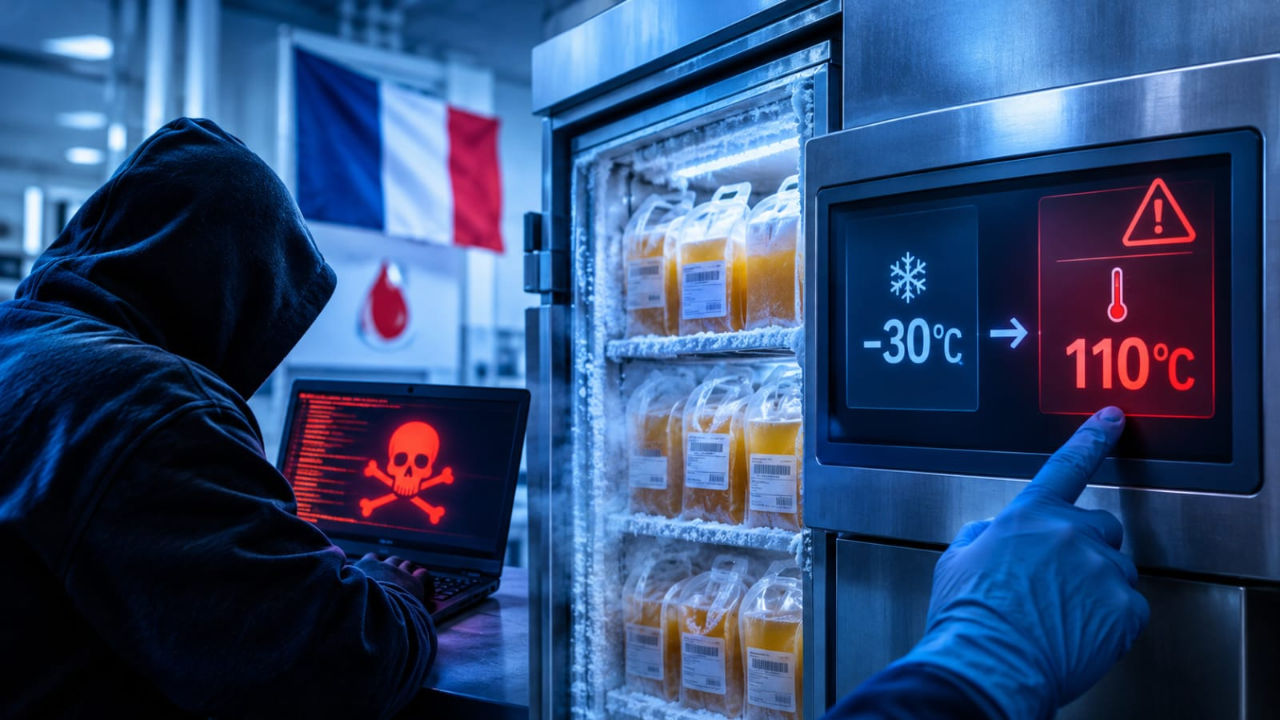
Hackers alter freezer settings at French blood service contractor
Digit

Hackers alter freezer settings at French blood service contractor

Setpoints reportedly pushed from about -30C to 110C; staff caught it overnight, and the intrusion method is still unknown

PARIS — Hackers reportedly reached refrigeration systems run by Coolworld, a contractor for France's national blood service EFS. Overnight on November 1-2 they changed freezer settings from roughly -30C to 110C, according to reporting that traces back to Le Canard enchaîné on November 3. Facilities in Bourgogne-Franche-Comté were mainly affected. An on-call technician spotted the abnormal readings. France's Health Ministry said this prevented operational consequences. The EFS first described the affected material as donor samples, then said frozen plasma meant for transfusion was also involved. The figure is a controller setting, not a measured temperature. The actual product temperatures and the duration of exposure have not been disclosed, and neither the attackers nor the way in have been identified. The case follows reports that Reuters said U.S. military bases are treating freezer malfunctions as a suspected cyberattack, and a wider run of refrigeration sabotage across Europe.

Why it mattersTampering with internet-reachable industrial controls is now reaching medical supply chains, and third-party maintenance access is the likely weak point.

Digit foreign · this week in security (Nov 1 edition) independent
Hacker leak exposes data on more than 40,000 Homeland Security staff
this week in security (Nov 1 edition)

Hacker leak exposes data on more than 40,000 Homeland Security staff

Records from an Okta system were published by DDoSecrets; a registrar hold briefly took a search site offline

WASHINGTON — The nonprofit Distributed Denial of Secrets published a database, dubbed Icepick, with the names, phone numbers and email addresses of more than 41,000 Department of Homeland Security employees and contractors. The data covers ICE, Customs and Border Protection, Homeland Security Investigations and CISA. It also includes operation names, surveillance programs and details of undercover initiatives, according to The Record's account. Independent reporter Zack Whittaker wrote that the data came from an Okta system used by DHS. A search site hosting it went offline briefly after a takedown request reached the domain registrar, while the server itself stayed up. The leak follows earlier hacks of the FBI and the Pentagon's HR department. DHS has not been quoted in the material reviewed, and the full scope of the intrusion is not independently confirmed.

Why it mattersA broad roster of federal law-enforcement and cyber staff in adversary hands raises counterintelligence and personal-safety risks, and points to weak identity-provider security.

Traders found a loophole to move banned HBM memory into China
Tom's Hardware (citing The Information)

Traders found a loophole to move banned HBM memory into China

The Information reports that processors are paired with Samsung and SK hynix chips to pass export checks

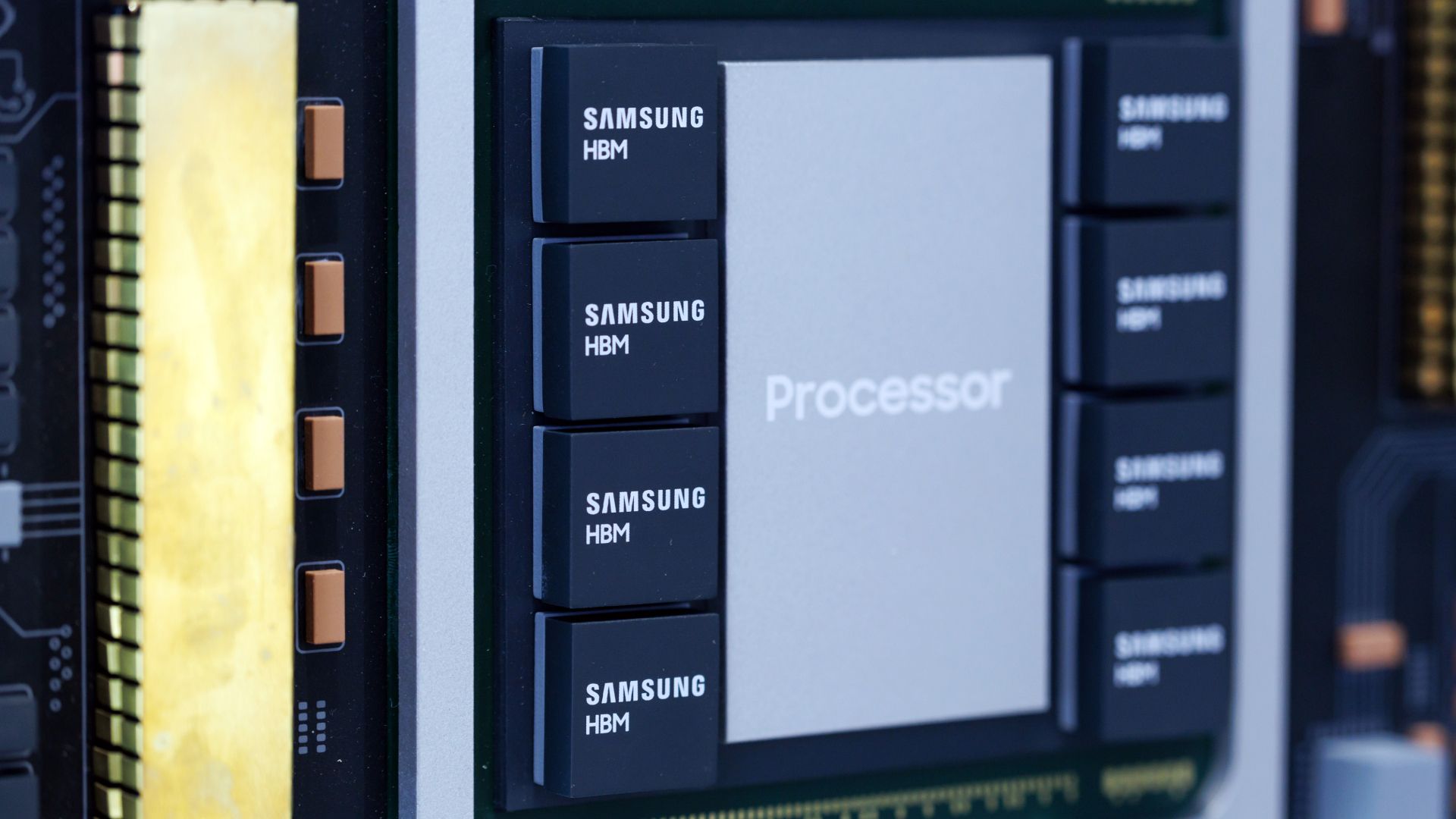
HONG KONG — A trader told The Information how export-controlled high-bandwidth memory reaches China. He pairs cheap, low-performance server processors that fall below control thresholds with HBM from Samsung and SK hynix. Export rules judge the package by the processor, so the memory passes. The boards travel through Hong Kong and are carried across the border into Shenzhen. Technicians there heat them, lift off the memory and discard the rest. A Shenzhen broker said a single HBM3E unit sold for several hundred dollars a year ago and now fetches about $4,000. An AI accelerator uses six to eight such chips, so memory alone is worth $24,000 to $32,000 per GPU. Tom's Hardware, which summarized the report, says the smuggler expects U.S. and South Korean authorities to move against the practice. The claims come from a single trader and have not been independently verified.

Why it mattersThe account shows how export rules written around processors leave a gap for memory, the component now limiting China's AI hardware.

Apple's first touchscreen MacBook Pro reaches stores Friday
CNN

Apple's first touchscreen MacBook Pro reaches stores Friday

The $2,899 laptop uses existing M5 chips, drawing questions about the performance gain

CUPERTINO, Calif. — Apple's MacBook Pro with PROLED XDR Display, its first Mac laptop with a touchscreen, goes on sale Friday, November 6. CEO John Ternus unveiled it on October 28 at an event in Los Angeles. The 14-inch model starts at $2,899 and the 16-inch at $3,399. Both use M5 Pro or M5 Max chips. Apple says the touch sensor is built into the display panel to cut lag, and quotes up to 24 hours of battery life. Reuters noted that Bloomberg reported the touch models would ship with the existing M5 Pro and M5 Max chips, so they would add no major speed boost over current machines. The same report said Apple also refreshed the base MacBook Pro with a new M6 chip. Analysts quoted by Reuters said the move reflects Apple giving in to buyer expectations for touch.

Why it mattersApple is dropping a design stance it held for more than a decade, in a product line that has gained from demand for on-device computing.

Artificial Intelligence

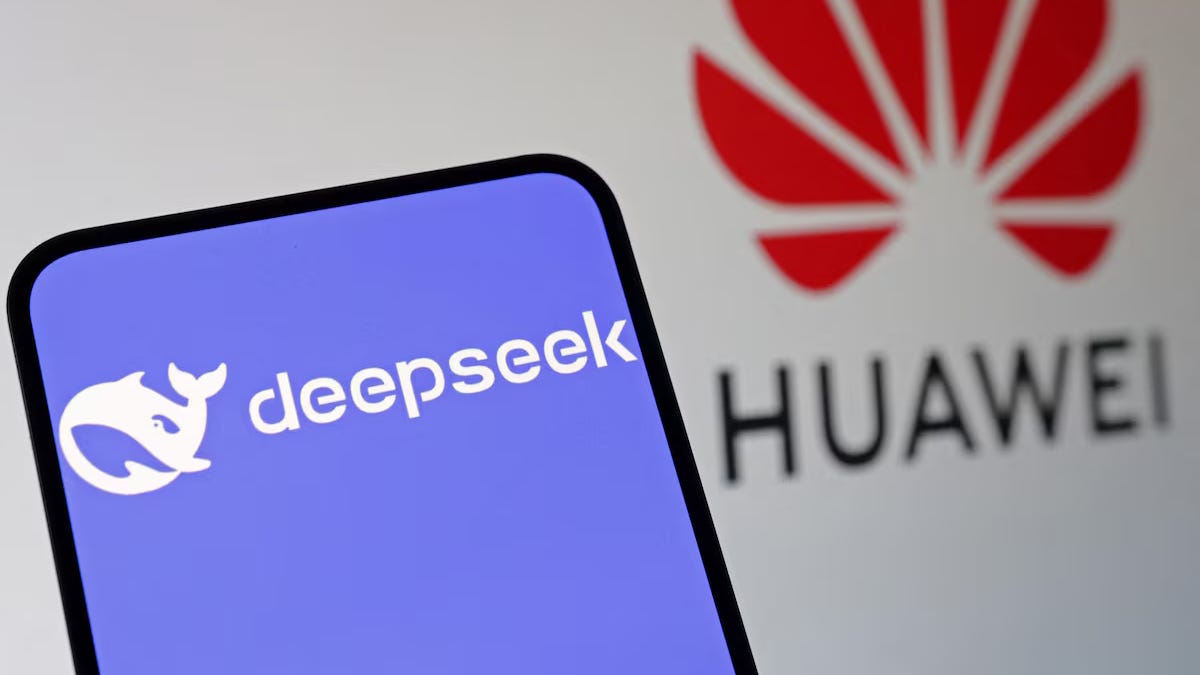
DeepSeek reportedly plans to pretrain V5 on Huawei Ascend chips
Geopolitechs: DeepSeek plans to train its next-generation model on Ascend

DeepSeek reportedly plans to pretrain V5 on Huawei Ascend chips

Chinese press reports a first for a frontier Chinese lab. Neither DeepSeek nor Huawei has confirmed it, and the timing is disputed.

BEIJING — Chinese financial outlets, including Star Market Daily and Caiwen, reported on November 3 that DeepSeek plans to pretrain its next flagship model, V5, on Huawei Ascend chips. Until now Ascend hardware has mainly served DeepSeek for inference and post-training. Accounts differ on timing. Some say pretraining could start by late 2026 at a planned Ulanqab, Inner Mongolia site. That figure traces to an earlier Bloomberg report of at least 160,000 Ascend 950DT chips. Digitimes, citing Caiwen, points to 2027 and says the chip choice is still being settled. DeepSeek open-sourced software tools adapted to Ascend on September 30, but has not announced V5. If the plan holds, it would test whether Chinese accelerators can carry a frontier-scale training run without Nvidia hardware.

Why it mattersA successful Ascend pretraining run would show US chip export limits are not a hard ceiling on Chinese frontier models.

Nikkei: Big Tech's off-balance-sheet AI obligations nearly double to $3.2 trillion
Nikkei Asia: US tech giants' hidden AI debt swells 90% to $3.2tn in 6 months

UPDATENikkei: Big Tech's off-balance-sheet AI obligations nearly double to $3.2 trillion

Tally covers Alphabet, Microsoft, Amazon, Meta and Oracle, up from about $1.65 trillion in an earlier cut.

TOKYO — Nikkei Asia reported on November 4 that AI-related obligations kept off the balance sheets of five US technology companies have grown to about $3.2 trillion. The companies are Alphabet, Microsoft, Amazon, Meta and Oracle. The total has nearly doubled in six months. Nikkei's earlier calculation for the same five firms was roughly $1.65 trillion. The newspaper says investors are growing more anxious about what it describes as seemingly unending spending. The figure is Nikkei's own tally rather than a number the companies report in one place. The report adds a new data point to this week's debate over AI financing and credit conditions. The companies' next quarterly filings will show whether the commitments keep growing at this pace.

Why it mattersLarge commitments outside reported debt make it harder for investors to judge how exposed AI spending leaves the biggest tech companies.

Post claiming GPT-6 Astra can edit model weights draws sharp pushback
Weight-Space Programming (authors' post)

Post claiming GPT-6 Astra can edit model weights draws sharp pushback

A blog post from researchers described as MIT CSAIL's Takehi, Teoh, Zhang and Khattab is a demonstration, not a peer-reviewed paper. Several developers say it is overstated.

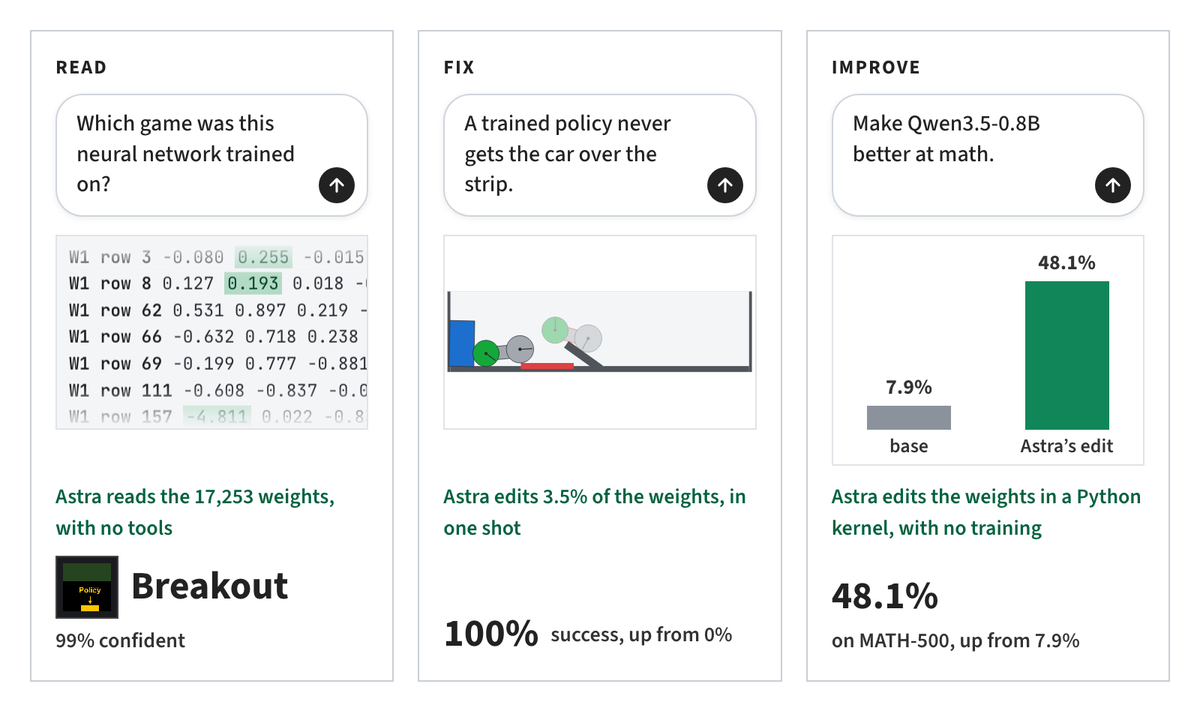
CAMBRIDGE, Mass. — A post titled 'Weight-Space Programming' was published this week. Its authors are described as MIT CSAIL researchers Rikiya Takehi, Jayden Teoh, Alex Zhang and Omar Khattab. It argues that OpenAI's GPT-6 Astra can read a model's weights and edit them from a plain-English specification, without gradient descent. In the example that drew attention, Astra was used to improve an open Qwen model. The post, which indexers summarize as showing a general-purpose model inspecting weights to infer behavior and then editing them to fix specific failures, was among the day's most discussed items on Hacker News. Within hours, developers published rebuttals. One is headlined as calling the framing misleading, and another argues that LLMs are not superhuman at this task. Simon Willison reported that a 27-billion-parameter Qwen model running on a laptop can also interpret weights. The claims have not been independently replicated.

Why it mattersThe episode shows how quickly a lab-adjacent demonstration can be read as a capability breakthrough before others test it.

Federal push to override state AI laws remains unsettled after midterms
Law360: AGs push Congress to regulate AI but not preempt state laws

Federal push to override state AI laws remains unsettled after midterms

State laws and enforcement keep running while the December 2025 executive order and congressional preemption efforts stay contested.

WASHINGTON — As the midterm elections conclude, the contest over who regulates AI has no settled federal answer. The December 2025 executive order told the Attorney General to set up a task force to challenge state AI laws. It also told Commerce to flag laws it considers onerous, told the FCC to consider a preemptive disclosure standard, and told the FTC to issue a policy statement. Law-firm analysts note an executive order cannot override state statutes on its own, and that the Senate voted 99-1 to strip a state-law moratorium from last year's budget bill. A bipartisan group of 26 state attorneys general wrote to Congress in September urging federal frontier-AI rules that expressly keep state enforcement power. Companies must still comply with state AI laws unless Congress or a court says otherwise.

Why it mattersCompliance obligations for AI developers and deployers are still set mainly by states until Congress acts or courts rule.

Courts escalate penalties as lawyers keep filing AI-fabricated citations
Legal 500: From Hallucination to Sanctions

Courts escalate penalties as lawyers keep filing AI-fabricated citations

A federal judge's default-style sanctions and appellate and UK rulings show the cost of unverified AI research rising.

NEW YORK — A law-firm analysis published this week describes a February 5 opinion by US District Judge Failla imposing terminal sanctions and nearly $40,000 in fees on defense counsel. Fourteen of the 60 cases cited in his motion-to-dismiss brief did not exist. What pushed the court past lesser penalties was repetition. Three filings carried fabricated authority after explicit warnings, including one filed while a show-cause order was pending. The judge said using AI is acceptable and that the violation was failing to verify output. Elsewhere the Sixth Circuit ordered two lawyers to pay $15,000 each in March. In England, the Solicitors Regulation Authority issued an AI warning notice on August 17, and a tribunal ordered its first strike-off in an AI case on September 3.

Why it mattersSanctions are moving from modest fines toward case-ending penalties and professional discipline, which raises the stakes for law firms adopting AI tools.

Science

Dinosaur bone holds strongest evidence yet of preserved red blood cells
CNN Science

Dinosaur bone holds strongest evidence yet of preserved red blood cells

Imaging and chemical tests on a 115-million-year-old fossil point to heme, a molecule found in hemoglobin

Researchers report what they call the strongest evidence so far that red blood cells can survive in a dinosaur fossil. The paper appeared Monday in the Proceedings of the National Academy of Sciences. The team studied a 115-million-year-old bone. They combined new microscopic imaging with chemical analysis. Inside the bone's vascular canals, which once carried blood vessels and nerves, they found many oval structures resembling red blood cells. They also found chemical signs of heme, a component of hemoglobin, the oxygen-carrying protein. The bone also held traces of manganese oxides. The authors suggest low-oxygen burial conditions slowed the breakdown of organic material, and that the minerals may have helped stabilize it. Claims of fossil soft tissue go back to the late 1990s and remain contested. Other laboratories will now test whether the heme finding holds up.

Why it mattersIf confirmed, the result would show that biological molecules can last far longer than most scientists have assumed, which would widen what fossils can reveal.

Jurassic fossil mammal relative swam like a platypus and had a swallowing throat
Wikipedia

Jurassic fossil mammal relative swam like a platypus and had a swallowing throat

Nature paper on a 165-million-year-old Inner Mongolian fossil reveals rare throat anatomy

A fossil from Inner Mongolia is the subject of this week's Nature cover. The paper, by Zhe-Xi Luo, Chang-Fu Zhou, Thomas Martin and colleagues, describes Megacauda sungei, a mammal predecessor that lived about 165 million years ago. The authors conclude it was semi-aquatic and could both dig and swim, much like the modern platypus. The preserved throat is what makes the specimen unusual. It allowed the team to infer a soft palate and constrictor muscles. These are rare evidence of a pharynx, the structure that lets most modern mammals suckle milk and swallow without fluid entering the airway. Monotremes such as the platypus lack this arrangement. The work appears in Nature volume 658, issue 8138, dated 29 October. It is a peer-reviewed description of a single fossil, and other specimens may refine the interpretation.

Why it mattersThe fossil helps date when the swallowing and suckling anatomy of mammals took shape, a feature tied to how they feed their young.

Mouse study links bone strain from exercise to slower ageing
Nature Daily Briefing

Mouse study links bone strain from exercise to slower ageing

Squeezing mouse legs triggered bone cells to release rejuvenating molecules, according to Nature's daily briefing

Mechanical stress on the skeleton during exercise may prompt bones to release proteins that slow ageing, a study in mice suggests. Nature's daily briefing reported the work this week. Researchers gently squeezed the legs of mice to mimic the loading of exercise. That activated osteocytes, bone cells that sense force. The cells then secreted molecules that rejuvenated immune cells. The molecules also reprogrammed cells in other organs toward a younger state, the researchers report. The finding comes from animals only. It has not been tested in people, and a mouse result of this kind often does not carry over to humans. The work points to bone as an organ that sends signals through the body, alongside muscle and fat. Next steps would be to identify the specific molecules involved and to test whether the effect appears in other species.

Why it mattersThe work offers a possible mechanism for why physical activity is linked to healthier ageing, though it is early-stage animal research.

Nature Daily Briefing primary

Space Exploration

Swift observatory's fall pulled forward to Wednesday, NASA says
NASA Science: Swift Observatory to Re-Enter Atmosphere

UPDATESwift observatory's fall pulled forward to Wednesday, NASA says

Updated Space Force forecast puts reentry of the failed-rescue telescope hours from now, not Nov. 6

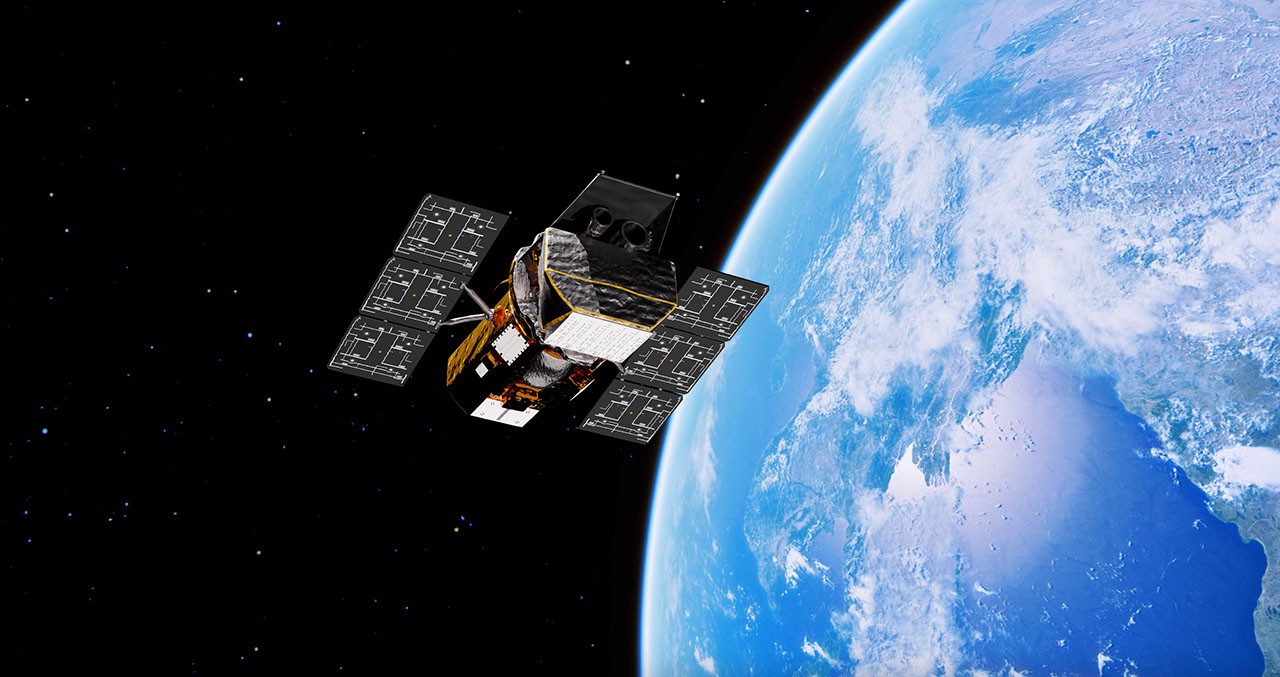
WASHINGTON — NASA's Neil Gehrels Swift Observatory is now expected to fall back through the atmosphere on Wednesday, Nov. 4. Earlier forecasts pointed to about Nov. 6. As of Monday, the U.S. Space Force predicted reentry at about 3:30 a.m. EST, give or take 11 hours. Sky & Telescope cited a similar projection for early Wednesday. The spacecraft weighs roughly 3,200 pounds, and NASA expects most of it to burn up. Some components may survive. Any debris would land between 20.6 degrees south and 20.6 degrees north latitude. NASA puts the chance of harm to anyone at about 1 in 2,100. Swift's science operations ended Oct. 20 at an altitude of 171 miles. A commercial rescue attempt with Katalyst's LINK spacecraft failed. NASA and the Space Force say they will keep updating predictions. No confirmation of reentry had been issued at press time.

Why it mattersThe loss ends one of NASA's most productive gamma-ray burst observatories and shows how the solar maximum can shorten satellite lifetimes.

November sky: Taurid fireballs, Mars beside Jupiter, Leonids and a supermoon
EarthSky: Visible planets and night sky guide for November

November sky: Taurid fireballs, Mars beside Jupiter, Leonids and a supermoon

A busy month for skywatchers starts with the Southern Taurids peaking Thursday

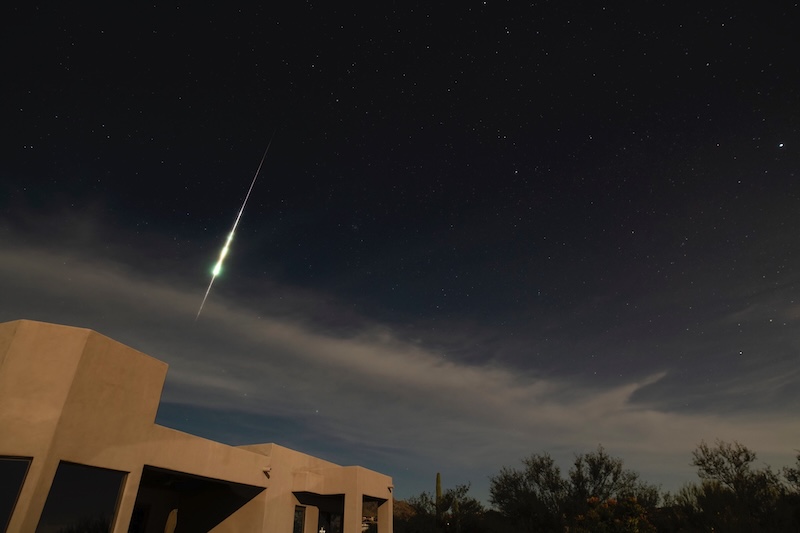
November's sky calendar begins with the Southern Taurid meteor shower, which NASA says peaks around Nov. 5. The Northern Taurids follow around Nov. 12. Each shower yields only about five meteors an hour, but both are known for occasional bright fireballs. On the mornings of Nov. 15 and 16, Mars and Jupiter will sit about 1.2 degrees apart in the southeast before sunrise. The Leonids peak overnight Nov. 17-18, after the Moon sets, at up to about 15 meteors an hour in ideal conditions. A supermoon follows on Nov. 24, the first of three in a row, through January. Timeanddate also lists Uranus at opposition on Nov. 25. It says Venus reaches its brightest of 2026 on Nov. 27. NASA also marks Voyager 1 passing one light-day from Earth around Nov. 17-18.

Why it mattersDark early-month skies and a new moon on Nov. 9 make this a good month for casual observing without equipment.

Webb data show interstellar comet 3I/ATLAS formed from unusual ice grains
Space.com: Webb uncovers new clues about 3I/ATLAS origins

Webb data show interstellar comet 3I/ATLAS formed from unusual ice grains

New paper points to a planet-forming disk around another star, possibly 10 to 12 billion years ago

Observations from the James Webb Space Telescope indicate that interstellar comet 3I/ATLAS was assembled from tiny grains of ice mixed with dust. Those grains differ from the material in comets native to the solar system. Space.com reports that the comet formed in a planet-forming disk of gas and dust around a young star. The star is unknown. The comet may be 10 to 12 billion years old, more than twice the age of the solar system. Webb detects the ice grains when sunlight warms the surface and gas carries them into the coma and tail. Mike Cordiner, who leads Webb's program on such objects, is a co-author of the paper. NASA's Webb team earlier reported the first mid-infrared chemical fingerprint of the comet, including methane, in a June 2026 update.

Why it mattersOnly a few interstellar objects have been seen, and each one offers a direct sample of planet-forming conditions around another star.