Sunday, October 25, 2026Memphis · 77°/51°, TennesseeEst. 2026
Markets · loading
Business & Markets
Business
Wikipedia
Smith & Nephew and J&J orthopaedics merger talks collapse over who would be CEO
A near-complete deal that would have valued J&J's hip and knee unit at up to $22 billion fell apart at the last minute, the Financial Times reported.
LONDON — Smith & Nephew and Johnson & Johnson were close to combining J&J's orthopaedics division with the British device maker, but the talks broke down over who would lead the merged company, the Financial Times reported Friday. The FT said the two sides had agreed the main financial terms and structure. J&J would have valued its hip and knee unit at up to $22 billion, nearly double Smith & Nephew's roughly £9.4 billion market value. J&J holders would have owned 50.1% of the group. Smith & Nephew insisted its CEO, Deepak Nath, stay in charge. J&J preferred Namal Nawana, who runs its orthopaedics unit and once led Smith & Nephew. A source told Reuters that J&J never planned to let Nath run the combined group. Both companies declined to comment on the report. J&J is leaning toward spinning off the unit, as DePuy Synthes, by mid-2027.
Why it mattersThe failed deal leaves a roughly $20 billion orthopaedics asset heading toward a spin-off or private-equity sale, and leaves Smith & Nephew to deal with its slow growth alone.
LSEG buys credit-data firm Octus for $3.5 billion as shares jump
The exchange group's largest deal in seven years aims to protect its data business from AI disruption; it also raised full-year targets.
LONDON — The London Stock Exchange Group agreed Thursday to buy Octus, a New York credit-intelligence provider, from Permira for about $3.54 billion in cash. It is LSEG's largest acquisition since 2019. Octus, which focuses on private, illiquid and distressed credit, is expected to bring in more than $300 million of revenue this year at an adjusted EBITDA margin of around 40%. LSEG expects the deal to be neutral to adjusted earnings in the first full year and to add to earnings after that. It will be financed with external debt and is expected to close in the first half of 2027, pending regulatory approval. LSEG shares rose about 6%, according to Reuters, after third-quarter results that beat expectations and prompted a second raise in full-year targets. The deal follows Tradeweb's agreement to buy bond platform Trumid for about $1.75 billion net.
Why it mattersThe deal shows incumbent financial-data firms paying premium prices for proprietary datasets they believe general AI tools cannot copy.
McCormick-Unilever $44.8 billion food deal clears U.S. antitrust step; UK review looms
The FTC ended the waiting period early, but British regulators have set a Nov. 11 date for an initial decision.
HUNT VALLEY, Md. — McCormick's proposed $44.8 billion combination with Unilever's food business has cleared the main U.S. antitrust procedural hurdle. The Federal Trade Commission granted early termination of the Hart-Scott-Rodino waiting period on Oct. 5, according to a report published Oct. 23. The deal is still under review in the United Kingdom, where regulators have set Nov. 11 for an initial decision. McCormick shareholders must also approve it, and other closing conditions apply. If completed, the deal would create a business under the McCormick name valued at about $65 billion, with about $20 billion in annual revenue. Unilever shareholders would own 65% of it. The companies are targeting a mid-2027 close. Early termination means the FTC did not extend its review. It does not bar later agency action.
Why it mattersA combination of this size in packaged food would reshape the grocery shelf, and the UK review is now the main regulatory test.
Small-business optimism slips to 97.9 as labor shortages and inflation bite
NFIB's September survey shows only 7% of owners say now is a good time to expand, with borrowing costs higher.
WASHINGTON — The National Federation of Independent Business said its Small Business Optimism Index fell 0.8 points in September to 97.9, one-tenth of a point below its 52-year average. Its Uncertainty Index rose a point to 90, far above the historical average of 68. Only 7% of owners said it was a good time to expand, five points fewer than in August. Labor quality or availability was the top problem for a third straight month, named by 26% of owners. Inflation was cited by 20%, up four points. Nearly a third of owners could not fill job openings. One analysis of the data put the average short-term loan rate at 8.2%, up 0.7 points, after the Federal Reserve raised its policy rate. The next NFIB reading is due Nov. 10.
Why it mattersMain Street owners drive hiring, and their reluctance to expand points to softer investment and employment ahead, including for Memphis-area firms.
Search Engine Roundtable: Google Search Tests Layout Change For Local Knowledge Panel
Google tests reshuffled local panels and a rebuilt Business Profile report
Posts move up, name and rating move above photos, and a new analytics view appears in limited tests
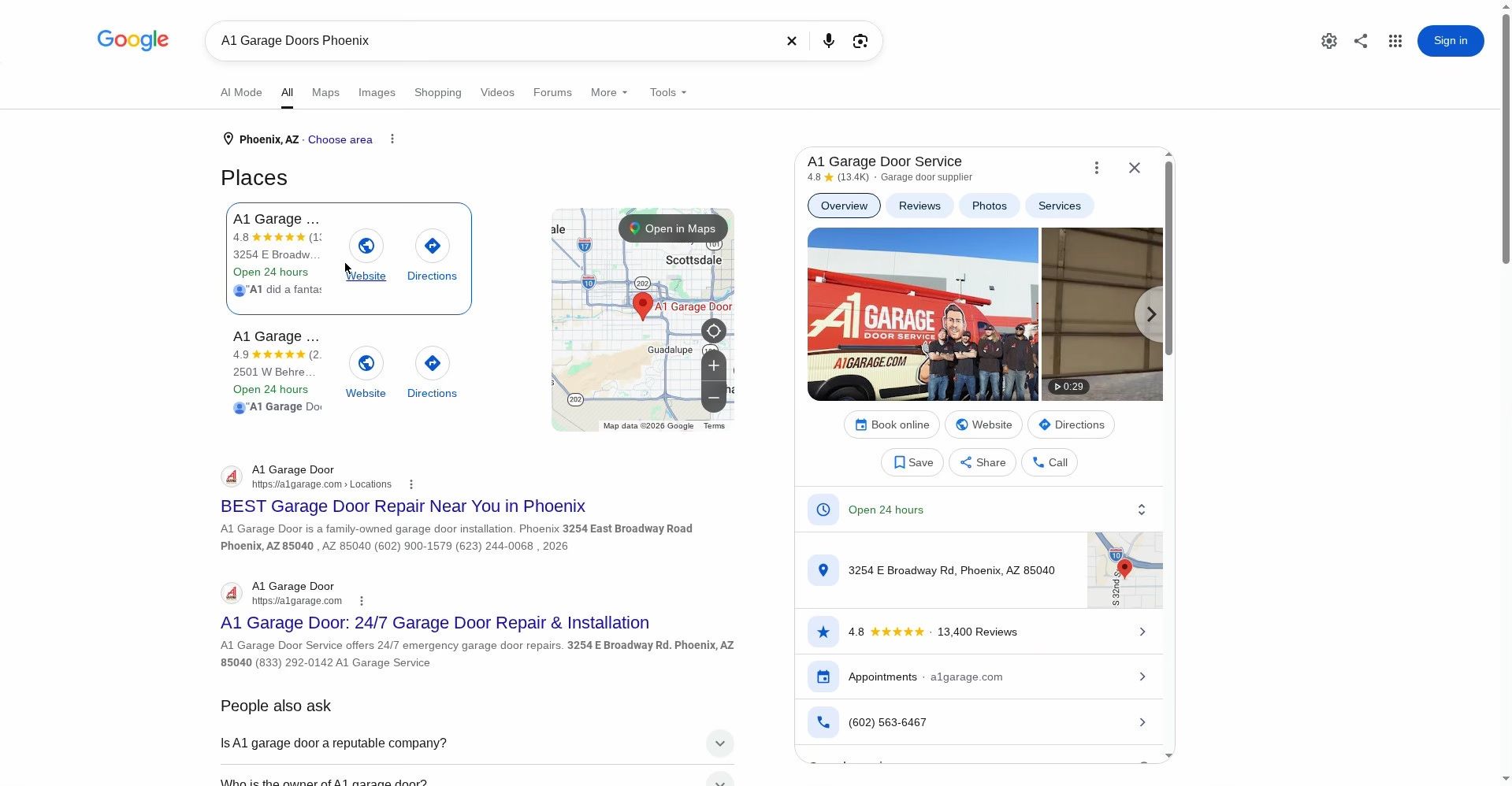
Google is testing several changes to the business panel that appears in local search. On October 22, Search Engine Roundtable reported a layout test that puts the company name, rating, description and action buttons above the business photos. The new order matches Google's mobile design. On October 19 the same outlet noted that the Posts section appears to have moved higher on the local panel. Google had pushed Posts to the bottom in 2018. On October 23, Roundtable reported that Google is testing a rebuilt performance report inside Business Profiles. It covers engagement, reviews, search trends and audience, adds top recommendations, and gives reviews a more detailed breakdown. Google has not announced a rollout schedule for any of these. All are described as tests seen by some users.
Why it mattersWhere Posts, ratings and buttons sit on the panel affects what local searchers see first, and the new reporting could change how agencies measure results for clients.
Google tests AI-written summaries inside AI Overview citation cards
Separate studies this week say AI search sends only a sliver of Google's traffic
Google appears to be testing or rolling out AI-generated summary snippets on the source cards that sit beside AI Overviews, Search Engine Roundtable reported October 23. The cards used to show publisher-supplied text. On October 20, the same outlet saw Google dropping the AI Overview label from some answers on desktop while the mobile version kept it. Roundtable also pointed to three studies published in the past week. It says they found AI services send a tiny fraction of the traffic and conversions that Google Search does. It reads them as an argument against heavy spending on AI visibility. Google has not detailed the card test. Pew Research Center researchers have also posted an arXiv paper on click behavior on results pages that carry AI Overviews.
Why it mattersEvery added AI layer between a searcher and a local business's website makes click-through harder to predict, yet AI chat referrals are still too small to replace Google traffic.
Google Ads tests scrolling review banners and adds AI video sourcing
Experiments and new controls arrive ahead of the holiday ad season
Google Ads is running two tests on some search ads, Search Engine Roundtable reported October 23. One adds a scrolling marquee that loads ratings and reviews, a visit count and a visit-site link. The other underlines the domain name in the ad snippet. Advertisers also gained a 'Sourced videos' on/off setting in asset optimization. It uses Google AI to find relevant videos from approved sources and add them to campaigns automatically. A related Search Engine Land headline says Performance Max gained new image and video sourcing options. Roundtable reported October 22 that Google is rolling out three updates to customer-lifecycle goals before the holidays. They extend high-value mode to Shopping campaigns, expand customer-retention goals and add new percentage multipliers. Google has not said whether the ad tests will become permanent.
Why it mattersReview-rich ad formats and automated asset selection change how paid listings compete with the local pack, and they shift creative decisions from advertisers to Google's AI.
UPDATEBrent settles at $116.72, highest since April, as Houthi strikes hit Saudi Arabia
Third straight weekly gain for crude raises the inflation stakes before the Fed meets Wednesday
NEW YORK — Brent crude futures settled at $116.72 a barrel on Friday, up $3.55, or 3.1%. That was the highest settlement since late April and roughly a 6% gain on the week, according to Reuters-based reporting. U.S. crude closed at $103.27. The session high of $117.45 was the loftiest in nearly six months. Buyers were reacting to a series of attacks by Iran-aligned Houthi forces across Saudi Arabia, including on energy infrastructure. Saudi Aramco ordered staff out of its Dhahran headquarters on Thursday. Traders are also betting that Washington could resume strikes on Iran. Market commentators describe the move as a risk premium, because tanker flows through Hormuz have actually risen. A Washington think tank's data show October is the worst month for attacks on shipping in the Hormuz area since it began tracking in 2017. Energy prices are feeding the inflation figures the Fed will weigh at its Oct. 27-28 meeting.
Why it mattersSustained crude above $110 pushes up inflation and the Treasury yields that have driven recent equity volatility.
Fed, big-tech earnings and GDP-PCE data collide in a crowded Wall Street week
Microsoft, Alphabet and Amazon report as core PCE is forecast to edge up to about 3.1%
NEW YORK — The Fed announces its decision at 2 p.m. Eastern on Wednesday. Analysts quoted by AFP expect rates to stay at 3.75%-4.00%, with at least one hike priced in before year-end. The midterm elections follow on Nov. 3. Microsoft and Alphabet report after the close Wednesday, and Amazon reports Thursday. A newsletter preview puts Microsoft's quarterly capital spending forecast near $46.6 billion, against $19.4 billion a year earlier. That figure is the author's estimate of consensus. Third-quarter GDP and September personal income and outlays arrive Thursday at 8:30 a.m. Core PCE is projected to rise 0.3% on the month, taking the annual rate to about 3.1% from 3.0%. The Employment Cost Index follows Friday. FXStreet's week-ahead note flags that weak demand at the two-, five- and seven-year Treasury auctions could renew bond selling. It also says a hawkish hold followed by firm data could lift the dollar.
Why it mattersSpending figures from the AI hyperscalers and a sticky inflation reading will test both equity valuations and the case for a December hike.
Gold drops below $4,000 for first time in three months despite Treasury rally
Bullion fell about 4% on the week even as the 10-year yield dipped under 5%
NEW YORK — Gold slid under $4,000 an ounce on Friday, touching $3,986.74 in Asian trading. That was a three-month low, and it left the metal down more than 3% on the week. The drop came even though the 10-year Treasury yield fell below 5% on Thursday for the first time in about a month, which would normally help a metal that pays no interest. Instead, rising oil prices stoked inflation worries and a firmer dollar weighed on bullion. ING analysts noted that gold got no safe-haven lift from Thursday's equity sell-off or the bond rally. Rabobank said the two-year yield also fell back below 4.75%. The 10-year was back near 5% on Friday and the dollar index was around 101.70. Technical analysts see $3,900 to $3,800 as the next downside area if support at $4,000 breaks. Next week's Fed meeting and GDP and PCE data could add volatility.
Why it mattersThe breakdown in gold's usual link to yields shows how much inflation fear from energy prices is overriding traditional safe-haven behavior.
American Express to cut 5% of staff in AI-preparation overhaul
Card issuer books $336 million charge while raising its outlook; Barclays announced similar cuts a day earlier
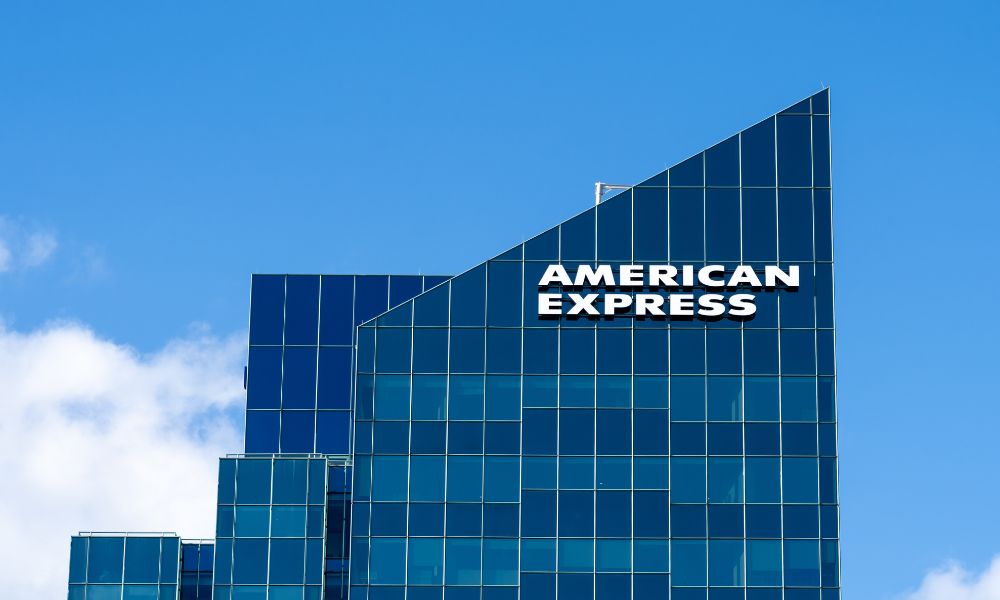
NEW YORK — American Express said on its third-quarter earnings call Friday that it will eliminate about 5% of its global workforce. CEO Stephen Squeri disclosed the plan, and a $336 million pretax restructuring charge accompanies it. The company had nearly 77,000 employees at the end of 2025, and Reuters-sourced reporting puts the reduction at about 3,500 jobs. CFO Christophe Le Caillec told CNBC the aim is to flatten management layers so processes can be automated, rather than to replace workers directly. Amex also raised its 2026 earnings outlook, and quarterly profit beat expectations. Part of the restructuring is being funded by the gain from selling its stake in Global Business Travel Group. The stock fell more than 3% and was the weakest Dow component Friday. Barclays confirmed plans on Thursday to cut 5,000 jobs, also roughly 5% of its staff, in a technology-driven overhaul.
Why it mattersProfitable lenders are trimming headcount ahead of automation, a trend that bears on the labor market and on bank cost structures.
Grid watchdog advances first mandatory rules for data-center power loads
NERC standards for AI and crypto sites of 50 MW or more head to board vote, then FERC
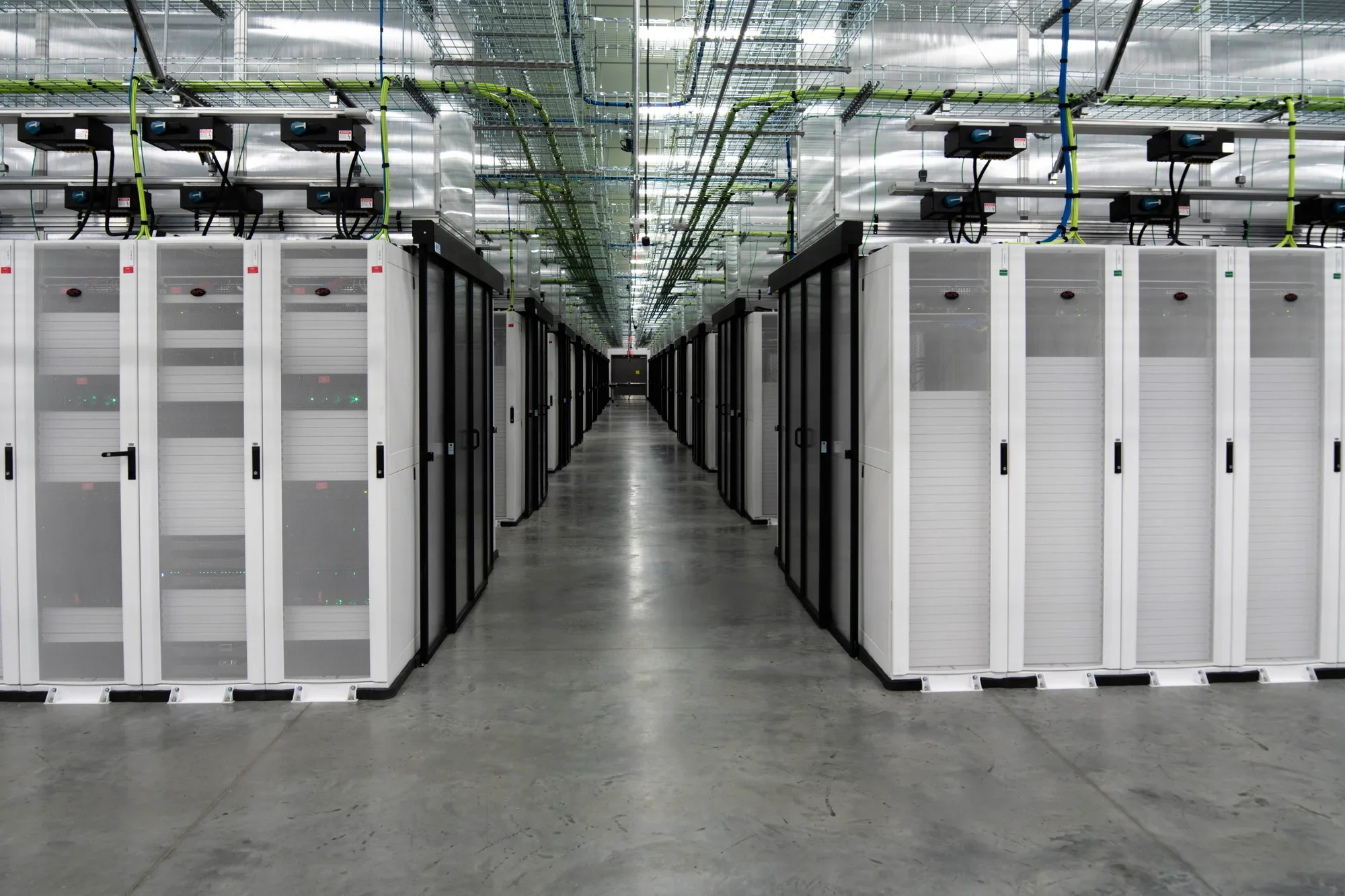
Industry stakeholders approved a package of reliability standards for large computational loads in a final ballot, the North American Electric Reliability Corporation said Oct. 15. The rules would cover AI data centers, crypto mines and similar sites drawing at least 50 MW through equipment rated at 100 kV or higher. The package has three new standards and revisions to two existing ones. Requirements include sharing planning and operating data, coordinating protection settings and recording disturbances. A computational-load operator would have to follow instructions from its grid operator, with narrow exceptions. NERC acted after incidents in which data centers suddenly dropped load or swung demand sharply. The NERC board is expected to take up the package in the fourth quarter, with Dec. 5 requested. FERC has ordered NERC to file by Dec. 31, and FERC approval would follow. Some compliance periods run up to three years.
Why it mattersFor the first time, the largest data-center loads would carry enforceable obligations to keep the grid stable, not just to buy power from it.
Energy Department backs $581 million TVA grid upgrade across eight states
84 transmission and distribution projects would add about 2.5 GW; a separate reconductoring program adds more
KNOXVILLE — The Energy Department said Oct. 13 it will help the Tennessee Valley Authority fund 84 transmission and distribution projects in eight states. The award totals about $581 million, made up of $250 million in federal money and about $331 million in cost-share from TVA and local power companies. It comes from the department's Grid Resilience and Innovation Partnerships program. DOE expects the work to add roughly 2.5 GW of grid capacity, serve about 2.58 million homes and businesses, and support about 800 jobs. Deputy Energy Secretary James Danly announced it at TVA headquarters. A separate SPARK award would upgrade about 125 miles of lines in Tennessee, Alabama and North Carolina with advanced conductors, adding about 1,900 MW. Together the two awards represent nearly $741 million in planned investment and more than 4,300 MW. Funding and schedules remain subject to final agreements.
Why it mattersTransmission capacity in the Tennessee Valley, which includes the Memphis area, is a key limit on serving new industrial and data-center demand.
Germany keeps 70-GW offshore wind goal but trims grid connections
Draft area plan designates 14 new sites; industry says auction rules must change first
Germany's maritime and hydrographic agency, the BSH, published a preliminary draft of its offshore wind area development plan on Oct. 23. The draft keeps the goal of 70 GW by 2045 but plans fewer offshore grid connections, a change that could save tens of billions of euros. It designates 14 new areas of about 1 GW each and commits the agency to run preliminary site investigations centrally. The draft also provides for cross-border projects. The German Offshore Wind Energy Association welcomed the plan but said the target will not be met unless investment conditions improve. It wants indexed two-sided contracts for difference in all future tenders, in place of the current two-stage model. The Bundestag has begun debating an amendment to the Wind Energy at Sea Act that will decide whether the auctions restart. Earlier zero-subsidy auctions drew no bids in 2025.
Why it mattersEurope's largest economy is deciding how much offshore wind it can afford and how to fund it after its auction model failed.