Friday, October 23, 2026Memphis · 80°/50°, TennesseeEst. 2026
Markets · loading
Law & Courts
Law
SCOTUSblog: Supreme Court allows New Hampshire to restrict use of student IDs in voting
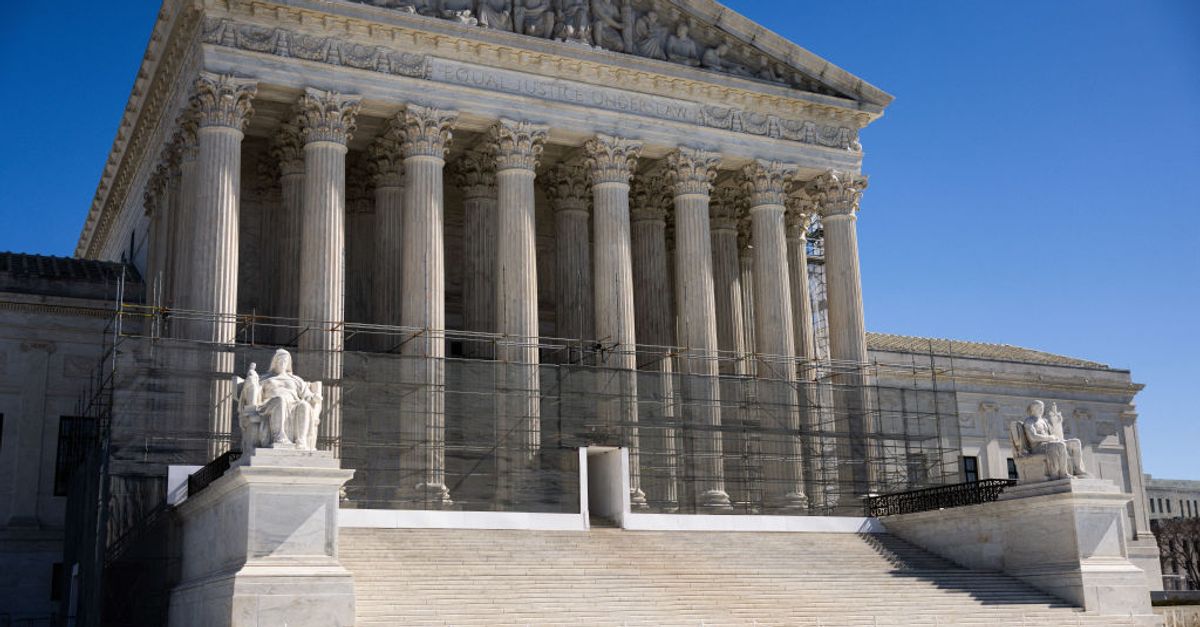
Supreme Court lets New Hampshire enforce full student-ID ban for November vote
Unsigned emergency order cites the Purcell principle against late changes to election rules; Justice Jackson dissents alone
WASHINGTON — The Supreme Court on Thursday granted an emergency application from New Hampshire Secretary of State David Scanlan. The unsigned order pauses a federal district ruling in the challenge brought by the Coalition for Open Democracy. U.S. District Judge Joseph Laplante had left in place HB 323, the April law that removed student IDs from the list of identification expressly valid for obtaining a ballot. He blocked Scanlan's broader directive to the extent it kept election officials from weighing student IDs as evidence of identity under a separate safety-valve provision. The 1st Circuit had refused to pause that order. The justices said lower federal courts should ordinarily not alter election rules on the eve of an election, and the Nov. 3 midterms are less than two weeks away. Justice Ketanji Brown Jackson dissented, saying the order only corrected misleading statements and did not change the law. The stay lasts while the state's appeal in the 1st Circuit continues.
Why it mattersThe order reinforces the Court's reluctance to let federal courts change voting rules close to an election, and it narrows what New Hampshire student voters can show at the polls.
Tennessee Supreme Court keeps ban on nonlawyer law-firm ownership
Oct. 2 order also loosens ABA-accreditation rule and creates three licensure task forces
NASHVILLE — In an Oct. 2 order, In re: Regulatory Reforms to Increase Access to Quality Legal Representation (No. ADM2025-01403), the Tennessee Supreme Court declined to change its rules on nonlawyer ownership of law firms and fee-sharing with nonlawyers. It said it had not found enough need or support for such reforms, and it left open revisiting them as data from other states accumulates. The Tennessee Bar had told the court there was scant empirical evidence that such changes improve access to justice. The order did loosen bar-admission rules: graduates must now come from a school accredited by an 'Approved Accreditor' approved by the court, a category that includes the ABA, and a prior active-practice requirement for graduates of other schools was dropped. It also created three task forces on alternative licensure, interstate mobility and limited-licensed paraprofessionals, with appointments expected late 2026 into 2027. The court did not review management-services-organization arrangements, which a law-firm client alert calls the usual compliant route for outside capital.
Why it mattersTennessee firms, including personal injury practices, stay barred from taking nonlawyer equity, while MSO structures remain the main way for outside investors to participate.
Courthouse News Service: Sixth Circuit takes up data breach reporting requirements
Full Sixth Circuit hears fight over FCC data-breach reporting rule
Telecom groups say the 2024 rule repeats one Congress rejected in 2016
CINCINNATI — The full U.S. Court of Appeals for the Sixth Circuit heard argument Wednesday on a 2024 FCC rule requiring telecommunications providers to report data breaches involving customers' personally identifying information. The challengers are Ohio Telecom Association v. FCC (No. 24-3133) and consolidated cases. The challengers include the Ohio Telecom Association, USTelecom and other trade groups. They argue the rule is substantially the same as one Congress disapproved in 2016, so the Congressional Review Act's reissue bar applies. The FCC counters that differences in the definitions of a breach and of PII, and in when providers must notify, make it a different rule. In the earlier divided panel opinion, Judge Jane Stranch wrote that the Communications Act's duty to protect consumer data supports breach-disclosure requirements. Chief Judge Raymond Kethledge presided over an en banc argument for the first time since taking the post on Oct. 1. The court has set no timetable for a decision.
Why it mattersThe ruling will help define how far the FCC can go in imposing consumer data-protection duties on carriers, and how broadly the Congressional Review Act's reissue bar reaches.
Tennessee appeals court orders new trial in Memphis-area killing of trans woman
Court of Criminal Appeals says jury should have learned victim's sex assigned at birth
MEMPHIS — The Tennessee Court of Criminal Appeals on Oct. 5 vacated Samuel Ward Jr.'s May 2025 Shelby County voluntary manslaughter conviction for the June 2022 shooting of Paris Lee at her Cordova home, and remanded for a new trial. In a unanimous opinion, the panel held that Criminal Court Judge Carlyn Addison erred in barring evidence of Lee's sex assigned at birth, including from autopsy and scene materials. The court said this deprived Ward of a full self-defense presentation and left jurors without a significant fact known to him at the time. The panel did not find the killing justified. Prosecutors had argued Lee was armed, that physical evidence contradicted Ward's account, and that the evidence would prejudice jurors against her. LGBTQ+ advocates have criticized the ruling, which Tennessee journalist Jamie Satterfield first reported. The state can seek further review in the Tennessee Supreme Court.
Why it mattersThe opinion addresses how a victim's biological sex may be used in self-defense claims, a question with consequences for violent-crime trials across Tennessee.