Thursday, October 29, 2026Memphis · 81°/51°, TennesseeEst. 2026
Markets · loading
The World
Geopolitics
U.S. Treasury press release
U.S. sanctions Rwanda's defense ministry over backing for M23 rebels in Congo
Treasury widens pressure on Kigali, saying it has broken its commitments under the Washington peace accords
WASHINGTON — The U.S. Treasury on Wednesday froze U.S.-linked assets of Rwanda's Ministry of Defence and of Zigama Credit and Savings Society, a Rwandan financial institution. Treasury says Zigama helped fund the Rwanda Defence Force and the M23 rebel movement. It says the ministry directs thousands of Rwandan troops fighting alongside M23 in North and South Kivu. The Rwanda Defence Force itself was sanctioned in March. Secretary Scott Bessent said Kigali must stop backing M23 and pull its troops out of eastern Congo. Rwanda has long denied backing the rebels. A government spokeswoman said Kigali is ready to carry out the accords as long as Congo does the same. The step comes weeks after former Congolese president Joseph Kabila joined the rebel cause, which Crisis Group says will complicate peace talks. Washington's sanctions now target Rwanda's institutions, not only individual commanders.
Why it mattersWashington is penalizing the state of a regional partner whose peace deal it brokered, a sign that the Trump-backed Congo accords are failing on the ground.
Britain pledges £10 billion to Ukraine as doubts grow over U.S. support
London adds air-defense money before winter while Kyiv deals with Starlink limits and an uneasy Washington
LONDON — Britain announced more than £10 billion (about $13.3 billion) in new support for Ukraine, President Volodymyr Zelensky said Wednesday. The package includes £500 million for urgent air defense, £7 billion in economic support over three years and £3 billion in export-finance capacity, mostly for military equipment. It arrives as Russian strikes on Ukrainian energy infrastructure continue ahead of winter. Crisis Group analysts note that Ukrainian forces reported restrictions on Starshield, the military version of Starlink, and that Zelensky said U.S. intelligence sharing had been restored. Secretary of State Marco Rubio called the Starlink throttling a technical error that no one ordered. Crisis Group says the episodes fed speculation that Washington is pressing Kyiv to make concessions. Separately, Vladimir Putin called Elon Musk a genius and said Moscow keeps in contact with him.
Why it mattersEuropean money is increasingly filling gaps as Kyiv questions how reliable American intelligence and communications support will be.
Hegseth offers ASEAN a defense framework and boosts Manila funding; China sends attaché
Cebu defense talks show Washington deepening first-island-chain ties as Beijing downgrades its delegation
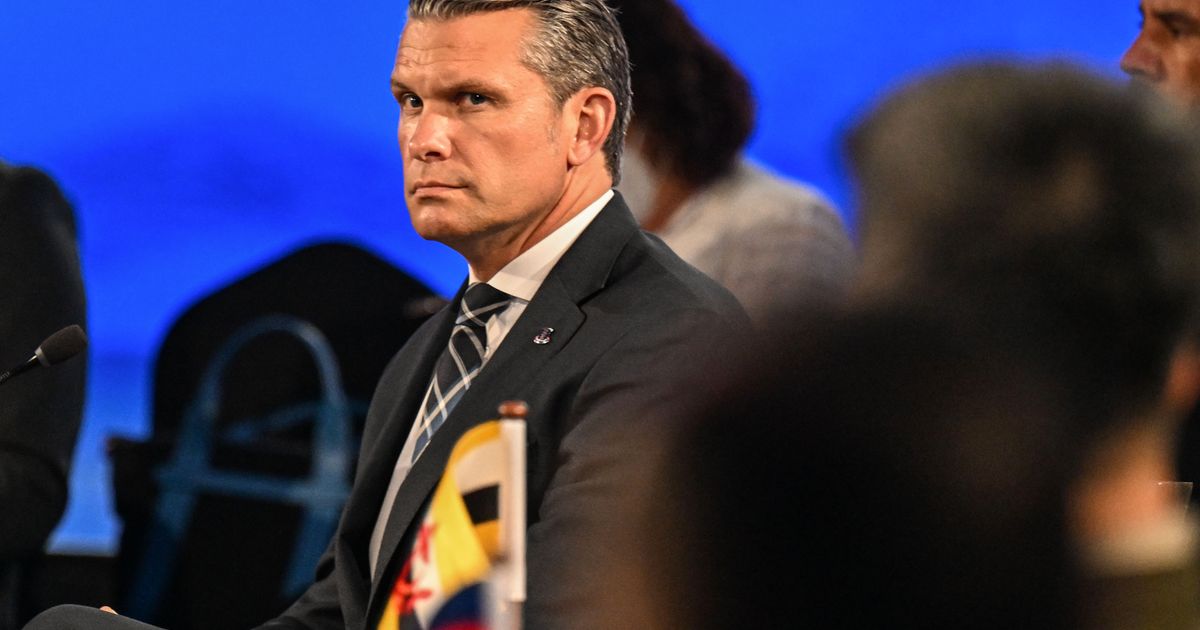
CEBU, Philippines — At the ASEAN Defense Ministers' Meeting-Plus in Cebu, U.S. Defense Secretary Pete Hegseth proposed a U.S.-ASEAN framework for defense cooperation to mark 50 years of relations next year, and said work would begin with Singapore, next year's chair. He described Washington's approach as strong, quiet and clear. After meeting Philippine counterpart Gilberto Teodoro, the Pentagon announced more security cooperation funds for interoperability along the first island chain and an alliance command-and-control modernization effort. It gave no figure or timetable, the South China Morning Post noted. Hegseth also agreed with Japan's defense minister to speed up flexible use of facilities and dispersed-operations training. China sent its defense attaché in Manila rather than its defense minister, which the SCMP described as a departure from past practice. Teodoro urged members to reject threats and the use of force.
Why it mattersThe meeting shows where U.S.-China competition in Southeast Asia stands: a U.S. push for institutional ties against a Chinese show of distance.
Europe's five biggest NATO powers vow larger defense role, keep U.S. as 'indispensable'
Paris talks come as Washington plans to cut its presence in Europe, with no new Ukraine aid announced
PARIS — Defense ministers from France, Germany, Italy, Poland and Britain, the E5 group, met in Paris on Monday and said Europe must take more responsibility for its own security. They still called the United States an indispensable ally. French minister Catherine Vautrin described the aim as a stronger Europe inside an equally stronger NATO, through a plan drawn up openly with Washington. EU foreign policy chief Kaja Kallas attended. The talks followed a Pentagon announcement in May of a planned reduction in its European presence, to take place over six to 12 months, which caught allies off guard, according to TRT World. Poland's representative said he expected any arrangement to be coordinated to avoid capability gaps. The ministers reaffirmed support for Ukraine but announced no new financial or operational aid. The next E5 meeting is set for Rome in March 2027.
Why it mattersEuropean capitals are trying to manage an American drawdown without breaking the alliance, but the Paris meeting produced pledges rather than new commitments.
Turkey, Bulgaria and Romania create Black Sea security mechanism after drone attacks
Sofia meeting called at short notice as strikes on commercial shipping and drifting mines worry coastal states
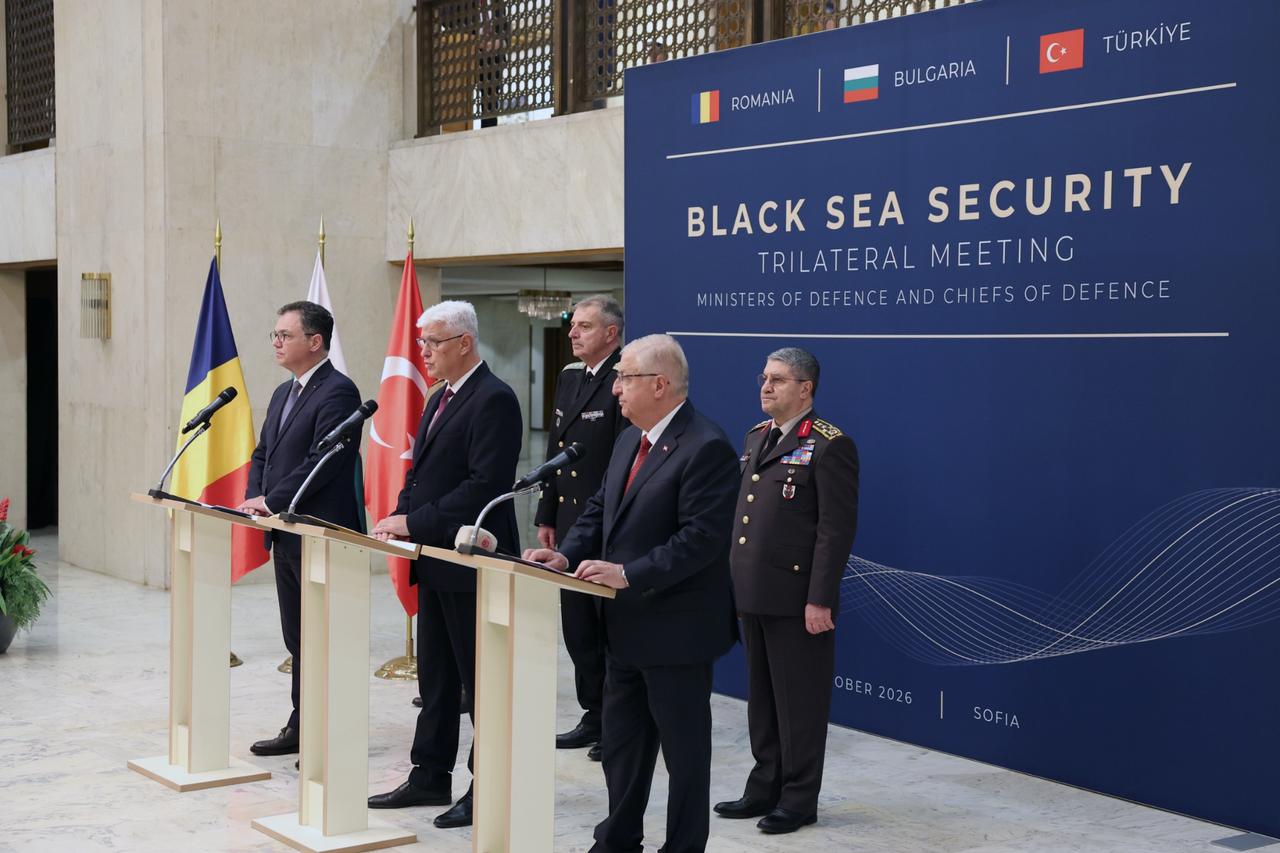
SOFIA — Defense ministers and military chiefs of Turkey, Bulgaria and Romania met in Sofia on Wednesday and agreed to set up a trilateral mechanism to respond to maritime security threats. Bulgarian minister Dimitar Stoyanov said the meeting was called quickly because the security environment had worsened. The meeting followed a drone attack reported off the Bulgarian coast the same day. Romania's Stefan-Radu Oprea said his country has also been hit by drone attacks on commercial vessels. Turkish minister Yasar Guler urged Russia and Ukraine to show restraint and respect freedom of navigation. He also pointed to work on a regional task group to counter drifting naval mines, which other countries may join without sending ships if members agree. More trilateral meetings are under discussion for Bucharest and Ankara. Guler credited Turkey's application of the Montreux Convention with limiting the war's spread.
Why it mattersNATO's Black Sea members are building their own coordination as the Russia-Ukraine war increasingly threatens civilian shipping beyond the combatants' waters.
Hegseth fires Pentagon's top war planner as Iran strikes weighed
Lt. Gen. Brett Sylvia, head of strategy and plans on the Joint Staff, is out with no reason given and no successor named
WASHINGTON — Defense Secretary Pete Hegseth has removed Lt. Gen. Brett Sylvia as director of strategy, plans and policy (the J5) on the Joint Staff, a defense official told the AP on Wednesday. The Joint Staff confirmed Sylvia is leaving and thanked him for 32 years of service. Neither explanation nor replacement has been announced. Sylvia is the second J5 pushed out under Hegseth. His predecessor, Lt. Gen. Joseph McGee, was forced to retire last October. The firing comes as President Trump weighs new strikes on Iran. CNN reports U.S. forces in the region could launch major operations within 96 hours of an order. AP reports that diplomats say regional allies were told to prepare for possible renewed action after Tuesday's elections, and that a third carrier and thousands more troops are heading to the region. Nearly two dozen senior officers have departed under Hegseth.
Why it mattersThe J5 turns presidential objectives into military options, and its leader has been removed just as the Pentagon prepares for possible new operations against Iran.
Iran war has cost U.S. $47.1 billion, Central Command tells Congress
Munitions replacement drives most of the bill; estimate is $3.5 billion above the September figure
WASHINGTON — U.S. Central Command figures provided to Congress put the cost of the war with Iran at an estimated $47.1 billion through Oct. 16, about $3.5 billion more than the Pentagon's early-September estimate. The war began Feb. 28. Replacing expended munitions accounts for roughly $29 billion. Another $6.1 billion covers damaged or destroyed equipment, and about $11.9 billion is operating cost. The total excludes damage to U.S. bases in the Middle East, which a Pentagon inspector general report says included hundreds of structures hit by Iranian missiles and drones. CENTCOM projects $2 billion to $3 billion a month while fighting continues. The official tally lists 21 U.S. service members killed and 865 wounded. Trump has left open renewed strikes after next week's midterms, and the administration is seeking more war funding while Democrats press for fuller accounting.
Why it mattersThe figures show how heavily the war is drawing down U.S. weapons stocks and set up a funding fight in Congress just before the midterms.
U.S. Department of Justice, Office of Public Affairs
CIA contractor charged with leaking to partner's Substack; her identity surfaces
Ian Brinksman, a Top Secret-cleared developer, is accused of passing five classified reports; the writer has not been charged
WASHINGTON — The Justice Department says the FBI arrested Ian A. Brinksman, 42, of Washington on Oct. 23 on a criminal complaint charging unlawful transmission of national defense information. CIA Director John Ratcliffe said the arrest followed a CIA referral. Brinksman held a Top Secret clearance with SCI access. According to the FBI affidavit, he repeatedly opened classified reports outside his duties and then contacted a romantic partner who runs a Substack. The affidavit cites database logs, badge swipes and more than 800 calls or attempted calls in 2026. It ties five episodes to articles that mirrored the reports. Reuters matched the affidavit's language to Capital & Empire, written by Aída Chávez. Israel's Ynet reports that three of the five articles concerned Israel. Chávez has not been charged. Brinksman is presumed innocent, and a public defender declined comment.
Why it mattersThe case tests how far leak prosecutions can reach into independent publishing, and it shows the government using access logs and phone records to trace insider leaks.
Ukraine critically short of Patriot interceptors as U.S. stocks also drain
Russian strikes intensify while the Iran war has consumed much of the U.S. inventory of the same missiles
WASHINGTON — The Washington Post reports that Ukraine is critically low on Patriot interceptors as Russian strikes intensify. The U.S.-supplied systems are among the few able to shoot down incoming ballistic missiles, and the interceptors are among the most depleted munitions worldwide. The shortage overlaps with American demand. Central Command figures reported Wednesday show that replacing munitions used in the Iran war is the largest cost item. USA Today has reported the U.S. military has used roughly 65 percent of its Patriot interceptor stockpile, and Patriot and THAAD supplies have both been drawn down. The Pentagon this week also picked Poland as a Patriot maintenance hub. The administration is seeking additional military funding. The Post's full reporting is paywalled, and the Pentagon has not published a detailed accounting of interceptor inventories.
Why it mattersCompeting demand from Ukraine, Israel-linked operations and U.S. forces for a limited stock of interceptors is becoming a binding constraint on allied air defense.
CBS News: Classified material missing from Epstein files, documents suggest
CBS: Epstein files point to classified material and unexplained page gaps
FBI records show classified Epstein items went to Blanche's office in 2025, despite his assurances that nothing was held back on national-security grounds
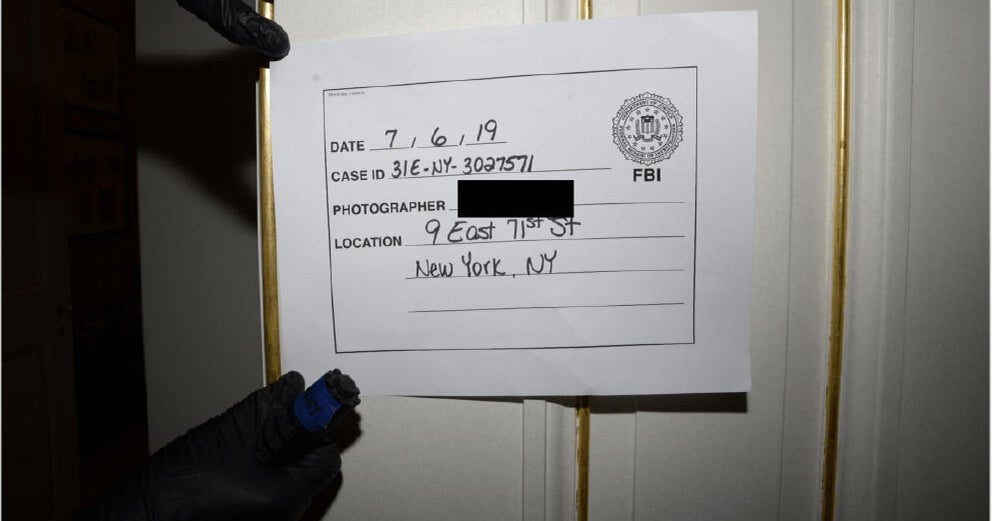
WASHINGTON — A CBS News investigation published Wednesday says documents in the Justice Department's own Epstein release contradict Attorney General Todd Blanche's statements that nothing was withheld on national-security grounds. An eight-page FBI timeline records 16 Epstein items delivered to the Office of the Deputy Attorney General on March 25, 2025. Two entries are described as classified material, including two CDs. A same-day FBI email says three documents remained classified. What they contained is unknown, and CBS could not confirm the email and the delivery list refer to the same material. CBS also compared page-numbering systems and found gaps. It reports 66 missing images among about 4,500 check images and about 1.2 million skipped numbers in one email series. Duplicate removal may explain part of this. A former U.S. attorney told CBS financial records were not a permissible category for removal. CBS said DOJ did not answer its questions. DOJ says it released over 3 million of 6 million pages collected.
Why it mattersIf confirmed, the records would undercut the Justice Department's claim that it fully complied with the Epstein Files Transparency Act and add evidence to pending court and congressional challenges.
Appeals court refuses to pause DOJ review of foreign-language Epstein files
D.C. Circuit panel says the government showed no irreparable harm from starting the review ordered in Phang v. Blanche
WASHINGTON — A three-judge panel of the U.S. Court of Appeals for the D.C. Circuit on Wednesday denied the Justice Department's request to pause a district court order. The order requires DOJ to begin reviewing foreign-language records under the Epstein Files Transparency Act. The unsigned order, from Chief Judge Srinivasan and Judges Pillard and Pan, said the government had not met the stringent stay standard. It said DOJ had not shown it would be irreparably harmed by merely starting review, and that production did not appear imminent. The panel sent DOJ's separate motion to dismiss to the merits panel hearing the consolidated appeals. The suit was brought by journalist-attorney Katie Phang before Judge Emmet Sullivan, who found DOJ in violation of the Act. DOJ argues Phang cannot sue under the Act and says thousands of documents are in foreign languages. Disputes over any withheld records would return to court.
Why it mattersThe ruling keeps alive the first court-enforced check on how the Justice Department applied the transparency law, while the core question of who may sue to enforce it awaits the merits panel.