Tuesday, October 27, 2026Memphis · 74°/52°, TennesseeEst. 2026
Markets · loading
Law & Courts
Law
SCOTUSblog
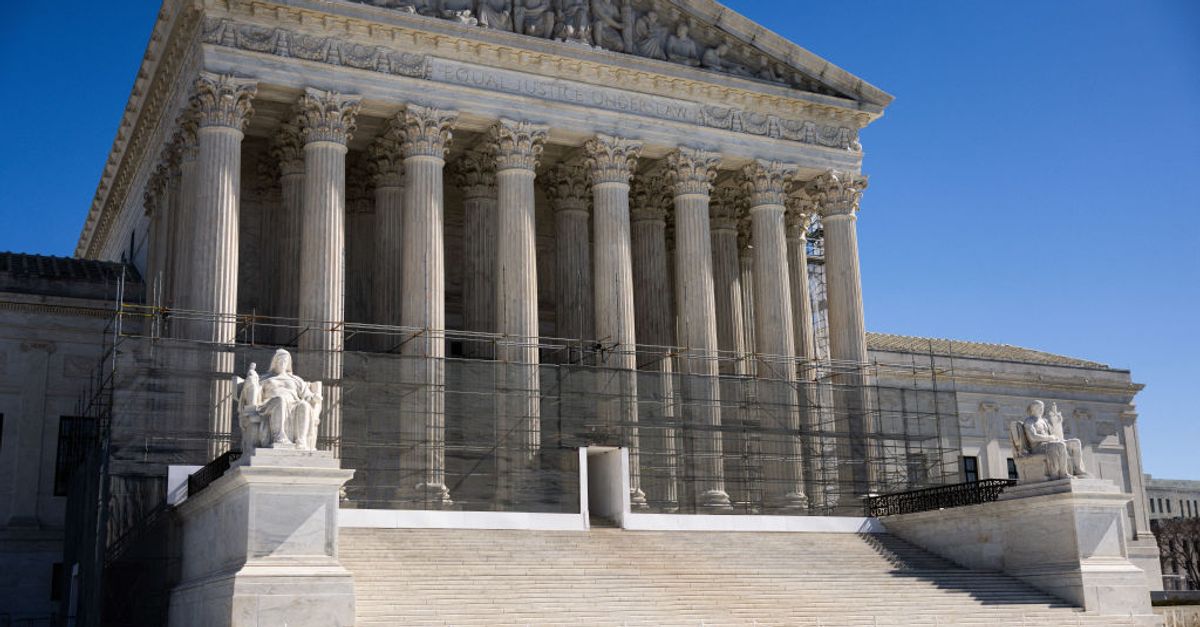
Supreme Court lets New Hampshire bar student IDs at the polls
Unsigned order in the Coalition for Open Democracy case invokes the Purcell principle; Justice Jackson dissents alone
WASHINGTON — The U.S. Supreme Court on Thursday, Oct. 22, paused a federal district judge's order that had softened New Hampshire's rules on student IDs. Judge Joseph Laplante had left in place HB 323, the April law that removed student IDs from the list of photo IDs that automatically qualify a voter for a ballot. He had blocked Secretary of State David Scanlan's broader directive, which barred officials from weighing a student ID as evidence under the law's safety-valve provision. The First Circuit refused to pause that ruling. The justices cited the Purcell principle against late changes to election rules, and Justice Ketanji Brown Jackson alone dissented. She said the order only corrected misleading guidance. The stay lasts while the state's appeal proceeds. The Nov. 3 midterms will run under the state's stricter reading, and the underlying constitutional challenge continues.
Why it mattersThe order shows how readily the Court applies Purcell to election-administration disputes in the final weeks before voting, even when a lower court only corrected official guidance.
Tennessee appeals court orders retrial in Memphis killing of Paris Lee
Criminal Appeals panel says jury should have heard the victim's sex assigned at birth in State v. Samuel Ward Jr.
MEMPHIS — The Tennessee Court of Criminal Appeals, in an Oct. 5 opinion by Judge Timothy Easter, reversed Samuel Ward Jr.'s May 2025 Shelby County voluntary manslaughter conviction for the 2022 shooting death of Paris Lee, a Black transgender woman. The unanimous three-judge panel held that the trial court wrongly kept out evidence of Lee's sex assigned at birth, including a photo and unredacted autopsy materials. In the panel's view, that left jurors without a significant fact known to Ward when he fired, and it undercut his self-defense claim. The case goes back for a new trial. The opinion says it is the first Tennessee ruling on whether such evidence is relevant to self-defense. The panel did not find the killing justified. Prosecutors had said the wound trajectories contradicted Ward's account. Memphis advocates warn that the ruling revives so-called trans panic reasoning, and Tennessee has not barred that defense, as roughly 20 states have.
Why it mattersThe ruling sets Tennessee appellate precedent on victim-identity evidence in self-defense cases, and the Shelby County retrial will test it.
Nashville federal judge orders ICE to free Egyptian asylum-seeker
Judge Aleta Trauger finds re-detention without terminating parole or a bond hearing was unlawful
NASHVILLE — U.S. District Judge Aleta Trauger of the Middle District of Tennessee ordered Immigration and Customs Enforcement to release an Egyptian Christian asylum-seeker. Court filings newly obtained by WKRN show ICE took him into custody Sept. 18, after he had lived in Nashville for about three years on parole. An asylum officer had found a reasonable possibility of religious persecution if he returned. Trauger ruled Oct. 5 that the government should have formally terminated his parole before re-detaining him and that it denied him a bond hearing. By the time she ruled, he had been moved to the Western District of Tennessee, bound for Louisiana in the Fifth Circuit. The filings allege the transfer was meant to head off release. ICE was told to free him by 1 p.m. Central the next day. The order also bars re-detaining or moving him out of state without an individualized bond hearing.
Why it mattersThe ruling is one of several in which federal judges are policing re-detention of paroled migrants and the use of transfers to pick a favorable circuit.
Pennsylvania federal court lets do-not-call suit proceed against telecom vendor
Marchetti v. 46 Labs shows courts split on how much a defendant must be tied to a calling campaign
PHILADELPHIA — In Marchetti v. 46 Labs, LLC, doing business as Hypercube Networks, No. 26-5805, the U.S. District Court for the Eastern District of Pennsylvania on Oct. 20 partly denied a motion to dismiss. The plaintiff says he got numerous unsolicited calls pitching consumer lending and related financial services despite being on the National and Pennsylvania do-not-call registries. The court accepted that a defendant with only a minor role in the chain of events does not "initiate" a call. It still held that his allegations linking Hypercube to the campaign were enough at the pleading stage, even without saying exactly what the company did. His Pennsylvania state-law claims were dismissed, but the federal TCPA claims go forward. The ruling runs against recent decisions trimming do-not-call suits, and it matters for lead sellers and telecom vendors that supply calling infrastructure.
Why it mattersThe ruling signals that vendors and lead-generation intermediaries can face discovery on thin allegations about their role in a calling campaign.