Memphis WeatherClear. High 69°, low 42°.
Chance of rain 0%.

Dalton Daily

Sourced widely. Told plainly.
Vol. I · No. 1Morning edition
daltondaily.com
Markets · loading

Ideas

Religion & Philosophy

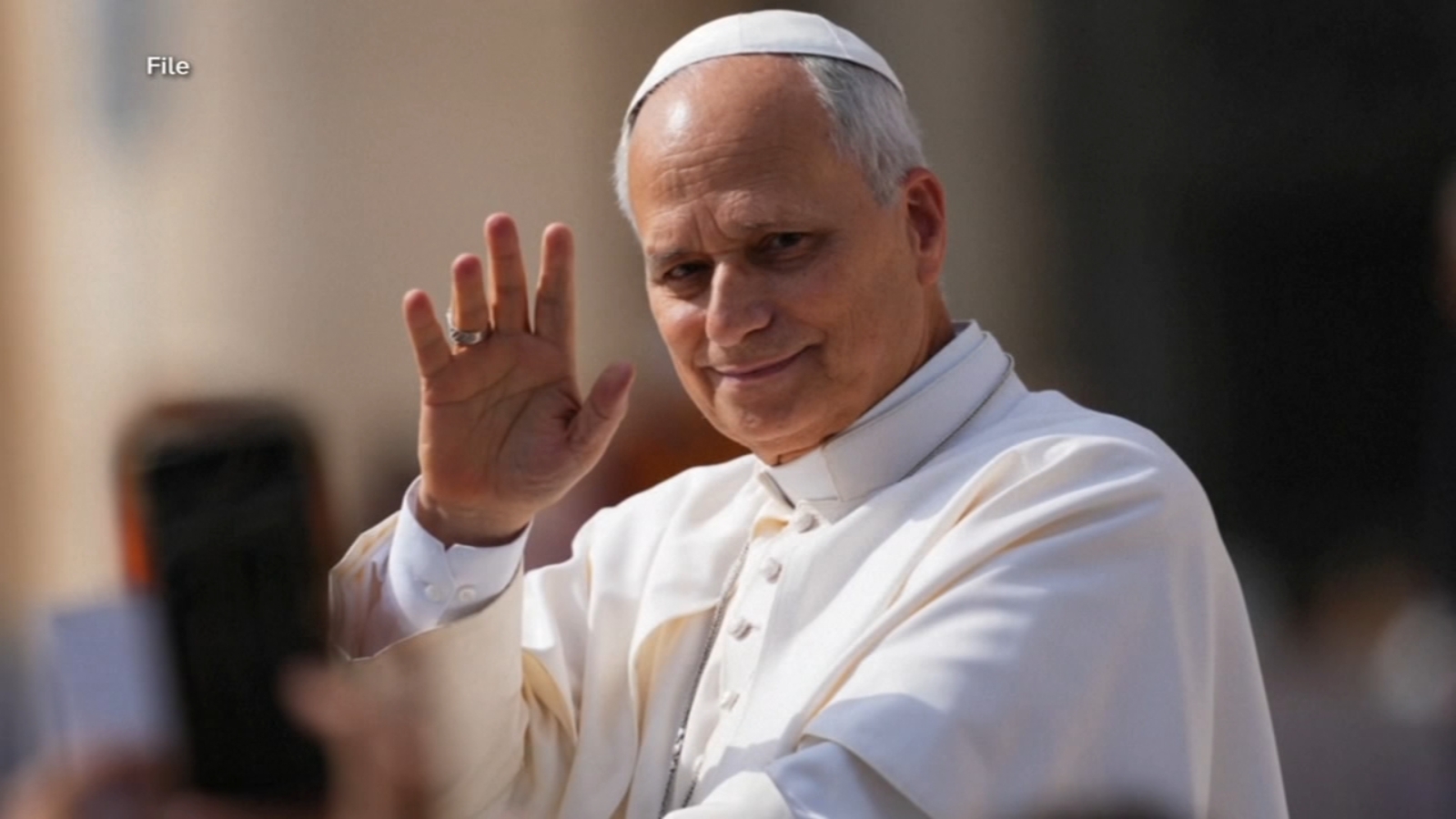
Pope Leo returns to the Angelus after lung cancer surgery
ABC7 (AP): Faithful welcome Pope Leo back for Sunday blessing

UPDATEPope Leo returns to the Angelus after lung cancer surgery

The pontiff says he will resume duties gradually. Further treatment depends on pathology results, and the Vatican is still weighing his November trip.

VATICAN CITY — Pope Leo XIV appeared at his window above St. Peter's Square on Sunday. He thanked the faithful for their prayers and said he would gradually resume his activities. His voice sounded strong four days after surgeons removed the lower lobe of his right lung. Doctors confirmed adenocarcinoma, the most common type of lung cancer. He left Rome's Gemelli hospital on Saturday. His surgeon said no clinical reasons stand in the way of a Nov. 6-17 trip to Uruguay, Argentina and Peru, and expects full recovery in about ten days. Testing of the tumor and lymph nodes is still underway. It will determine whether he needs chemotherapy, immunotherapy or targeted therapy. From hospital on Friday the pope also phoned Vladimir Putin. He asked for a local ceasefire in Oleshky, a Russian-held Kherson city where about 2,000 civilians are reportedly short of food. The Kremlin said the two agreed to cooperate on aid. Ukrainian officials say Russia has not yet confirmed an evacuation.

Why it mattersThe health of the leader of 1.4 billion Catholics, and his role as a channel to Moscow, bear on both church governance and the war in Ukraine.

Supreme Court's new term tests limits of religious exemptions
TNND: Supreme Court term brings cases on climate claims, gun rights, religious liberty

Supreme Court's new term tests limits of religious exemptions

Justices have taken a Kentucky shrine dispute and a Colorado preschool case. An Ohio home-worship case is also pending.

WASHINGTON — The Supreme Court has built a religion-heavy docket for its 2026-27 term. On Oct. 1 it agreed to hear Missionaries of St. John the Baptist v. Frederic. Catholic priests in Park Hills, Kentucky, want to build a grotto shrine to the Virgin Mary beside their church. Kentucky's Supreme Court held that the zoning ban did not violate the federal land-use law RLUIPA. It reasoned that a smaller shrine elsewhere would be allowed. The justices will decide whether a ban at the chosen site is a "substantial burden" on religious exercise. The court also has St. Mary Catholic Parish v. Roy. In it, Colorado says its nondiscrimination condition for universal pre-K funding is neutral. The parishes say it burdens their faith by requiring them to admit children of LGBTQ families. A third case, Grand v. City of University Heights, concerns threats over home worship in Ohio. Supporters call the trend a restoration of religious liberty. Critics say it erodes church-state separation. Rulings are expected by summer 2027.

Why it mattersThe rulings will decide how far houses of worship and religious schools must follow zoning and anti-discrimination rules.

Theos survey finds British 'Christian nationalism' is more cultural than devout
Humanists UK: We can't tackle Christian nationalism by pretending it isn't Christian

Theos survey finds British 'Christian nationalism' is more cultural than devout

A new UK study splits the public into five groups. Humanists UK disputes the report's reading of its own figures.

LONDON — The think tank Theos has published Beyond "Christian Nationalism", based on an April 2026 survey of 1,765 UK adults. It sorts respondents into five groups. Committed Separatists are 34 per cent and Cultural Separatists 16 per cent. Values Integrationists are 26 per cent, Belief Integrationists 13 per cent and Identity Integrationists 11 per cent. Theos treats the Identity group as the closest to Christian nationalism. Only 13 per cent of that group attend church weekly, against 11 per cent of the whole sample, and 82 per cent of it endorse the "Great Replacement" conspiracy theory. Belief Integrationists, the most devout group at 31 per cent weekly attendance, are the most likely to want faith promoted in public life. Two-thirds of them also accept that theory. Humanists UK argues that about half of weekly churchgoers sit in the two groups most sympathetic to the idea, so it cannot be separated from Christianity. Academic John Heathershaw calls the methodology rigorous.

Why it mattersThe study gives empirical data to a heated debate over religion, identity and the far right in Britain, and bears on similar arguments in America.