Sunday, October 18, 2026Memphis · 69°/42°, TennesseeEst. 2026
Markets · loading
Business & Markets
Business
Wikipedia
AI sell-off drags Nasdaq to worst week since June as oil tops $100
Chip and AI-infrastructure shares lead losses as hot inflation data and Middle East tensions raise borrowing-cost fears
NEW YORK — Wall Street ended Friday lower as investors dumped artificial-intelligence and chip stocks. The Nasdaq Composite fell 2.14% to 26,140.03 and the S&P 500 lost 1.09% to 7,659.44. The Dow slipped 0.34% to 52,002.41. For the week the Nasdaq dropped more than 4%, its worst since June, while the S&P 500 fell about 2%. The Cboe Volatility Index climbed above 22 for the first time in four months. Two things drove the selling: September consumer prices rose 3.7% from a year earlier, above forecasts, and producer prices jumped 6.3%. U.S. crude rose above $100 as Iran stepped up attacks in the Strait of Hormuz. Concerns about financing for the AI buildout and Chinese memory-chip competition also weighed on tech. South Korea's Kospi fell more than 14% on the week and triggered a circuit breaker Thursday. Bank of America flagged a possible Fed rate hike on Oct. 28 among its risks.
Why it mattersThe sell-off tests whether debt-funded AI spending can continue as rates, oil and inflation all rise at once.
Netflix cuts about 1,000 jobs and replaces its top content executive
Largest layoff in the streamer's history comes as co-CEOs say the business remains healthy
LOS GANGOS, CALIF. — Netflix said this week it will lay off about 6% of its workforce, close to 1,000 positions. It is the company's biggest round of cuts in years. Co-CEOs Ted Sarandos and Greg Peters announced the move in a Wednesday memo. They said product, technology, legal and human resources teams would be hit hardest, and that the business is strong but needs discipline about where it puts people and money. Netflix had about 16,000 full-time employees at the end of 2025. Variety reports that the company also removed chief content officer Bela Bajaria and named industry veteran Peter Rice, formerly of Disney and 21st Century Fox, to replace her. The Wall Street Journal first reported the layoffs. Netflix has declined to comment beyond the memo.
Why it mattersA profitable market leader is shrinking its staff and reshuffling content leadership, which signals how hard streaming rivals are pressing on growth and costs.
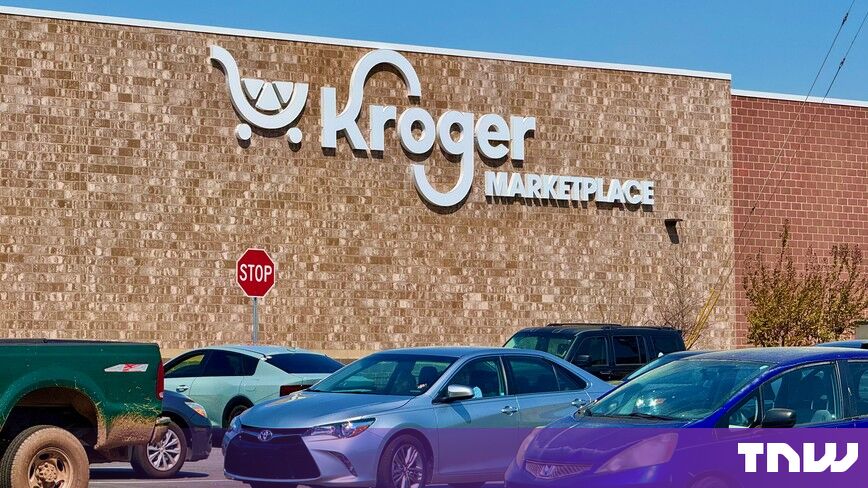
Kroger to cut 3,000 corporate jobs as Albertsons merger trial opens Monday
Grocer trims office ranks by about 37% while facing a claim of more than $8 billion in Delaware
CINCINNATI — Kroger told staff on Oct. 12 that it will eliminate about 3,000 corporate jobs over three years. That is roughly 37% of its 8,200 office employees, according to figures the company gave Business Insider. CEO Greg Foran wrote that the company has too many layers, handoffs and overhead, and said technology would help reduce duplicated work. No departments have been named. Notices are due in the coming months. Store, plant and warehouse workers are not covered. The cuts arrive as Kroger heads to a bench trial in Delaware Chancery Court on Oct. 19, expected to last about two weeks. Albertsons is seeking more than $8 billion, including lost shareholder premium and a $600 million break fee, over their $24.6 billion merger. Federal and Washington state courts blocked that deal in late 2024. Kroger denies liability and says it spent more than $1 billion pursuing approval.
Why it mattersThe case will decide who bears the cost of the failed antitrust-blocked grocery merger, and the layoffs show a large retailer restructuring under price pressure from Walmart, Costco and Aldi.
FTC asks appeals court to revive its monopoly case against Meta
Agency calls the trial judge's market analysis flawed; Meta defends the dismissal
WASHINGTON — The Federal Trade Commission has urged the U.S. Court of Appeals for the D.C. Circuit to reinstate its monopolization suit against Meta Platforms. District Judge James Boasberg dismissed the case after trial in November 2025, finding that Meta now competes with TikTok and YouTube and so lacks monopoly power. In its brief, the FTC argues that Meta operates in two markets: personal social networking, where it says Meta holds monopoly power, and a separate market for unconnected content such as short video. It also argues the question is whether Meta held a monopoly when the case was filed, not when it was decided. Meta told the court in an August filing that users treat TikTok and YouTube as substitutes for Facebook and Instagram. Elsewhere, the FTC settled with Corteva in a pesticide-loyalty case, and its litigation against Syngenta continues.
Why it mattersThe appeal will help decide how far U.S. antitrust law can reach into fast-changing digital markets, including the agency's challenge to Instagram and WhatsApp.
Search Engine Roundtable: Google Business Profiles Gives You Four Days To Reject User Suggested Edits
Google gives Business Profile owners four days to reject edits
Suggested changes may go live unanswered, as Maps limits reviews for signed-out users and Google adds spam-review alerts
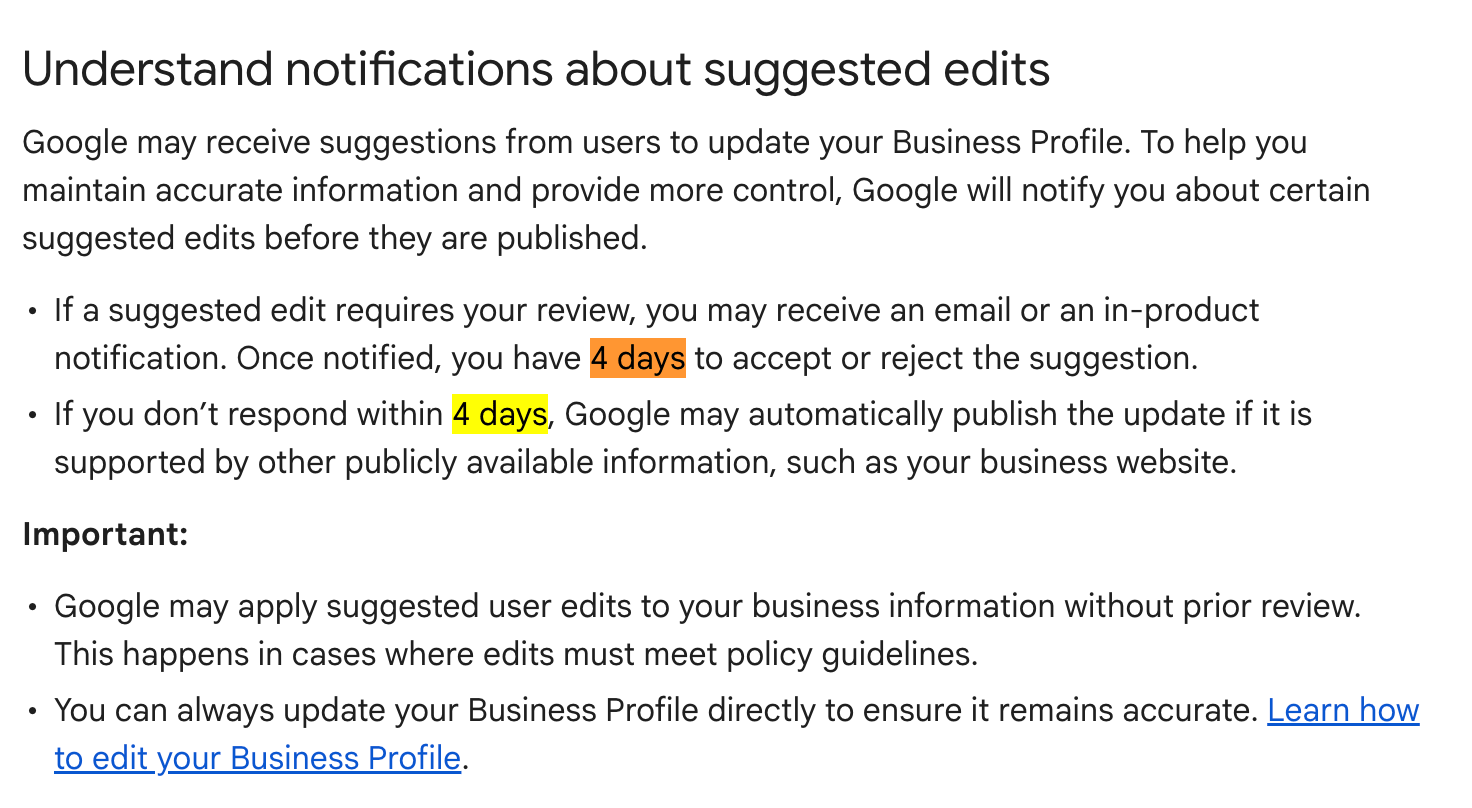
Google has added a section to its Business Profile help page on suggested edits. When a user suggests a change that Google decides needs the owner's review, the owner gets an email or in-product notice and has four days to accept or reject it. If the owner does nothing, Google may publish the change when other public information, such as the business website, supports it. Google also says some user edits may be applied with no prior review where policy requires. Search Engine Roundtable flagged the wording on September 23. Around the same time, per one practitioner's account, Google began emailing owners about spikes in spam reviews, removing them and pausing new reviews for a few days. Google Maps now asks signed-out visitors to sign in to read all reviews. Google has not said why. The help page does not say whether the four-day window is new or newly documented.
Why it mattersAgencies managing many client listings now need someone watching notices at least twice a week, and a website that matches the profile.
Search Engine Roundtable: Google Local Services Ads Transitioning To Google Ads Platform
Google moves Local Services Ads into Google Ads, with bidding changes
Migration began in August; service-area businesses and custom setups are due late 2026
Google is folding its Local Services Ads platform into the main Google Ads interface through 2027. Per Google's announcement, as reported by Search Engine Roundtable, the first phase began in August for select U.S. home and storefront advertisers, including plumbing, HVAC, electrical, roofing and pest control. Late 2026 is meant to bring in service-area businesses without storefronts and accounts with custom bidding or booking setups. Non-U.S. accounts and remaining categories follow in 2027. Advertisers will still pay per valid lead, with ads limited to Search and Maps. Manual bidding and industry-level target CPA are being retired. Weekly budgets convert to daily budgets, and past performance reports do not carry over. Google says it will email 14 days before each move. Google also told Search Engine Roundtable it is still adding LSA verticals and 'pre-badge' ads.
Why it mattersLead-generation operators who rent or resell LSA leads face new bidding controls, budget mechanics and reporting gaps as accounts migrate.
Search Engine Roundtable: Google Testing AI Mode Left Sidebar On Main Results Page
Google tests AI Mode sidebar on main results page
New field research ties AI Overviews to fewer clicks and more zero-click searches
Google appears to be testing the AI Mode left sidebar on its standard results page. It carries chat history, a button to start an AI Mode chat and settings. Search Engine Roundtable's Barry Schwartz reported the test after a user posted a screenshot. Schwartz could not reproduce it himself and judged it a test. He wrote that it moves AI Mode closer to being Google Search's default. The click effect of AI features is under scrutiny. A randomized field experiment by Saharsh Agarwal of the Indian School of Business and Ananya Sen of Carnegie Mellon, run in January and February 2026, found AI Overviews cut organic clicks by 38% on queries where they appeared. Zero-click searches rose from 54% to 72%, and removing the summaries did not change reported satisfaction. Google has argued that the clicks that remain are higher quality.
Why it mattersLocal lead-generation traffic that depends on informational queries faces further erosion if AI Mode becomes the default entry point.
Nasdaq suffers worst week since June as AI debt fears spread
CoreWeave's distressed bonds and a chip rout drag tech lower, while the Dow edges up on the week
NEW YORK — U.S. stocks fell Friday and the Nasdaq Composite had its worst week since June. The Nasdaq lost 2.14% on the day to 26,140.03. The S&P 500 fell 1.09% to 7,659.44, and the Dow Jones Industrial Average slid 175.28 points to 52,002.41. For the week the Nasdaq dropped about 4.5% and the S&P 500 about 1.9%, while the Dow gained 0.7%. A key chip index fell 11.4% on the week, its worst since April 2025. The anxiety centers on CoreWeave, an Nvidia-backed AI computing rental firm with heavy debt. Its shares lost about a quarter of their value this week, and its bond yields rose to roughly 15%, a level that signals distress. Nvidia chief Jensen Huang's public vote of confidence on Thursday gave only a brief lift. Investors will watch whether higher borrowing costs keep pressuring debt-funded AI projects.
Why it mattersThe selloff shows that financing costs, and not just demand, are now testing the AI trade that has driven much of this year's market gains.
U.S. Bureau of Labor Statistics: CPI, September 2026
Fed seen holding rates Oct. 28 after hot inflation report
Warsh gives no signal; markets still expect another hike by year-end
WASHINGTON — Fed Chair Kevin Warsh told an IMF audience in Bangkok on Friday that he does not prejudge meetings, and he gave no hint on the Oct. 27-28 decision. Futures put the chance of an October hike at about 15%, after it briefly hit 50% following Wednesday's inflation data. The Labor Department reported September consumer prices up 0.6% on the month and 3.7% over the year, up from 3.4% in August. Gasoline rose 9.1% in the month. Core prices, which exclude food and energy, rose 0.3% on the month and 2.6% on the year. The Fed raised rates a quarter point in September, to 3.75%-4.00%, its first increase in more than three years. Vice Chair Philip Jefferson, New York Fed President John Williams and Governor Christopher Waller have signaled patience. One CNBC analysis cautions that Warsh's refusal to give guidance leaves room for a surprise. A Chase wealth-management outlook puts September payrolls at 29,000 and unemployment at 4.2%.
Why it mattersA Fed that is raising rates into a slowing job market, with oil-driven inflation rising, shapes borrowing costs and asset prices for the rest of the year.
CNBC: U.S. Treasury yields waver as traders wrap up volatile week
Treasury yields ease from 24-year highs but 10-year holds near 5%
Producer prices jump 6.3% as bond traders weigh hot data against a flight to safety
NEW YORK — Treasury yields were little changed Friday after a volatile week. The 10-year note yielded about 5.085%, the 30-year bond about 5.434% and the 2-year note about 4.715%. Thursday's producer price index showed wholesale prices up 6.3% from a year earlier in September, the largest gain since 2022 and above the 5.5% economists expected. That followed Wednesday's consumer price report. Market commentator Wolf Richter notes that the 10-year yield jumped to 5.33% briefly after the CPI release. It then fell to a low of 5.04% Thursday as investors fled AI-linked stocks and bonds for safety. He calls it the biggest weekly bond rally since mid-February and says the 5% level now looks like a floor, though that is his reading of the market. Short-term yields moved little and still price in at least one more Fed hike.
Why it mattersLong-term borrowing costs near 5% feed through to mortgages, corporate debt and the government's interest bill.
Brent crude touches $110 as Hormuz shipping attacks intensify
Oil's weekly rise adds to inflation pressure facing the Fed
LONDON — Brent crude futures touched $110 a barrel on Friday for the first time since May and settled at $109.86, up 3.7%. U.S. West Texas Intermediate settled at $101.41 and rose more than 10% on the week. At least nine commercial ships have been attacked near the Strait of Hormuz since Sunday, according to CNBC, with three seafarers injured and two missing. Kpler data show crude shipments through the strait at about 9.4 million barrels a day, roughly 70% of prewar levels. Houthi missile fire at Saudi Arabia and Ukrainian strikes on Russian refineries added to supply worries. U.S. diesel averaged $6.33 a gallon, according to AAA data cited by CNBC. The Bureau of Labor Statistics reports that energy prices were up 20.4% from a year earlier in September's CPI. Iran says it is escalating in response to a U.S. port blockade and new sanctions.
Why it mattersEnergy is the main driver of the inflation reading that is keeping the Fed from easing.
IEA speeds release of 100 million barrels as diesel shortage seen lasting into 2027
Agency's October report calls Hormuz disruption the most severe in oil-market history; crude back above $100
PARIS — The International Energy Agency's governing board agreed Thursday to speed up the release of about 100 million barrels of emergency stocks, including more than 20 million barrels of diesel. Members have already released about 330 million barrels under the March plan adopted after the Iran war began. The agency's October report, published Wednesday, says diesel supply will fall short of demand in the fourth quarter and that inventories are unlikely to be rebuilt before the second half of 2027. Wholesale diesel reached records near $220 a barrel in September. US pump diesel topped $6 a gallon for the first time. The IEA forecasts 2026 oil demand will fall 2.6 million barrels a day. It calls the Gulf recovery fragile after renewed attacks on Saudi and shipping targets. WTI settled Friday near $101 and Brent traded around $108 to $110.
Why it mattersRecord diesel costs feed directly into freight, food and heating bills, and the agency says relief is not due before late 2027.
Pennsylvania Capital-Star: PJM issues alerts warning of tight supplies
PJM grid strains under emergency alerts days after FERC rejects data-center curtailment plan
Regulators sided with states on who gets cut first; an unseasonably warm week then pushed the grid near its reserve limit
WASHINGTON — On Oct. 9 the Federal Energy Regulatory Commission rejected the core of PJM Interconnection's plan for new data centers. The plan would have let large loads connect without matching new generation, in exchange for being curtailed first in emergencies. FERC said parts of it intruded on state authority over retail customers. It approved a 50-megawatt large-load definition and a registry of big users, effective Oct. 12. Days later, warm weather and about 62,000 MW of plants offline for maintenance led PJM to issue a Maximum Generation Alert on Oct. 13 and call on demand response. The Energy Department issued an emergency order through Oct. 16. It let PJM exceed some environmental permit limits and, as a last resort, direct large users onto backup generators. Spot power at the Western hub reached $1,021 per megawatt-hour Tuesday. PJM says it is reviewing whether to refile.
Why it mattersWith the federal path closed, states now decide how data-center demand is priced and curtailed on a grid serving 67 million people.
WASHINGTON — The Nuclear Regulatory Commission renewed and updated Westinghouse's AP1000 design certification on Wednesday. The update folds in lessons from building Vogtle units 3 and 4 in Georgia. On Oct. 5 the Energy Department announced a loan of about $4.2 billion to Vistra for upgrades at plants in Pennsylvania and Ohio. Those upgrades add 433 megawatts, and Meta has signed a long-term power purchase deal. Constellation this week disclosed plans to spend more than $4.3 billion on uprates at 11 reactors, enough for roughly 700,000 homes. The NRC already expects applications for about 2.4 gigawatts of uprates through 2032. At Michigan's Palisades plant, the first US reactor attempting to restart after shutdown, the NRC approved an alternate method for removing a tilted fuel assembly. Separately, an NRC inspection report found possible fear of retaliation among some staff for raising safety concerns.
Why it mattersUtilities and the administration are leaning on existing and restarted reactors to meet data-center demand, and the Palisades findings test how fast that can safely happen.