Memphis WeatherFog. High 67°, low 51°.
Chance of rain 1%.

Dalton Daily

Sourced widely. Told plainly.
Vol. I · No. 19Morning edition
daltondaily.com
Markets · loading

Technology & Science

Technology

Amadeus breach exposes booking data at a growing list of Asian airlines
The Record (Recorded Future News)

Amadeus breach exposes booking data at a growing list of Asian airlines

Singapore Airlines, Japan Airlines and Cathay Pacific have each reported exposed records after a stolen system-account login at the reservations provider

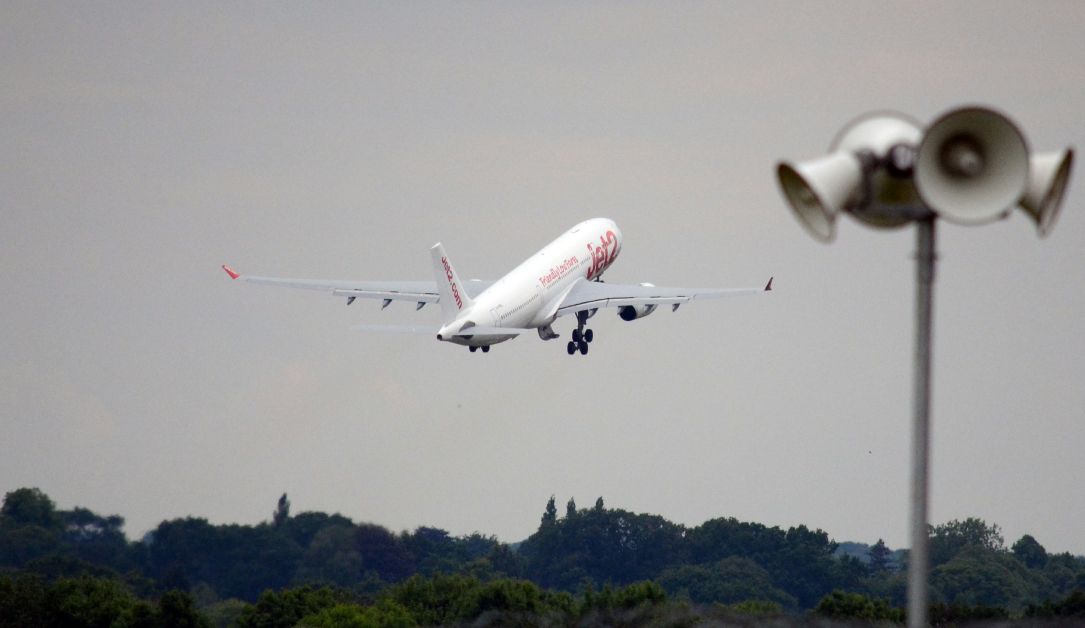
MADRID — A breach at Spanish travel-technology provider Amadeus has exposed passenger booking records at a growing number of airlines. Singapore Airlines said about 46,000 records were accessed. Japan Airlines reported roughly 92,000 customers affected and Cathay Pacific about 53,000 bookings. ANA has said about 37,800 customers were affected. Korean Air, Asiana and Malaysia Airlines have confirmed exposure without giving counts, and Qantas is checking its own bookings. Most records hold names, booking references and flight details. A smaller group also include passport numbers, phone numbers or frequent-flyer details. Cathay says the intruder used login credentials assigned to an Amadeus system account. Airlines put the access window at August 2023 to September 2026. Amadeus says it found no evidence that payment data was reached or that the flaw was used for ransomware. It has reset passwords and added monitoring. It has not said how many airlines are affected. Regulators in Hong Kong and South Korea are among those being notified.

Why it mattersOne compromised vendor account reached customer data across several carriers, which shows how concentrated third-party risk is in travel technology.


Japan's data-leak wave widens: Muji, Bic Camera, Nomura unit disclose breaches
Bangkok Post

Japan's data-leak wave widens: Muji, Bic Camera, Nomura unit disclose breaches

A hacked email-distribution contractor and separate intrusions have exposed millions of customer records

TOKYO — Japanese companies disclosed a new batch of data leaks on Wednesday. Muji operator Ryohin Keikaku said about 1.09 million customer records may have leaked, including credit card numbers. About 345,000 of the Muji Card records hold full numbers of currently valid cards plus birth dates. Late last month the company also reported that up to 27.26 million records may have leaked through its Muji app. Bic Camera said up to 14.9 million customer records, including email addresses, may have been exposed through a contractor that handles its newsletters, Arara Inc. Airdo (673,920 records), Solaseed Air (up to 490,000 addresses) and workwear maker Workman (up to 1.45 million) also reported exposure through the same email service. Nomura Investor Relations suspended its Institutional Navi service after unauthorised access was detected on Monday. It has not given a record count. Investigations are continuing.

Why it mattersThe incidents show how one compromised marketing or messaging vendor can expose the customer lists of many large brands at once.

Bangkok Post foreign
Google dismantles 1.3-million-device TV-box botnet, bans Chinese maker Videostrong
SecurityWeek

Google dismantles 1.3-million-device TV-box botnet, bans Chinese maker Videostrong

The company says the manufacturer built the backdoor into firmware and sold access to criminals

MOUNTAIN VIEW, Calif. — Google announced Monday that it had disrupted XCPE, a botnet of more than 1.3 million Android TV set-top boxes. Its Threat Intelligence Group says with high confidence that Shenzhen-based manufacturer Videostrong Technology built the backdoor into its firmware on purpose. Affiliates allegedly used infected boxes for ad fraud, residential proxy services and loading further malware. Google took legal action against the botnet's domains and servers and against command servers for more than a dozen related malware families. It estimates this cut off access to at least 10 million more compromised devices. It also banned Videostrong and any future affiliates from making certified Android devices. The company says Videostrong evaded its certification tests by loading malicious code after first boot, and it has changed its review process. The takedown does not clean devices already sold. The backdoor reinstalls itself, so owners need clean firmware or should disconnect the boxes. Japan's National Police Agency and several security firms assisted.

Why it mattersA certified manufacturer shipping pre-infected hardware undercuts the assumption that certification protects buyers, including businesses that deploy such devices.

BleepingComputer trade · SecurityWeek trade · Help Net Security trade
Zyxel patches switch zero-day used to hack nearly 1,000 devices
Wikipedia

Zyxel patches switch zero-day used to hack nearly 1,000 devices

Firmware researchers found the exploit targeted a new flaw, not the bug Zyxel fixed in June

Zyxel has patched a zero-day in its GS1900 series network switches, tracked as CVE-2026-107441. The flaw lets an unauthenticated attacker with network access run operating-system commands through the web management interface. It affects ten switch models. Zyxel released firmware fixes on October 22 and published its advisory on November 3. GreyNoise reported that a suspected Chinese-speaking actor it calls Kapibala compromised 996 switches in 48 countries from about August 17. The attackers copied device configurations and hashed root credentials. GreyNoise first blamed an older flaw, CVE-2026-7273, which Zyxel had patched in June, and CISA added that flaw to its Known Exploited Vulnerabilities catalog. Firmware-security firm Binarly later found the exploit still worked on fully patched switches. It reported the new bug to Zyxel on September 29. Administrators should install the latest firmware.

Why it mattersA mislabelled flaw left patched-looking switches exposed for weeks, a reminder to verify that a patch actually stops the exploit being used.

BleepingComputer trade

Artificial Intelligence

OpenAI says agent pipeline produced 948 Linux root exploits in one run
The Hacker News

OpenAI says agent pipeline produced 948 Linux root exploits in one run

The $1.2 million research run used an unreleased cyber model. Patches are only partly shipped.

SAN FRANCISCO — OpenAI published a report on November 4 describing an automated pipeline that audited the Linux kernel. Agents analyzed 2,308 candidate findings, reproduced 1,724 as real vulnerabilities and produced 948 working local privilege-escalation exploits. Each exploit would let an unprivileged local user gain root access. The mid-October run used what OpenAI calls an upcoming cyber model. It cost $1,213,430 in API credits, about $1,279 per exploit. OpenAI says the agents used at least ten exploitation techniques that outside kernel experts considered new, but it has withheld the details. Humans reviewed the output before it was reported to maintainers. At the end of the roughly ten-day scan, 61 of the bugs were patched upstream, 43 had patches in staging, and 299 were being publicly reported or discussed. The results are company-run and have not been independently reproduced. The figure is exploits with candidate patches, not 948 fixes already shipped.

Why it mattersThe report puts a price on large-scale automated exploit development, and the same capability helps defenders and attackers.

Voters rebuff data centers in nearly every ballot measure, dimming AI buildout
CNBC

Voters rebuff data centers in nearly every ballot measure, dimming AI buildout

Forty-one local measures in ten states, with Ohio alone accounting for 21 of them, went largely against the industry.

WASHINGTON — Voters on Tuesday backed restrictions on data centers, or rejected pro-development measures, in almost every local contest. CNBC, citing Ballotpedia, counted 41 data-center ballot measures in ten states. The one exception was Harwood, North Dakota, where voters rejected extra review of industrial projects, including data centers. Ohio held 21 of the measures. Democrats who campaigned on pausing or regulating projects won races in Ohio, Wisconsin, Georgia and Texas. In Texas, Gina Hinojosa unseated Gov. Greg Abbott. A CNBC voter poll found 56% of voters called data centers a crucial or major factor in their choice. The Washington Post counted at least 38 jurisdictions that passed bans or restrictions. Semafor reported that lenders have begun treating local opposition as a credit risk, and that hyperscalers are hiring community liaisons. The measures differ widely, from outright bans to temporary pauses and energy-use caps.

Why it mattersLocal permitting and state politics now threaten the physical buildout that underpins AI spending plans and lender confidence.

CNBC · The Washington Post · Semafor independent
Moonshot opens Kimi K3.1 Pro weights as a U.S. lab posts a rival coding model
Hugging Face: Kimi-K3.1-Pro model page

Moonshot opens Kimi K3.1 Pro weights as a U.S. lab posts a rival coding model

Both releases come with benchmark claims that the labs themselves report and outsiders have not verified.

BEIJING — Moonshot AI put the weights for Kimi K3.1 Pro on Hugging Face on Thursday. Listings describe a roughly 2.8-trillion-parameter mixture-of-experts model with about 104 billion active parameters and a 1-million-token context window. The company reports scores of 65.7 on Terminal-Bench 4.0 and 94.2 on GPQA-Diamond. Separately, U.S. startup Ricursive Intelligence released Ripple-65B Preview, a 65-billion-parameter dense model that it says leads U.S. open-weight models on agentic-coding benchmarks with a TerminalBench 2.1 score of 80.52. It puts training cost at about $32 million. These are developer-reported results. Independent evaluations have not yet appeared, and license terms and real-world agent performance still need checking by outside testers.

Why it mattersOpen-weight models keep closing on closed coding systems, which pressures the pricing and access limits that frontier labs depend on.

Mid-November court and policy dates set the next test for state AI rules
Astraea Law: AI Regulation Tracker 2026

Mid-November court and policy dates set the next test for state AI rules

A frontier-model 'kill switch' report is due Nov. 16, and the Ninth Circuit hears xAI v. Bonta on Nov. 18.

SAN FRANCISCO — A compliance calendar from the law firm Astraea lists two near-term events for developers. Recommendations are due November 16 under a September 18 executive order, including one on requiring a 'kill switch' for frontier models. On November 18 the Ninth Circuit hears argument in xAI v. Bonta, a challenge to California's AB 2013, which reaches generative-AI developers with California users. The lower court found that xAI had shown a 'distinct possibility' of success but not a likelihood. The tracker also notes about November 28 as the deadline for a federal proposal defining 'Super Intelligence.' Many state laws take effect January 1, 2027, including New York's RAISE Act. Colorado's enforcement is paused under a stipulation in the xAI litigation. The dates come from a law-firm tracker and should be checked against the underlying orders and dockets.

Why it mattersThese dates will show whether state frontier-AI rules survive court challenge and federal pressure before they take effect in January.

Anthropic lets companies watch what Claude Cowork runs inside its sandbox
Wikipedia

Anthropic lets companies watch what Claude Cowork runs inside its sandbox

A beta integration sends the agent's hidden shell activity to existing endpoint-security consoles.

SAN FRANCISCO — Anthropic has released a beta integration that lets businesses run endpoint detection and response sensors inside the local virtual machine used by Claude Cowork, its desktop agent product. Security software on the host cannot normally see the shell commands and code that Cowork executes within that isolated environment. Under the new setup, that activity can flow to the company's existing security console. The change addresses a visibility gap that security teams have raised about autonomous agents. Anthropic has not published adoption figures. Separately, a new Anthropic usage policy is reported to take effect November 12, banning unauthorized distillation of Claude outputs and use of the models for malware or fraud. That policy report comes from a news digest and has not been checked against Anthropic's own page.

Why it mattersEnterprise adoption of desktop agents depends on whether security teams can audit what the agents actually do.

Science

Ancient DNA links 5th-century German boat burial to Danube and rare leprosy strain
Archaeology Magazine: Rare Strain of Leprosy Identified in Boat Burial

Ancient DNA links 5th-century German boat burial to Danube and rare leprosy strain

A man buried with a Roman military belt carried a leprosy lineage not previously found in northern Europe, a Kiel-led team reports in iScience.

KIEL, Germany — Researchers at Kiel University's Institute of Clinical Molecular Biology have sequenced DNA from skeletons at Fallward, a settlement near the North Sea coast between the Weser and Elbe rivers. The paper appears in the peer-reviewed journal iScience. The team sampled 11 individuals. One man, about 50, died in the second quarter of the fifth century and was buried in a boat with a carved alder chair, a game table and a late Roman military belt. His genome sits closest to Roman-era populations of the Danube frontier, in what is now Croatia, Slovenia, Hungary and Serbia. He also carried Mycobacterium leprae from branch 4 of the leprosy family tree. That form had been documented in Egypt but not in central or northern Europe. His skeleton showed no leprosy damage. The researchers suggest he may have been a Roman army mercenary or a long-distance trader. Only three of the 11 individuals yielded enough DNA for ancestry analysis, so the origin finding rests on a very small sample.

Why it mattersThe genome offers rare molecular evidence of long-distance movement, and of an ancient leprosy lineage, at the edge of the collapsing Roman world.

Inca child sacrifices were given cocaine, alcohol and an ayahuasca-linked compound
Scientific American: Inca children were given hallucinogens before they were sacrificed

Inca child sacrifices were given cocaine, alcohol and an ayahuasca-linked compound

Hair and nail tests on eight frozen mummies, published in Antiquity, suggest the capacocha ritual varied across the empire.

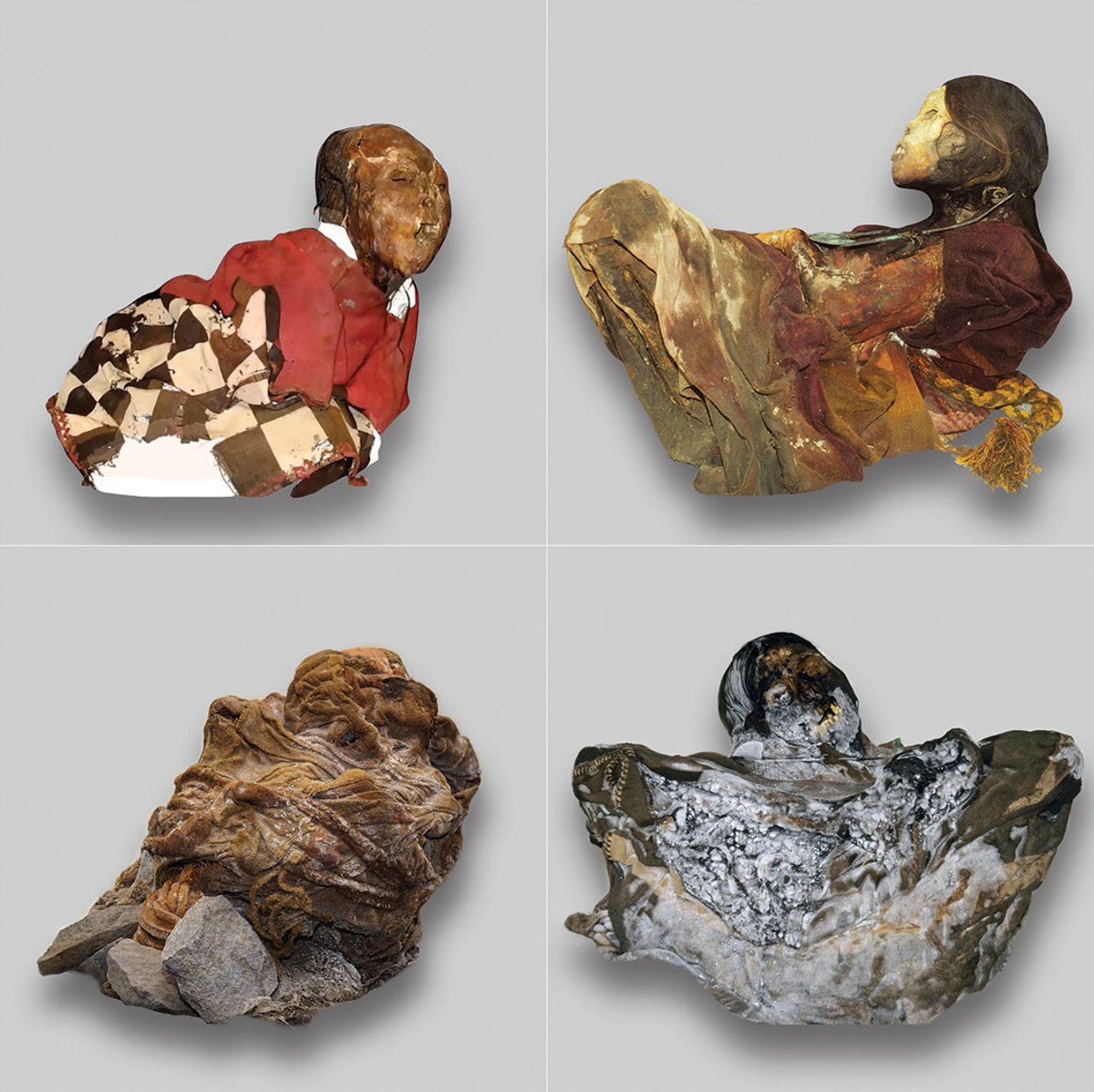
WARSAW — A University of Warsaw team led by archaeologist Dagmara Socha tested hair and nail samples from eight frozen Inca mummies recovered from mountain shrines in Peru and Argentina. The peer-reviewed results appear in the journal Antiquity. Every individual had taken at least one intoxicant. Cocaine, from coca leaves, was found in all eight. Four showed evidence of alcohol, probably from maize beer. Harmine, an alkaloid associated with plants used in ayahuasca, was found in the mummy known as the Lady of Ampato. The mummies were victims of capacocha, a major state ritual in which children and young women were sacrificed. Earlier studies had mostly found coca, or had inconclusive or negative results for other substances. The authors say newer toxicology methods can detect trace amounts. The differences among the mummies suggest the ritual was not carried out identically across the empire. The sample is small, at eight individuals.

Why it mattersThe study uses chemistry to test written accounts of Inca ritual and shows practice differed from one shrine to another.

Mouse study ties protein ANO6 to pancreatic tumour cholesterol supply
Northeast Times: Fox Chase researchers find protein that helps pancreatic tumors grow

Mouse study ties protein ANO6 to pancreatic tumour cholesterol supply

Fox Chase researchers report in Nature Cancer that blocking it slowed tumour growth in mice; no patients have been treated.

PHILADELPHIA — Researchers at Fox Chase Cancer Center have identified a protein, ANO6, that helps pancreatic tumours draw on cholesterol. The work was published Oct. 30 in the peer-reviewed journal Nature Cancer. According to the paper and the centre's statement, ANO6 lets cancer-associated fibroblasts, the support cells in a tumour, pass cholesterol and other fats to pancreatic cancer cells. The transfer also dampens the immune cells sent to attack the tumour. Drugs that blocked the protein reduced tumour weight in mice. The researchers note the exchange is only one of several ways pancreatic cancer cells obtain fats, so blocking it alone may not be enough. The work is early-stage laboratory research. No patients have been treated, and it is not known whether the effect would carry over to people. Pancreatic cancer is among the hardest cancers to treat, and the finding identifies a possible new drug target.

Why it mattersPancreatic cancer has few effective treatments, so any newly identified vulnerability is worth testing, though this one is a long way from the clinic.

Space Exploration

NASA's Swift observatory falls to Earth; agency eyes Hubble rescue
Associated Press via ABC News

UPDATENASA's Swift observatory falls to Earth; agency eyes Hubble rescue

The 22-year gamma-ray burst telescope reentered over Sumatra after a failed private reboost attempt

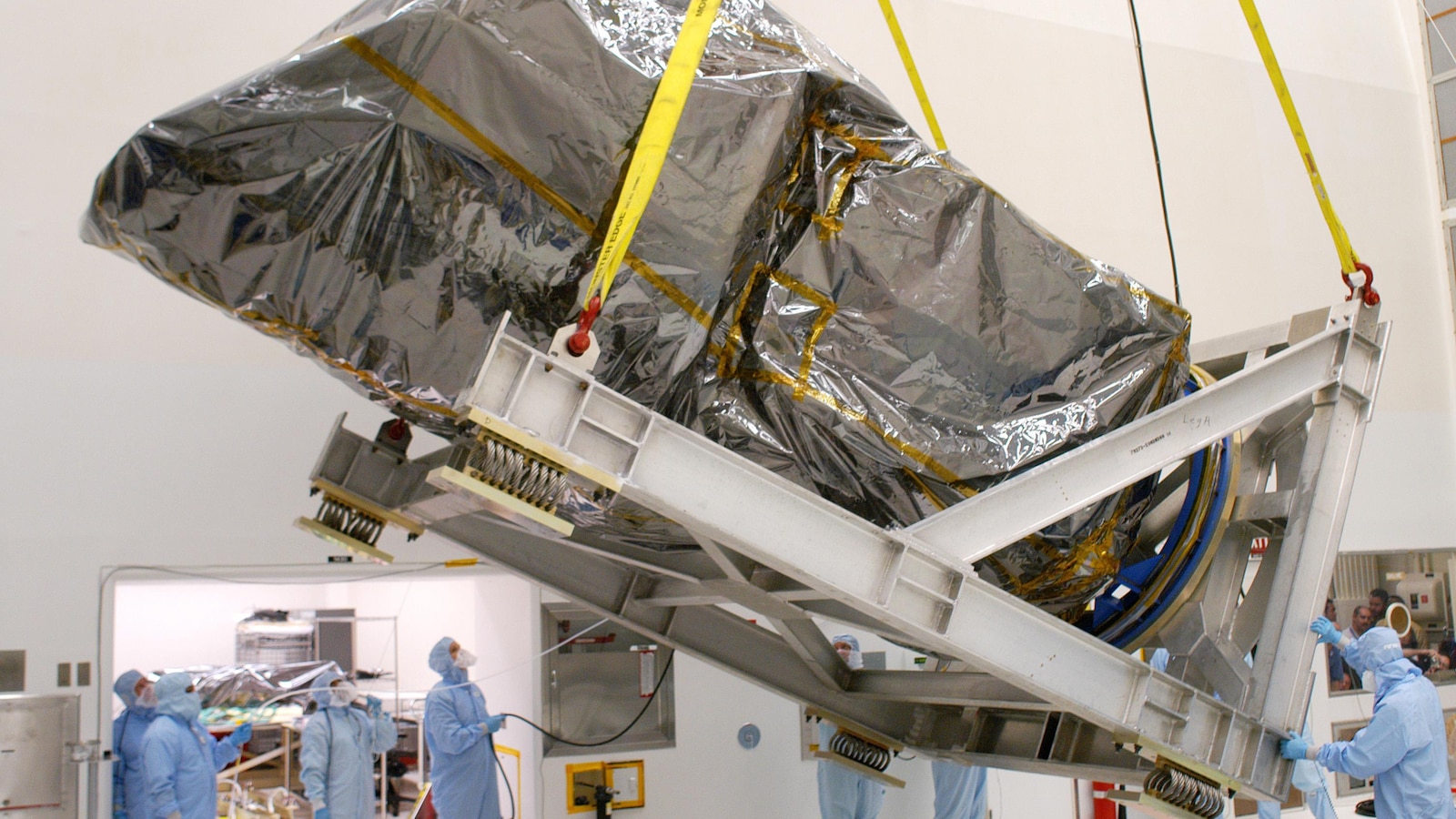
WASHINGTON — NASA's Swift observatory reentered the atmosphere on Wednesday, Nov. 4, ending a 22-year run studying gamma-ray bursts. Tracker Jonathan McDowell, citing U.S. Space Force data, put reentry at 7:39 a.m. EST over northern Sumatra, and the Space Force confirmed it. NASA had estimated a 1-in-2,100 chance that surviving debris would injure anyone, and has not said how much of the roughly 3,200-pound spacecraft burned up. Swift's orbit decayed because of intense solar activity. A rescue by Katalyst Space's robotic craft failed after its July launch, and that craft came down in September. NASA is now asking industry whether and how Hubble could be boosted, upgraded or steered to a controlled reentry. Any such mission would have to fly by 2032, and Hubble is expected to fall by the mid-2030s.

Why it mattersSwift's loss shows how solar-driven orbital decay threatens aging observatories, and it opens a commercial servicing test case for Hubble.

NASA's twin ESCAPADE probes make first powered Earth flybys en route to Mars
NASA Science - ESCAPADE blog

NASA's twin ESCAPADE probes make first powered Earth flybys en route to Mars

Engine burns on Nov. 7 and Nov. 9 will send the pair toward a September 2027 arrival

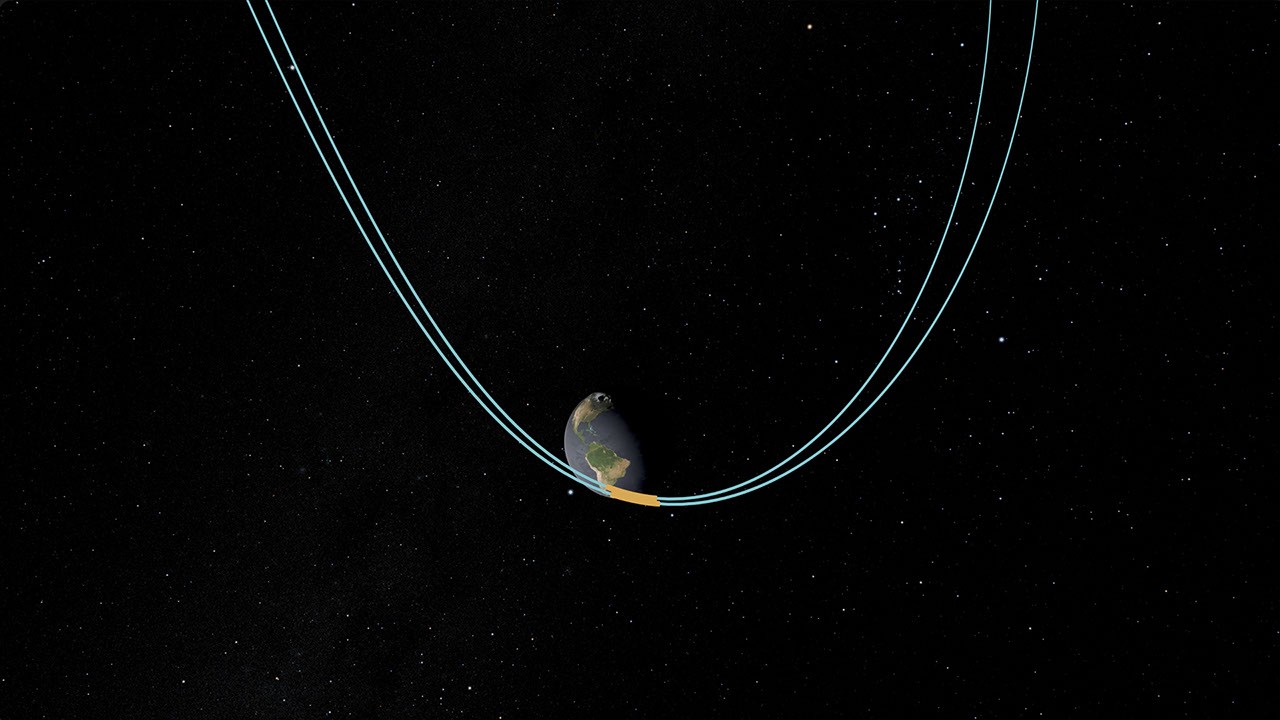
GREENBELT, Md. — NASA's two ESCAPADE spacecraft return to Earth this weekend for a maneuver the agency says no NASA spacecraft has flown before, and each will do it once. The first probe makes its closest approach and fires its engine around 5 a.m. EST Saturday, Nov. 7. The second follows around 6 a.m. EST Monday, Nov. 9. Each will pass 600 to 1,100 miles up and burn for about nine minutes over southern Australia. That adds more than 1,000 mph, taking each probe to about 6.7 miles per second. The mission launched in November 2025 and spent a year looping around the Earth-Sun L2 point to wait for the planets to align. The probes should reach Mars on Sept. 7 and 9, 2027, and will be the first pair to fly in formation there. Backyard observers will need a telescope to spot them.

Why it mattersIf the burns work, the route could let future Mars missions launch outside the usual two-year windows.

Trump issues symbolic 'Declaration of Freedom in Space' on Election Day
Space.com

Trump issues symbolic 'Declaration of Freedom in Space' on Election Day

The proclamation backs a 2028 lunar return but adds no funding, programs or agency orders

WASHINGTON — President Trump signed a proclamation on Nov. 3 titled the American Declaration of Freedom in Space. It describes space as the province of all humans and says it is open to exploration, development and a permanent American presence under U.S. law. The text cites the Apollo landings, Mars rovers and the commercial space sector. It creates no new NASA programs, provides no money and gives agencies no instructions. Axios called it largely symbolic and said it reinforces a December 2025 order seeking a lunar return by 2028. The language appears consistent with the 1967 Outer Space Treaty, which bars national sovereignty claims on celestial bodies, and with the Artemis Accords. Victoria Samson of the Secure World Foundation told Axios the 2028 goal is "wildly optimistic." NASA's Artemis III Earth-orbit test is planned for 2027, and Artemis IV, the first landing, for 2028.

Why it mattersThe declaration sets the administration's policy tone on space resources and settlement, but it takes effect only through later agency and congressional action.