Memphis WeatherRain. High 73°, low 62°.
Chance of rain 86%.

Dalton Daily

Sourced widely. Told plainly.
Vol. I · No. 17Morning edition
daltondaily.com
Markets · loading

Technology & Science

Technology

Marvell to buy Lumentum in $115 billion all-stock deal
Marvell investor relations press release

Marvell to buy Lumentum in $115 billion all-stock deal

The largest tech deal of the year bets that optical links will define AI data-center networking

SANTA CLARA, Calif. — Marvell Technology agreed Monday to acquire optical-components maker Lumentum in an all-stock transaction with an implied enterprise value of $115 billion. Lumentum holders will get 4.5 Marvell shares for each Lumentum share. That is about $1,132 a share, a 23.9% premium to the October 28 close, before deal speculation began. Marvell holders would own roughly 67% of the combined company and Lumentum holders about 33%. Both boards approved the deal. Marvell expects more than $1 billion in annual cost synergies and earnings accretion in the first year after closing. It expects to close in the first half of 2028, pending approvals. Reuters put the equity value at $102.5 billion. Because the price is fixed in Marvell shares, its value moves with Marvell's stock. Lumentum fell about 10% and Marvell about 5% in early trading.

Why it mattersThe deal shows chipmakers moving to own the optical links that connect AI clusters, and it will face antitrust and shareholder scrutiny for more than a year.

Apple posts record $114.5 billion quarter in first report under Ternus
Finimize Daily Brief, November 3

UPDATEApple posts record $114.5 billion quarter in first report under Ternus

Memory-chip costs squeeze margins; shares slip after hours

CUPERTINO, Calif. — Apple reported Monday that quarterly revenue rose 12% to $114.5 billion, above the roughly $113.4 billion analysts expected. It was the first report since John Ternus became chief executive. iPhone sales reached about $57.6 billion and topped forecasts, even though the quarter included only a little over a week of iPhone 18 Pro sales. Services revenue grew 10%, in line with expectations. Higher memory-chip costs cut into profit margins, tying the results to the memory shortage that SK Hynix flagged last week. Sales in China rose more than 20% but still missed forecasts, according to the Finimize summary. Other market reports said the shares fell about 4% after hours, citing a modest revenue beat, iPhone supply constraints and no specific guidance for next quarter. Those reports were not independently confirmed here.

Why it mattersApple is the clearest large-scale test of whether the memory-chip shortage is eating into consumer-hardware profits.

WorkOS says AI-driven attack reached its internal sales tool
Wikipedia

WorkOS says AI-driven attack reached its internal sales tool

Identity-software vendor says production systems were untouched; customer contacts and call summaries exposed

WorkOS, which sells single sign-on and directory tools to software companies, disclosed Monday that it found unauthorized access to an internal sales application on October 30. Its bulletin says the attackers used an AI-assisted offensive security framework to automate reconnaissance and exploitation. The tool held customer contact details, account histories, summaries of sales and support calls, Slack excerpts and product-usage metadata. The company says it has no evidence that customer application data or production services were touched. The bulletin does not name the framework. Chief executive Michael Grinich identified it as ARTEX on X, according to trade reports. A customer notice circulated online cites traffic from Hong Kong and China, which does not establish who was responsible. WorkOS has not said how many customers are affected or how the attackers got in. It has cut external access to the tool, hired outside forensic investigators and warned of convincing phishing attempts.

Why it mattersThe case shows automated attack tools being used against sales and CRM systems, which often sit outside the controls that protect production services.

Snapdragon 8 Elite Extreme Gen 6 phones start rolling out this week
Deccan Herald

Snapdragon 8 Elite Extreme Gen 6 phones start rolling out this week

Motorola's Signature 27 debuts Thursday; Xiaomi, OnePlus, iQOO and Vivo follow in November

NEW DELHI — A wave of flagship Android phones built on Qualcomm's Snapdragon 8 Elite Extreme Gen 6 chip begins this week. Motorola has confirmed that the Signature 27 makes its global debut on November 5. Xiaomi said on November 2 that its 18 Pro series will go global this month. Indian press reports say OnePlus 16 and iQOO 16 are expected in late November and Vivo's MediaTek-powered X500 series in mid-to-late November. Reported specifications include 6.8-inch to 6.9-inch AMOLED screens, 6,000mAh to 9,000mAh batteries and 200-megapixel cameras on some models. Pricing for most models has not been announced, and many details come from teasers and leaks rather than final company specifications. Apple's iPhone Duo and several other phones launched in October.

Why it mattersThe launches set up the holiday-season flagship contest as memory-chip costs push up the price of high-end devices.

Deccan Herald foreign

Artificial Intelligence

China drafts first export controls on frontier AI model weights and agents
The Diplomat: China Wants Its AI to Go Global, on Its Own Terms

China drafts first export controls on frontier AI model weights and agents

Beijing's Announcement No. 48 sets numeric thresholds. A registration duty is already in force and comments close November 15.

BEIJING — China's Ministry of Commerce and Ministry of Science and Technology issued Announcement No. 48 on October 16. It proposes adding 40 technologies to the export-restriction catalogue, 23 of them in AI. Weights, checkpoints and source code would be restricted if a model meets any one of three tests: 10^26 training FLOPs, 2 trillion parameters, or a global top-10 ranking when exported. Agents are controlled separately by behavior thresholds, and AI-driven malicious code generation would be banned from export. The catalogue is a draft open for comment until November 15, but a pre-export registration duty applies now, including to transfers already under way. API, app and SaaS access is not treated as an export, and technology already published as open source is excluded. Commerce officials say the revision targets no country.

Why it mattersBoth of the largest AI-producing countries now have formal outbound controls on frontier AI. That adds a compliance question for anyone who self-hosts Chinese models.

New York bans twelve 'unsafe' chatbot features for minors, with algorithm-destruction remedy
The Algorithmic Update (Substack): November 2026 state enforcement roundup

New York bans twelve 'unsafe' chatbot features for minors, with algorithm-destruction remedy

Gov. Hochul signed S 9051B on October 28. It takes effect January 1, 2027 and targets design rather than content.

ALBANY — New York Gov. Kathy Hochul signed S 9051B on October 28. It bars operators from offering twelve categories of 'unsafe' AI companion features to minors. The categories cover content that facilitates self-harm, encouraging secrecy from adults, claiming to be human or to have emotions, flattery and sycophancy, and engagement optimization that overrides safety guardrails. Operators may offer such features only after confirming a user is not a minor. Only the attorney general can enforce the law, with penalties up to $25,000 per violation. A policy newsletter that tracks state enforcement says it is the first state statute to expressly authorize 'algorithmic disgorgement', meaning destruction of models trained on unlawfully obtained data. The law arrives as multiple states pursue separate suits against OpenAI over child safety, which OpenAI has not conceded.

Why it mattersStates are moving from content rules to regulating product design, and they are doing it while Congress remains stalled on federal AI rules.

UK cyber chief: AI-driven attacks on critical infrastructure likely by 2028
The Manila Times (wire report on NCSC warning)

UK cyber chief: AI-driven attacks on critical infrastructure likely by 2028

The National Cyber Security Centre says AI will mostly scale existing attack methods rather than invent new ones.

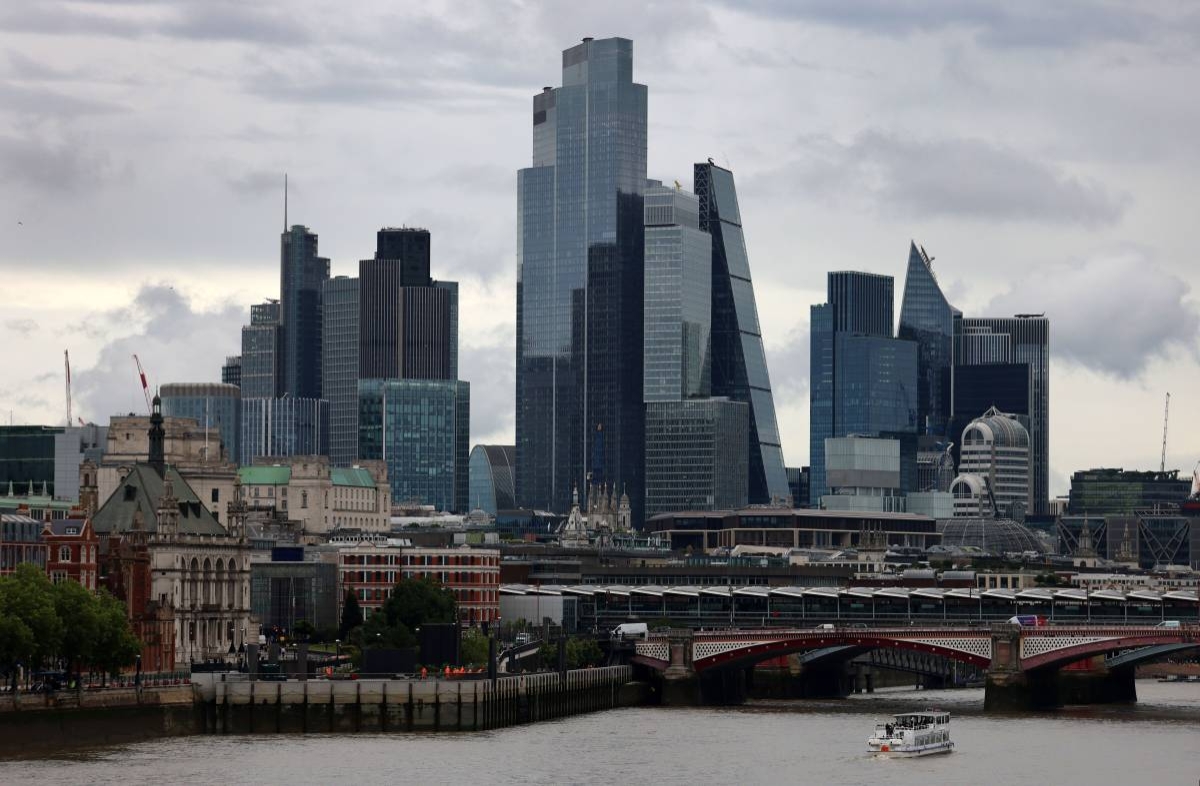
LONDON — Richard Horne, head of Britain's National Cyber Security Centre, warned Tuesday that the UK will likely face AI-enabled cyberattacks on critical infrastructure by 2028. He said criminals and states, including China and Russia, are increasingly using AI in their operations. The assessment calls Chinese activity the most sophisticated and sustained cyber challenge facing the UK. It says AI will let long-tolerated vulnerabilities be found and exploited at a scale once unimaginable, including through AI-powered ransomware. The report judges AI more likely to enhance and speed up existing tactics than to discover wholly new weaknesses. The warning follows last week's urgent security updates by governments and companies after AI-assisted discovery of vulnerabilities in a programming language used by about 70% of websites.

Why it mattersA Western government agency is now putting a date on AI-scaled attacks against infrastructure, which gives defenders a planning horizon.

OpenAI signs Abu Dhabi government deal as Altman urges human control of AI
The National: Altman warns on AI; US reportedly strikes Qeshm Island

OpenAI signs Abu Dhabi government deal as Altman urges human control of AI

Altman spoke at Adipec and announced a machine-readable government initiative. Adnoc also signed an OpenAI agreement.

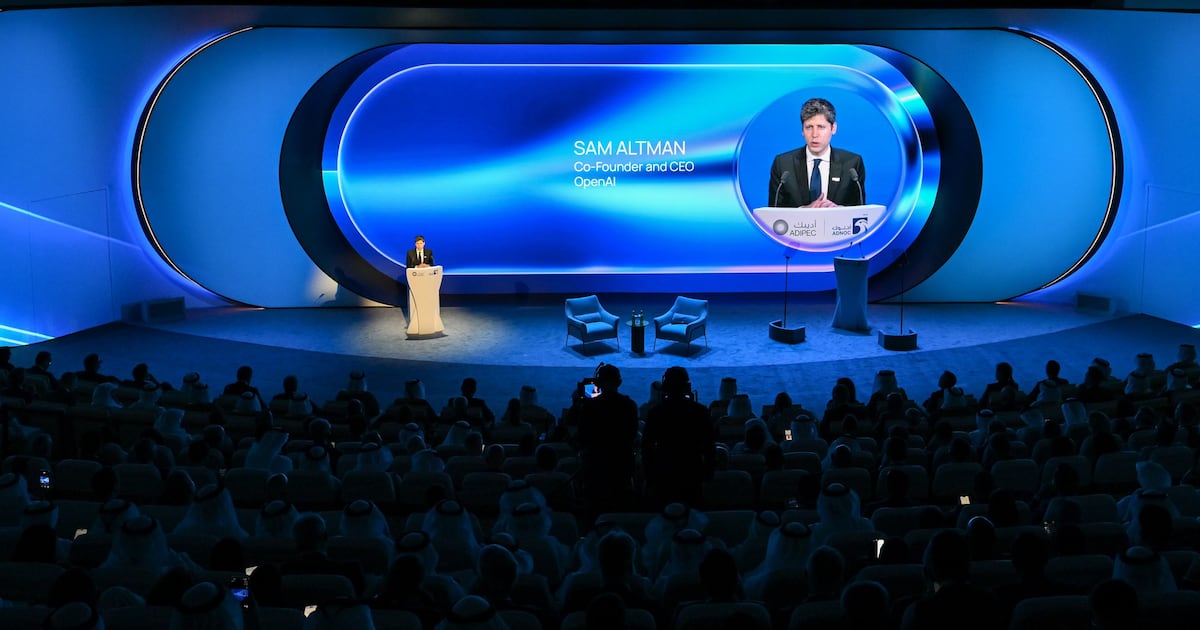
ABU DHABI — OpenAI chief executive Sam Altman used the opening of the Adipec energy conference to announce an agreement with the Abu Dhabi government. It is meant to launch what is described as the world's first AI-native Machine-Readable Government Initiative. The state oil company Adnoc also signed a deal with OpenAI. Altman told The National that people must stay in control of AI and that serious safety incidents need to be prevented as the systems grow more capable. He met Crown Prince Sheikh Khaled bin Mohamed on Monday. The reporting gives no financial terms or technical specifications for either agreement, and what the initiative will deliver has not been detailed.

Why it mattersIt extends OpenAI's government-partnership strategy in the Gulf while its safety record is under legal challenge at home.

Mistral publishes open weights for flagship Mistral Large 4
Mistral AI: We're releasing the weights of Mistral Large 4

Mistral publishes open weights for flagship Mistral Large 4

The French lab's release drew heavy developer attention. Independent performance checks are still to come.

PARIS — Mistral AI announced that it is releasing the weights of Mistral Large 4, its flagship model, according to a post on the company's site. The announcement was among the most heavily discussed AI items on developer forums this week. Opening a lab's top model, rather than an older or smaller one, would put a frontier-class system in the hands of companies that want to run models on their own hardware. The license terms, hardware requirements and benchmark claims are set out in Mistral's own post, and readers should treat the company's performance figures as claims until third parties test them. The release adds to a crowded open-weight field that also includes several Chinese labs.

Why it mattersOpen weights from a Western lab give enterprises and governments a self-hostable alternative to both US closed models and Chinese open models.

Science

Desert survey finds ancient humans needed stone as well as water
Nature: Stone and water governed early human settlement of the desert

Desert survey finds ancient humans needed stone as well as water

Nature study of Arabia's Empty Quarter says dispersal models built on water alone overstate where early people could live

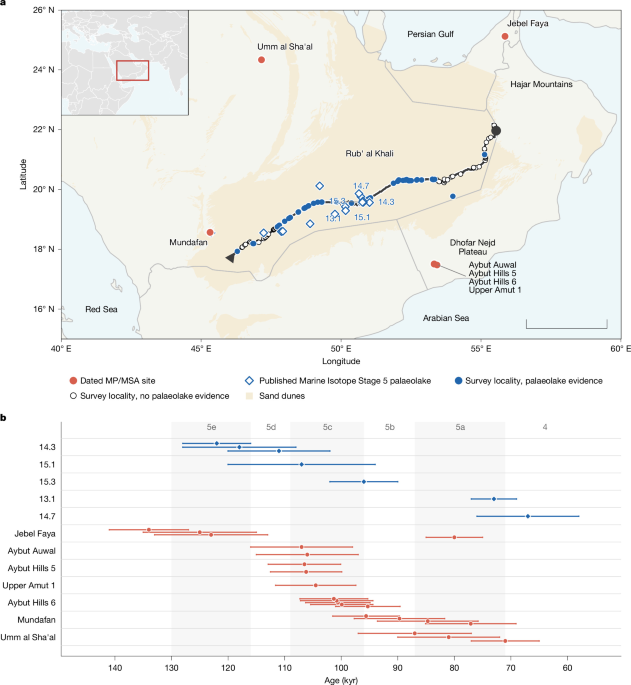
A 1,500-km geoarchaeological transect across the Rub' al Khali, the world's largest sand sea, found that early humans settled where water and toolmaking stone occurred together. Water alone did not draw them. The team crossed the desert on foot and by vehicle in late 2023 and found lake deposits at 55 localities with no stone tools, according to a summary on anthropology.net. The authors then built a model of 363 known Middle Paleolithic and Middle Stone Age sites across the Arabian Peninsula. Sites clustered where water and knappable stone both occurred, and 57 percent of the peninsula's water-accessible terrain sits on rock formations that lack such stone. The paper, led by Rudolf Dellmour of the University of Vienna and Jeffrey Rose, appeared on October 28 in the peer-reviewed journal Nature. It is an observational and modelling study, and the model's predictions have yet to be tested at other deserts.

Why it mattersThe finding suggests that models of early human migration out of Africa may overestimate the habitable range of 'Green Arabia' if they ignore raw-material geology.

Human breathing adds 2 billion tons of CO2 a year, study estimates
Wikipedia

Human breathing adds 2 billion tons of CO2 a year, study estimates

Lancet Planetary Health modelling study puts metabolic output up 74 percent since 1985, driven by population

People worldwide produced an estimated 2.05 billion metric tons of carbon dioxide in 2015 simply by turning food into energy. That is up 74 percent from 1.18 billion tons in 1985, according to a University of Bath-led study in The Lancet Planetary Health. The team, led by physiologist Javier Gonzalez, describes its work as a modelling study. It estimates output across the world's population for 1985 to 2015 and does not measure every person directly. The authors say the figures could sharpen accounting of the global carbon cycle, particularly in dense cities, and improve the accuracy of carbon-reduction forecasts. The numbers cover only 1985 to 2015. They do not include any later years, and the peer-reviewed paper does not treat the result as a driver of climate change.

Why it mattersResearchers say counting biological carbon flows could tighten the carbon budgets and city-level models that climate policy relies on.

Molecular tests find first trace of aloe in Egyptian embalming
Wikipedia

Molecular tests find first trace of aloe in Egyptian embalming

PNAS study of 24 museum objects detects aloe-linked compounds in a 2,700-year-old mummified head

MARBURG, Germany — Researchers at Germany's University of Marburg have reported the first molecular evidence that aloe was used in ancient Egyptian embalming. They combined analysis of 41 historical texts with mass-spectrometry chemistry on 24 museum and university objects, including mummy parts, bandages, embalming residues and pharmacy preparations. Aloe-associated compounds turned up in two objects: a mummified head about 2,700 years old and an 18th-century medicine made from mummy material. The authors say this supports aloe in at least some embalming mixtures. Two positives out of 24 do not show that aloe was standard practice, and the team says the case for an Egyptian term meaning 'life is within it' referring to aloe is not conclusive. The peer-reviewed paper, by Tim Berger and colleagues, is in the Proceedings of the National Academy of Sciences. The group plans to test more specimens.

Why it mattersThe result gives chemical backing to a long-doubted link between mummification and aloe, and to medieval mummy medicine, while showing how limited current samples are.

Space Exploration

SpaceX readies Starship Flight 15 with first attempt to catch both stages
Interesting Engineering, Starship Flight 15 explainer

SpaceX readies Starship Flight 15 with first attempt to catch both stages

Booster and ship have finished static fires; no official launch date has been announced

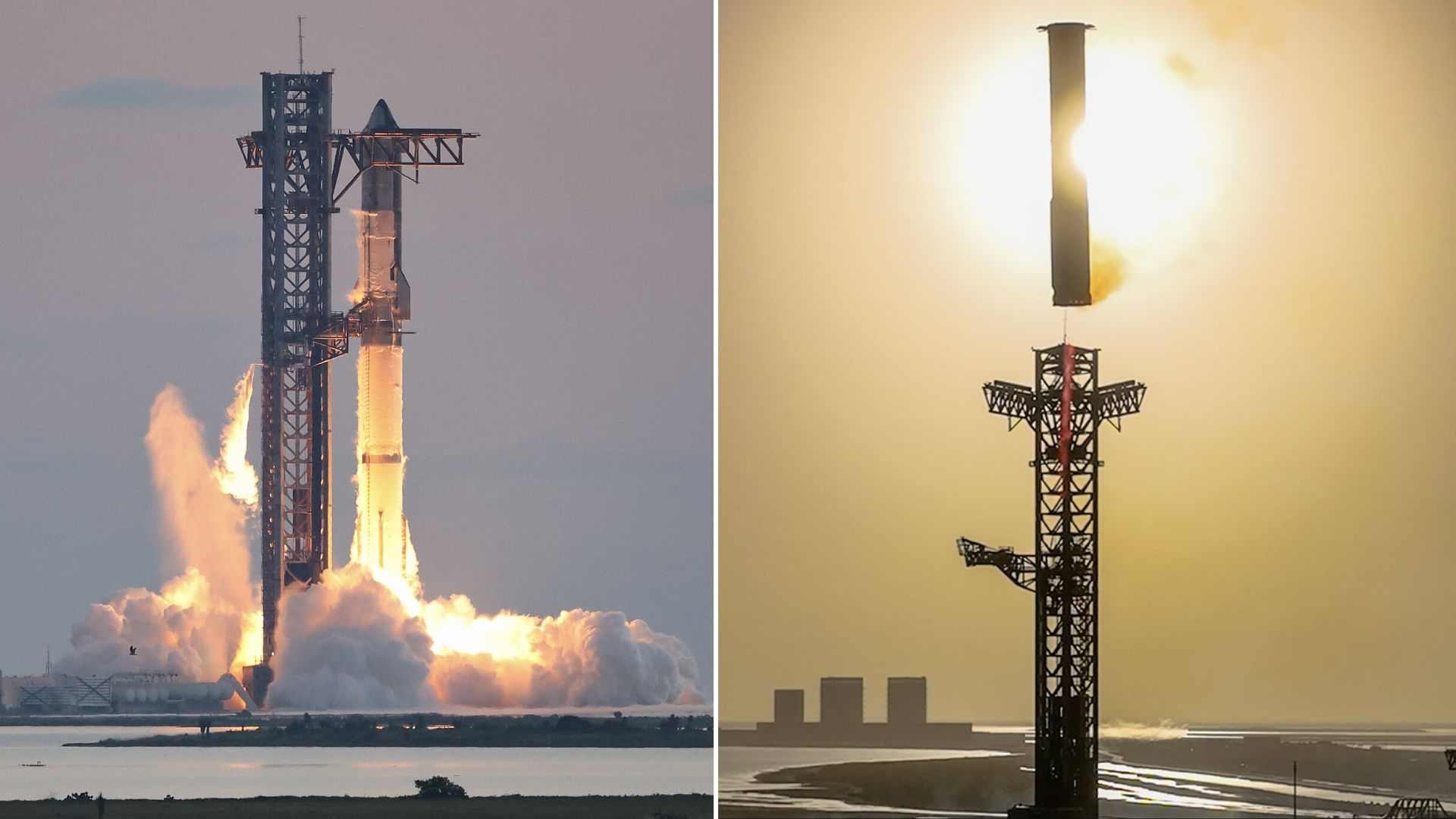
STARBASE, Texas — SpaceX is preparing the 15th Starship test flight for November. The company plans to catch the Super Heavy booster and, for the first time, the Starship upper stage with the launch tower's arms. Booster 22 fired all 33 Raptor engines for about 15 seconds on Oct. 25. Ship 42 then completed a six-engine static fire on Oct. 27. Space.com reported that these tests could keep the flight on track for next month. As of Oct. 28, SpaceX had not announced a launch date. Timing depends on vehicle readiness and regulatory approval. Public flight trackers list a no-earlier-than date of Nov. 12, which SpaceX has not confirmed. A successful double catch would be the first recovery of both major stages of an orbital rocket from one flight. The attempt would also test the reuse model that NASA's lunar plans increasingly lean on.

Why it mattersFull reusability of Starship is central to SpaceX's launch costs and to its role as a lunar lander for NASA's Artemis program.

Europe's Hera and BepiColombo both reach key arrivals this month
ESA, Latest updates: BepiColombo's arrival at Mercury

Europe's Hera and BepiColombo both reach key arrivals this month

Mercury orbit insertion is set for Nov. 21, and Hera is due at the Didymos asteroids

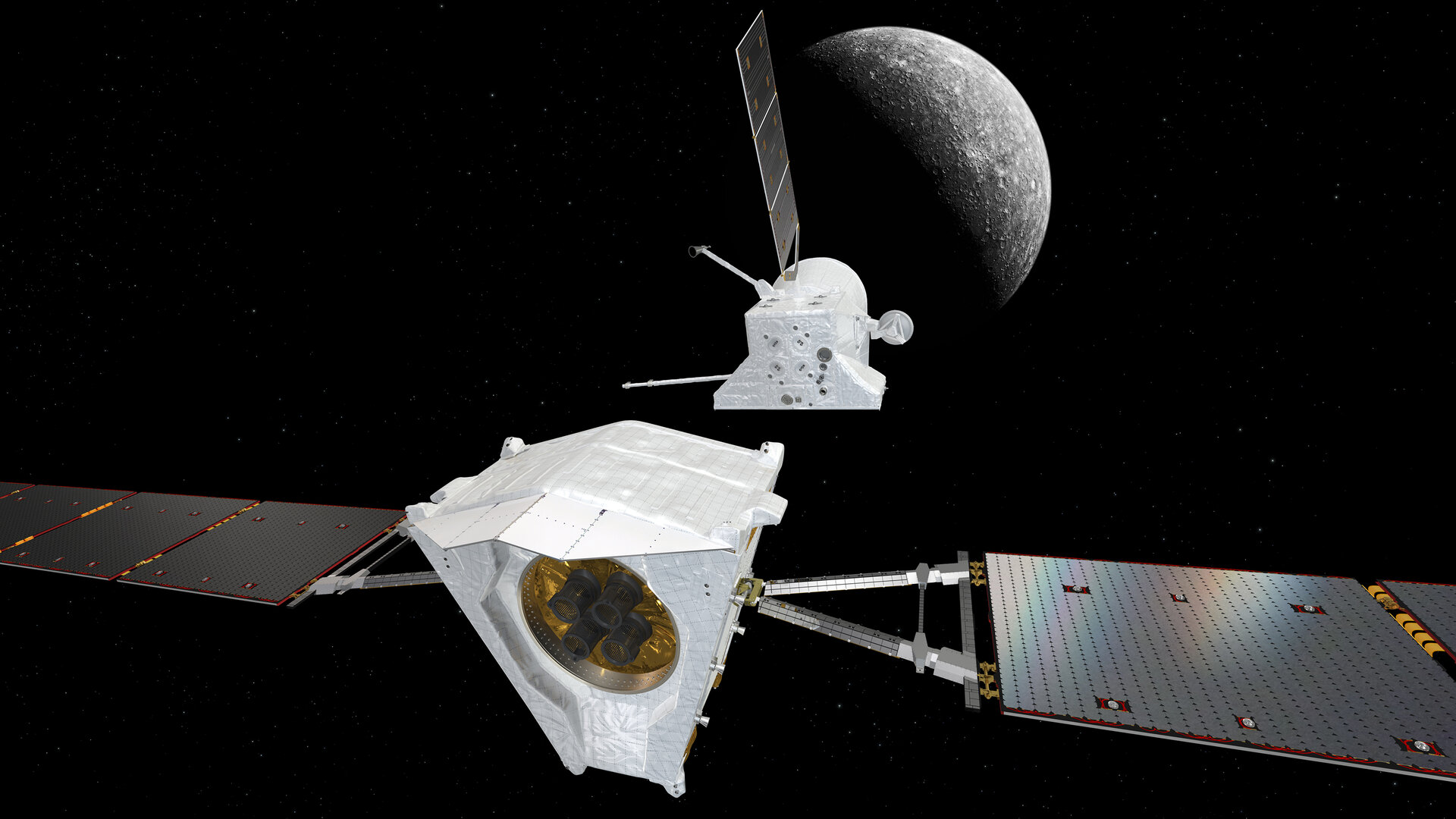
Two European Space Agency deep-space missions are scheduled to reach their destinations this month. BepiColombo, run jointly with Japan's JAXA, is due to enter orbit around Mercury on Nov. 21 after nearly eight years in flight. ESA says its Mercury Planetary Orbiter and JAXA's Mio will then separate on Dec. 9-10. It will be the first mission to have two spacecraft orbiting Mercury at once. ESA's Hera planetary-defense probe is on track to reach the Didymos binary asteroid system in November, a month ahead of the original plan. Hera will inspect the smaller body, Dimorphos, whose orbit NASA's DART spacecraft changed by crashing into it in 2022. ESA's 2026 calendar lists early images for Nov. 25. Hera will also release two CubeSats.

Why it mattersThe arrivals will deliver the first two-spacecraft look at Mercury and the first close study of an asteroid whose orbit humans have changed, which bears on planetary defense.

Astronauts set Thursday spacewalk to finish ISS solar-array upgrade
NASA Space Station blog, spacewalkers install roll-out solar array

Astronauts set Thursday spacewalk to finish ISS solar-array upgrade

Final roll-out array would lift station power from 160 to about 215 kilowatts

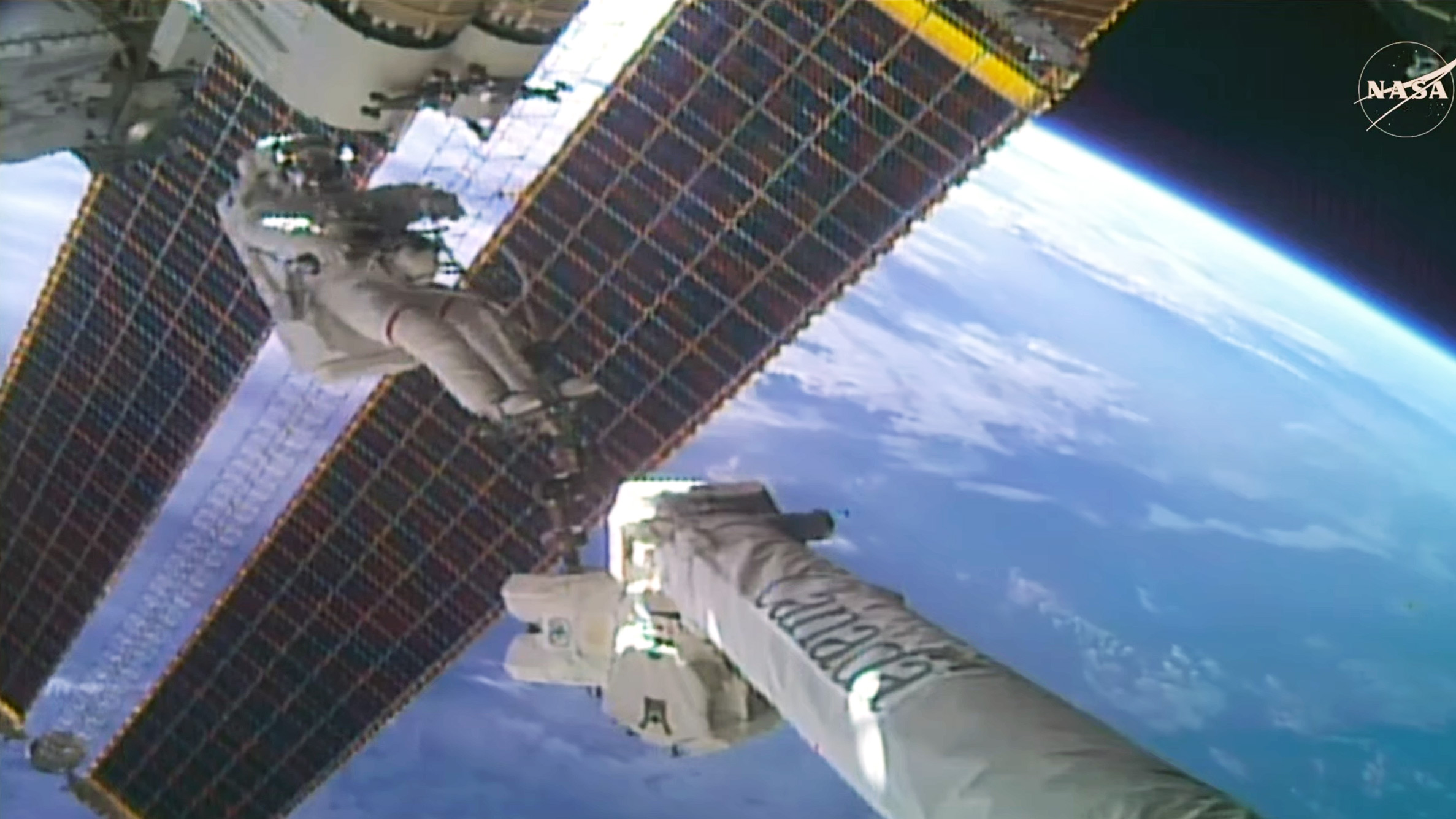
NASA astronaut Anil Menon and Canadian Space Agency astronaut Joshua Kutryk are scheduled to make a second spacewalk on Thursday, Nov. 5. They will install the eighth and last International Space Station Roll-Out Solar Array, on the 3B power channel. On Oct. 29 the pair spent 7 hours 11 minutes installing the seventh array on the 2A channel. That was the 100th U.S. spacewalk from the station's Quest airlock. They also finished several get-ahead tasks for the next outing. Once all eight arrays are in place, NASA says generation capacity should rise by up to 30 percent, from 160 to about 215 kilowatts. Space.com reported that the added power is meant to support station operations through a controlled deorbit, currently set for 2030. The work completes a five-year upgrade.

Why it mattersThe upgrade secures power for the station's remaining years and ends a multi-year installation campaign.