Memphis WeatherRain. High 66°, low 61°.
Chance of rain 98%.

Dalton Daily

Sourced widely. Told plainly.
Vol. I · No. 15Morning edition
daltondaily.com
Markets · loading

Technology & Science

Technology

Binance cites wider breach, plans phased withdrawal restart today
Gulf News

UPDATEBinance cites wider breach, plans phased withdrawal restart today

Exchange says $6.3 billion incident reached beyond one engineer's laptop; rivals tighten defenses as stablecoin issuers freeze funds

Binance said in an October 30 update that its preliminary inquiry into the record theft found compromises beyond the employee laptop first identified. It is targeting a phased restart of withdrawals today, subject to security checks. The exchange has set aside more than $6.34 billion in company funds and affected tokens to cover customer losses. Those findings and the restart date are company statements and plans, not independently verified. Gulf News reported that Tether froze nearly $1.57 billion linked to the incident and Circle froze another $800 million. Coinbase is adjusting its safeguards. Bloomberg reported that the attackers rehearsed first, running test code on Ethereum accounts a few dollars at a time days before the theft. Bitcoin was trading near $77,000 on Saturday, according to crypto press reports.

Why it mattersThe size of the theft and how it was carried out are testing industry security practices, and today's withdrawal restart will show whether customer assets are fully backed.

Gulf News foreign · Bloomberg · The Morning Brief (Substack) independent
Report: U.S. intelligence flagged spy concerns at Nvidia-linked Singapore data-center firm
Fazekas Károly morning briefing (Substack), relaying NYT

Report: U.S. intelligence flagged spy concerns at Nvidia-linked Singapore data-center firm

New York Times account, as relayed by a newsletter, says warning went unheeded as chip sales boomed

WASHINGTON — U.S. intelligence agencies concluded that Alice Huang, the Chinese head of Singapore data-center company Megaspeed, had ties to Chinese intelligence, according to a Thursday New York Times report summarized by a Hungarian newsletter. The Times reportedly said President Trump was briefed about a year ago and took no action, partly to avoid disrupting Nvidia chip sales. Megaspeed has reportedly bought at least $4.8 billion of Nvidia hardware. The suspicion is that it rented computing capacity to Chinese firms including Alibaba, and that some chips may have reached China illegally. Nvidia says its chief executive's customer meetings are routine and that customers receive no national-security information. Megaspeed has opened an internal review, and China has called the claims slander. The account has not been independently confirmed here.

Why it mattersIf accurate, the report shows how export-control enforcement can collide with the commercial interest in AI chip sales.

Intel posts 21% revenue growth but guides fourth quarter lower
Wikipedia

Intel posts 21% revenue growth but guides fourth quarter lower

Data-center sales grow at fastest pace in 15 years; PC weakness and Xeon supply limits flagged

SANTA CLARA, Calif. — Intel reported third-quarter revenue of $16.5 billion on October 29, up 21% from a year earlier. Earnings per share were $0.60 on a GAAP basis and $0.52 adjusted. The chipmaker said the results beat its own guidance for revenue, gross margin and earnings. Chief financial officer David Zinsner said data-center revenue grew at its strongest rate in 15 years. For the fourth quarter Intel forecast revenue of $15.0 billion to $16.0 billion, below the third-quarter figure, and adjusted earnings of $0.25 per share. CEO Lip-Bu Tan cited near-term headwinds across the PC industry. He said the priority is unlocking more supply to meet what he called extraordinary demand for Xeon server processors. A preview cited by one analyst note had expected fourth-quarter revenue near $17 billion.

Why it mattersIntel's results show server-chip demand outrunning supply while PC sales weaken, a split that is shaping the chip industry's recovery.

Anduril and Qualcomm unveil BlueChip, a U.S.-built laptop line
Anduril announcement

Anduril and Qualcomm unveil BlueChip, a U.S.-built laptop line

Rugged machine aimed at government and defense buyers; orders open in 2027

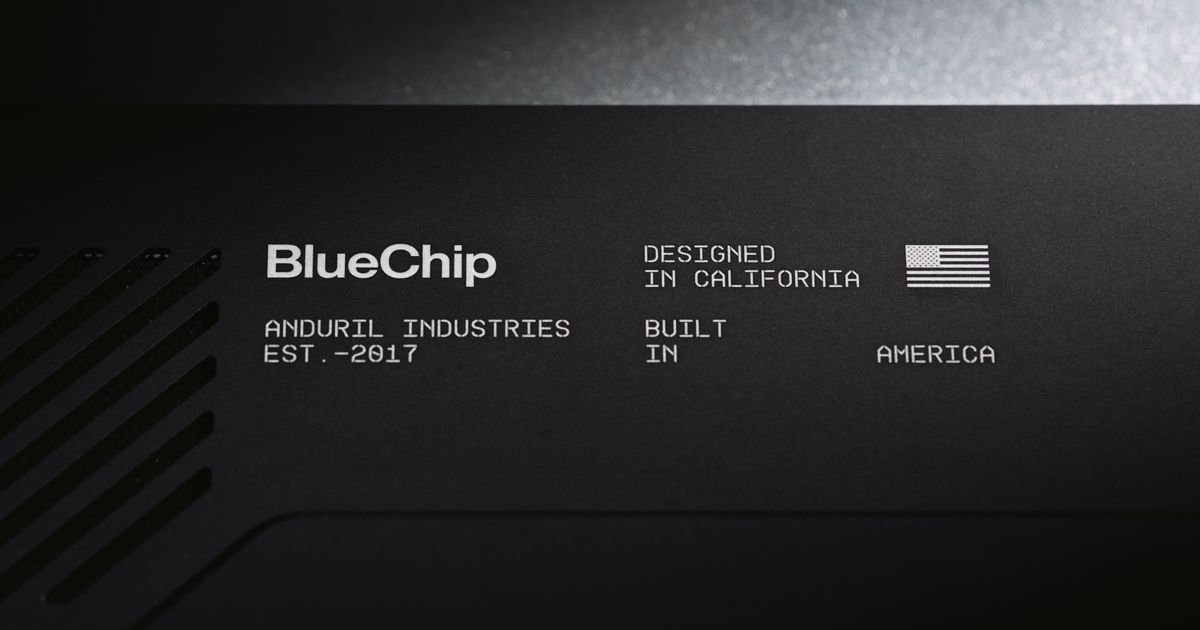
COSTA MESA, Calif. — Defense contractor Anduril and Qualcomm announced BlueChip on Tuesday, a computer line meant to rebuild U.S. computer manufacturing. It starts with a laptop for government, defense, first-responder and public-safety customers. The machine will use Qualcomm's Snapdragon X Series processor. Anduril says it has working prototypes and plans to take orders in 2027. Circuit-board assembly is planned at its Arsenal-1 plant in Ohio, which also builds drones for the Air Force. The companies describe a phased plan: first more domestic sourcing, then less reliance on foreign suppliers, and eventually an end-to-end American supply chain. Founder Palmer Luckey told DefenseScoop that the work resembles what the company already does. He said production is currently a very small line making small quantities to refine the manufacturing process.

Why it mattersThe project tests whether a domestic computer supply chain is feasible beyond chip fabrication, a gap in U.S. industrial policy.

Anduril announcement primary · DefenseScoop trade

Artificial Intelligence

Anthropic's IPO filing shows $16.3B in half-year revenue and huge compute bills
Fortune: Anthropic's S-1, by the numbers

Anthropic's IPO filing shows $16.3B in half-year revenue and huge compute bills

The S-1 reports a first operating-profit quarter, but also an $80.7B net loss and large fixed commitments

Anthropic's public S-1, filed October 26 for a Nasdaq listing under the ticker ANT, reports about $16.3 billion in revenue for the first half of 2026. That compares with $1.16 billion a year earlier and $4.6 billion for all of 2025. The $80.7 billion net loss is mostly a non-cash charge tied to the rising value of convertible instruments, according to analysts who read the filing. The company reported a $693 million operating loss for the half, but $974 million of operating income in the second quarter. Fortune notes that $498 billion of Anthropic's compute commitments, about 76% of the total, cannot be cancelled. Concentration is another risk: about 20% of first-half revenue came from two customers. Q3 figures are not in the filing, and no pricing or date has been set.

Why it mattersIt is the first audited look at a frontier lab's economics, arriving as investors question whether AI spending will pay off.

OpenAI cuts funding target by $10 billion as AI stocks sell off
CNBC: OpenAI announces rollout of GPT-6 Astra

OpenAI cuts funding target by $10 billion as AI stocks sell off

Some investors reportedly trimmed their commitments, and the first close could come in below the revised figure

OpenAI has lowered the size of its latest funding round by roughly $10 billion, Bloomberg and TechCrunch reported. The Financial Times, as relayed by trackers, puts the revised target at about $20 billion, down from $30 billion. It also reports the implied valuation falling from about $1.4 trillion to $1.25 trillion. Subscriptions were due last Friday, and the same reports say some investors cut their allocations. OpenAI has not published figures for the round, so the numbers rest on press reports. The cut comes during a sharp tech selloff, with semiconductor shares in bear-market territory and Bloomberg citing S&P's move to a negative outlook on Meta over AI spending. OpenAI told employees it expects to be public in 2027, according to CNBC.

Why it mattersThe largest private AI company is raising less than it wanted, which tests the funding model behind the AI buildout.

Judge lets NAACP Clean Air suit over Memphis-area xAI turbines proceed
The420.in: Legal action over SpaceX Memphis AI turbine emissions cleared to proceed

Judge lets NAACP Clean Air suit over Memphis-area xAI turbines proceed

The ruling follows an earlier rejection of a Justice Department bid to end the case; it does not find any violation

MEMPHIS — A federal judge has denied a motion by SpaceX to dismiss the NAACP's Clean Air Act lawsuit over gas-fired turbines that power AI data centers in the Greater Memphis area, TechCrunch and other outlets reported. The suit was filed in April 2026 against xAI, before it was folded into SpaceX. SpaceX has since taken operational responsibility for the facilities. The opinion came late Friday. About two weeks earlier, the same court refused a Justice Department request to end the proceedings. The order lets the plaintiffs try to prove their claims. It does not establish that the company violated the law. The case now moves to full litigation, and no trial date has been reported. Separately, an xAI subsidiary is offering to buy homes in Southaven in exchange for lawsuit releases.

Why it mattersThe case will test how federal air-pollution law applies to the on-site power plants that AI data centers are increasingly building.

OpenAI releases GPT-6 Rosalind Research to approved life-science customers only
Real Python: AI news weekly, October 24-30, 2026

OpenAI releases GPT-6 Rosalind Research to approved life-science customers only

Biology-focused model shares GPT-6 reasoning and is gated by an approval program; performance claims come from OpenAI

OpenAI's release notes say GPT-6 Rosalind Research went out on October 30 for multistep life-sciences work, with safeguards built for biological use. It is not a general release. It is rolling out to a limited set of approved Research customers in ChatGPT Work, Codex and the API, and it is absent from the standard Chat tab. Organizations need Rosalind Research approval, and a separate Discovery approval does not grant access. Trackers report that the model relaxes refusals on some dual-use biology queries under a trusted-access arrangement. They also cite large gains on OpenAI's own internal benchmarks, but no independent evaluation has been published. A day earlier, OpenAI separately changed GPT-6 in Chat to give shorter answers and less flattery. On October 26 it released GPT-6.1 Terra at $1 per million input tokens and $5 per million output tokens.

Why it mattersIt shows the industry's move toward credential-gated access for the most sensitive capabilities, with claims that outsiders cannot yet verify.

NYT v. OpenAI fair-use fight heads into final briefing on November 6
AI Lawsuit Tracker: NYT v. OpenAI & Microsoft

NYT v. OpenAI fair-use fight heads into final briefing on November 6

No court has yet ruled on whether training on news articles is fair use in the flagship case

NEW YORK — Reply briefs are due November 6 on cross-motions for summary judgment in the New York Times case against OpenAI and Microsoft, part of a multidistrict litigation before Judge Sidney Stein in Manhattan. The motions were filed in September. They ask the court to decide whether training AI models on copyrighted articles is fair use, a question no court has resolved in this case. The Justice Department filed a statement of interest on September 2 backing OpenAI's position. No trial date is set, and a trial would follow only for claims that survive summary judgment. Other courts have gone different ways. In September the Third Circuit held in Thomson Reuters v. Ross that using Westlaw headnotes to train an AI tool was not fair use. Those rulings are the closest appellate precedent so far.

Why it mattersA fair-use ruling in this case would shape licensing and liability for every company that trains models on published work.

Science

Diet-plus-exercise program puts over half of young diabetics into remission
Medical Dialogues (India), summary of Lancet Regional Health - Americas trial

Diet-plus-exercise program puts over half of young diabetics into remission

Randomized trial of 96 adults under 45 finds 54% off diabetes drugs at six months, versus 4% with usual care

MONTREAL — A randomized trial reports that a supervised low-calorie diet combined with structured exercise put early-onset type 2 diabetes into remission in more than half of young adults after 24 weeks. The RESET for Remission study enrolled 96 adults aged 18 to 45 with type 2 diabetes and obesity in Montreal, Edmonton and Leicester. Of 50 assigned to the program, 27 (54%) reached remission, against 2 of 46 (4%) given usual care. Remission stood at 58% after the initial 12-week diet phase. Results appeared in The Lancet Regional Health - Americas and were presented at the European Association for the Study of Diabetes meeting in Milan. The trial was open-label with blinded endpoint assessment and had no diet-only arm, so it cannot isolate the effect of exercise. It also says little about older adults, people on insulin, or long-term durability beyond the follow-up period.

Why it mattersDiabetes diagnosed before 45 carries decades of complication risk, and the trial offers evidence that a non-drug route can reverse it in many patients.

Kidney drug povetacicept cuts protein loss in IgA nephropathy, interim trial data show
AJMC, Kidney Week 2026 recap (cites NEJM doi:10.1056/NEJMoa2608682)

Kidney drug povetacicept cuts protein loss in IgA nephropathy, interim trial data show

Vertex's phase 3 RAINIER analysis, published in NEJM, is sponsor-reported and not yet final

BOSTON — The New England Journal of Medicine published an interim analysis of RAINIER, a phase 3 trial of Vertex Pharmaceuticals' povetacicept in IgA nephropathy, a kidney disease driven by immune-complex deposits. The paper went online October 23 and the data were presented at the American Society of Nephrology's Kidney Week. The week-36 analysis found consistent reductions in urinary protein across patient subgroups, including a 54.2% greater reduction in the urine protein-to-creatinine ratio than placebo among North American participants. Vertex reports no serious adverse events related to the drug and no deaths. Vertex describes RAINIER as the largest IgAN trial to date, and the drug is dosed by autoinjector every four weeks. Proteinuria is a surrogate marker, and this is an interim readout from a company-funded study. A Biologics License Application has been accepted by the FDA.

Why it mattersIf regulators accept the proteinuria data, patients with a progressive kidney disease could gain a new, easier-to-use treatment option.

Neanderthal from Iraqi cave may have been killed by a wooden spear
Kurdistan24

Neanderthal from Iraqi cave may have been killed by a wooden spear

Cambridge-led study in Scientific Reports reads a hole in a 75,000-year-old shoulder blade as a possible heart shot

ERBIL, Iraq — Researchers led by Emma Pomeroy of the University of Cambridge report that a Neanderthal known as Shanidar A may have died from a wooden spear thrust through the chest about 75,000 years ago. The remains were excavated at Shanidar Cave in Iraqi Kurdistan, and the study appeared in Scientific Reports. A round hole about 15 millimeters wide in the left shoulder blade is the key evidence. The team says the spear entered at the front and passed through the lung and likely major arteries. They say this may be the earliest known lethal spear attack on a human ancestor. The authors call the strike possibly intentional but say a hunting accident cannot be excluded. A healed facial injury suggests the individual, about 45 years old, survived earlier trauma, perhaps with help from others, and was then deliberately buried. The conclusions are interpretive, drawn from a single skeleton.

Why it mattersThe find adds rare physical evidence on Neanderthal violence, care for the injured and burial practices.

Space Exploration

NASA recasts Artemis III as 2027 Earth-orbit test of rival moon landers
Space.com: Artemis III crew meets Trump at White House

NASA recasts Artemis III as 2027 Earth-orbit test of rival moon landers

Four astronauts would dock with Blue Origin and SpaceX landers before an Artemis IV landing targeted for 2028

CAPE CANAVERAL — NASA has turned Artemis III into a roughly 14-day crewed flight in low Earth orbit, targeted for summer 2027, with no lunar landing. At an Oct. 23 briefing at Kennedy Space Center, Administrator Jared Isaacman and program managers said the mission will test commercial landers from Blue Origin and SpaceX. In the plan, Blue Origin's Blue Moon launches first on New Glenn. Orion then flies on the SLS rocket with Randy Bresnik, Frank Rubio, Andre Douglas and ESA's Luca Parmitano. It docks with Blue Moon on flight day 3, and the crew enters the lander to test life support and emergency procedures. NASA has not said whether both landers will be ready. A trade report cites an Inspector General audit warning that vendor delays could push a landing to 2030 or 2031. It also says Isaacman told staff in September the mission was about 90 days behind.

Why it mattersThe restructured plan is NASA's bet that a rehearsal in Earth orbit keeps a 2028 crewed lunar landing on schedule, but it leaves little margin for error.

Air Force recovers cargo pods flown on SpaceX's Starfall capsule
Space.com: Starfall delivers cargo for US Air Force

Air Force recovers cargo pods flown on SpaceX's Starfall capsule

Rocket Cargo test is a first step toward delivering military supplies anywhere on Earth by rocket

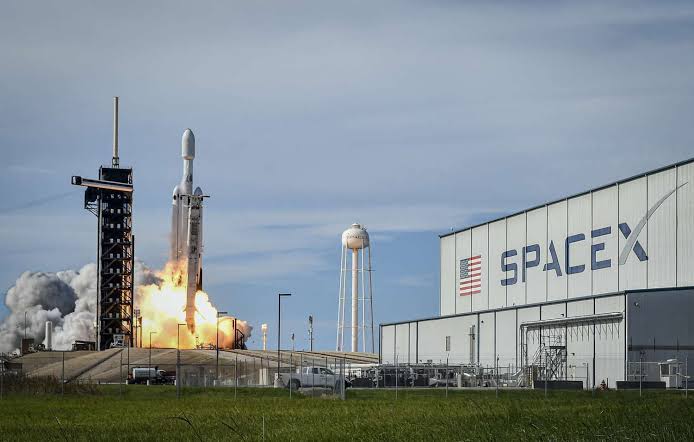
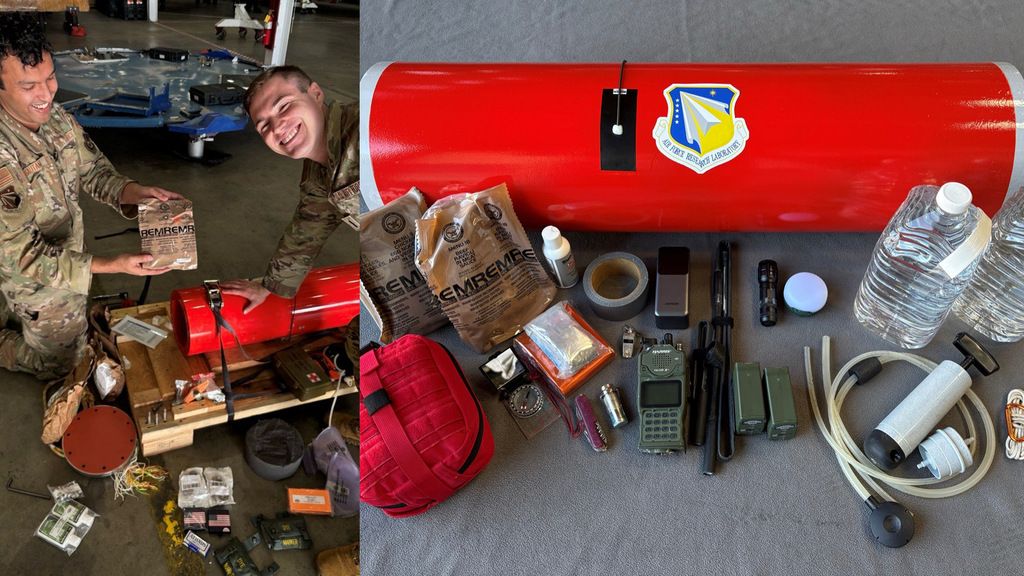
WRIGHT-PATTERSON AIR FORCE BASE, Ohio — The Air Force Research Laboratory says it has recovered cargo pods that flew on a SpaceX Starfall reentry capsule and splashed down in the Pacific. The capsule rode on the Bandwagon-5 rideshare Falcon 9, which lifted off from Cape Canaveral on Oct. 20. The pods held representative gear, including a satellite-linked tracker, batteries, a desalinator and emergency medical supplies. Sensors recorded temperature, shock and vibration through launch, reentry and splashdown. The lab also fit-checked a life raft inside the capsule for possible future tests. According to a Federal Aviation Administration environmental assessment, Starfall is about 3.1 meters across and can return up to 1,000 kilograms. A trade report notes the lab has not released test results or said whether the cargo met requirements. The lab says it is also assessing vendors such as Blue Origin and Rocket Lab and plans further tests.

Why it mattersMoving freight by rocket would let the military reach places with no runways or roads, and this is one of the first public hardware tests of the idea.

NASA's twin ESCAPADE probes due to swing past Earth this month on way to Mars
NASA Science: ESCAPADE ready to study space weather from Earth to Mars

NASA's twin ESCAPADE probes due to swing past Earth this month on way to Mars

Gravity-assist flyby is the key step in an unconventional off-window route to the Red Planet

NASA's two ESCAPADE spacecraft are scheduled to return to Earth this month and use its gravity to slingshot toward Mars. They launched on Blue Origin's New Glenn on Nov. 13, 2025. Since then they have looped around the Sun-Earth L2 point, about a million miles out, a route designed to let Mars-bound craft launch outside the usual two-year window. NASA's mission pages give only the month for the flyby and the related trans-Mars engine burn, not a specific date. If the flyby succeeds, the probes arrive in September 2027. They would then become the first coordinated pair of orbiters around another planet. They will study how the solar wind strips Mars's atmosphere. The University of California, Berkeley leads the mission, and Rocket Lab built the spacecraft.

Why it mattersA successful flyby would show that Mars missions can be launched almost any time, rather than only when the planets align every 26 months.