Saturday, October 31, 2026Memphis · 77°/62°, TennesseeEst. 2026
Markets · loading
Technology & Science
Technology
TechCrunch
Binance says $6.3 billion hit in record crypto theft; North Korea blamed
Exchange says a compromised engineer's laptop let an attacker submit unauthorized withdrawals; about $3 billion frozen
Binance, the world's largest crypto exchange, disclosed a security incident that affected about $6.3 billion in assets. Researchers say it is the largest crypto theft on record. The exchange said an early review points to a compromised DevOps engineer's laptop. That device gave an attacker access to a service container and let them submit unauthorized withdrawal transactions. Binance said it has seen no sign that private keys leaked. A spokesperson said industry partners have frozen about $3 billion of the funds. Blockchain analysts at TRM and Elliptic attribute the theft to North Korean state-linked hackers. TRM says the theft took roughly 20 minutes. Binance has not itself confirmed that attribution. TechCrunch reports the incident is not yet confirmed resolved and the total stolen could change.
Why it mattersA theft of this size at the sector's largest venue tests exchange security and the stablecoin issuers' ability to freeze funds, and it adds to concern about North Korean state-backed crypto theft.
Amadeus breach spreads to Cathay Pacific, adding to Asian airlines hit
Cathay says 53,000 bookings exposed through stolen system-account credentials at the travel-software provider
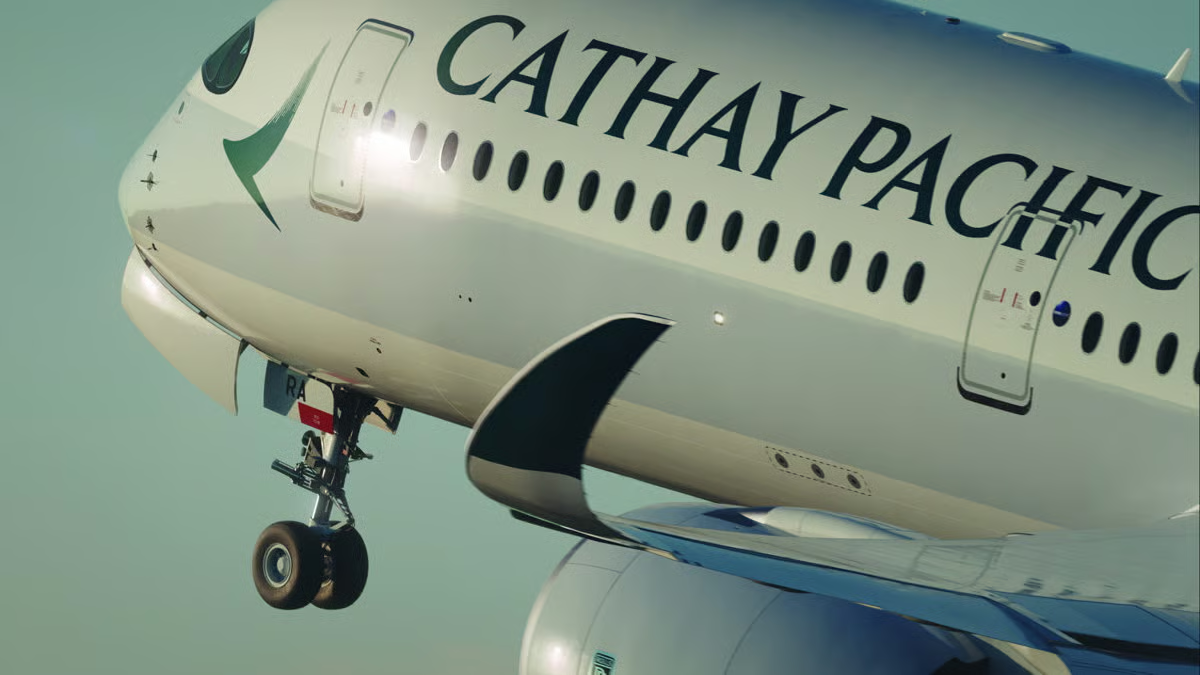
HONG KONG — Cathay Pacific said on Friday that about 53,000 of its bookings were exposed in a breach at Spanish travel-technology provider Amadeus IT Group. The airline said an unauthorized party used Amadeus system-account credentials to reach reservation data between August 2023 and September 2026. Amadeus alerted Cathay on October 28. Most records held booking references, passenger names and flight details. A smaller group may also have included contact details, travel document information or frequent-flyer numbers. Cathay says no payment data was accessed and its own systems were unaffected. Japan Airlines has reported about 92,000 affected customers and ANA about 37,800. Korean Air, Asiana and Condor have also reported exposure. The figures count bookings or records, not unique travelers. Amadeus reset a password and strengthened monitoring, and no misuse has been confirmed.
Why it mattersOne compromised vendor account quietly exposed passenger data for roughly three years across several major airlines, showing the third-party concentration risk in aviation IT.
Attackers probe new WordPress core flaw within hours of patch
Wordfence logs 18,500 requests in 21 hours against the update-process bug fixed in version 7.1.4
Attackers began targeting a newly patched WordPress core vulnerability within hours of the fix. WordPress released version 7.1.4 on October 28, fixing 22 vulnerabilities. The most serious is a race condition in the core update process that can allow unauthenticated remote code execution. Security firm Defiant, which runs Wordfence, said the first hit on its new firewall rule came nine minutes after deployment. It recorded more than 18,500 requests aimed at staged installer paths in the first 21 hours. The flaw affects versions 4.7 through 7.1.3 and carries a CVSS score of 8.1. Exploitation is difficult: an attacker must hit a window of seconds while a full-package update unpacks. Wordfence reports no confirmed compromises, and no CVE number had been assigned. Site owners are told to verify that 7.1.4 is installed.
Why it mattersWordPress runs a large share of the web, and the gap between patch and attack attempts is now measured in minutes.
Apple reports Monday with iPhone supply and currency limits in focus
Company guided to 9-11% revenue growth and mid-teens iPhone growth for the September quarter
CUPERTINO — Apple will report fiscal fourth-quarter results on Monday, November 2. In July the company posted a June-quarter record of $109.4 billion in revenue, up 16%, with iPhone sales of $54.3 billion, up about 22%. For the current quarter it guided to total revenue growth of 9% to 11%. It expects iPhone growth in the mid-teens, held back by foreign-exchange headwinds and supply constraints. The year-earlier quarter's iPhone revenue was $49.02 billion, according to AppleInsider. Apple said last quarter's results included a $0.11 per-share benefit from tariff refunds. Investors will look for whether supply constraints cap the iPhone 17 cycle, and for any commentary on Services and the Mac line, which grew nearly 29% last quarter.
Why it mattersApple's results and guidance are a read on consumer hardware demand and component supply as the holiday quarter begins.
CNBC: AI buildout hits snag as Google and Microsoft put off raising capex forecasts
Alphabet, Amazon and Intel slide as investors question AI spending
Alphabet's roughly $500 billion one-day loss spreads to other tech names; Microsoft trims its capex forecast
NEW YORK — Alphabet shares fell sharply Thursday, erasing about $500 billion in market value. Its third-quarter revenue was $127.6 billion, up 25% but below analyst forecasts. Investors also focused on slowing search-ad growth and heavy AI outlays. Alphabet held its 2026 capital-spending guidance at $195 billion to $205 billion. Amazon and Intel then reported disappointing results, and both stocks fell by double digits in premarket trading Friday. Nasdaq futures were down more than 2%. Microsoft lowered its 2026 capex forecast to $170 billion from $175 billion. Its CFO said delays at third-party AI chip suppliers would push some capacity into the first half of 2027. Azure sales still grew 48%. Meta raised the bottom of its capex range to $135 billion to $145 billion and reported negative free cash flow. Microsoft also plans a $25 billion bond sale. The next test is whether hyperscaler guidance and cloud growth justify the buildout.
Why it mattersThe sell-off shows markets now demanding evidence of returns on a spending wave of roughly $700 billion or more this year.
Tampered Claude Code extension on Cursor marketplace tried to plant SSH backdoor
Malicious versions were live about 11 hours; Cursor says up to 5,000 users may be affected
Cursor disclosed that two malicious versions of the Claude Code extension, 2.1.312 and 2.1.313, were distributed through its VS Code extension marketplace on Wednesday, October 29. They were available for about 11 hours, from 2:27 a.m. to 1:35 p.m. Pacific time. Security researchers at Phorion found that the code tried to add an attacker-controlled SSH key to the victim's authorized-keys file, which would give persistent remote access. Cursor first estimated that up to 5,000 users could be affected. It said Anthropic did not create the malicious software and that it found no sign that other Claude Code versions were compromised. Cursor pulled the packages and temporarily closed its extension marketplace. Cursor advised affected developers to clean up their systems. How the attacker gained publishing access has not been established in the reporting.
Why it mattersThe incident shows that AI coding tools, which typically run with broad access to developer machines, are now a supply-chain target.
EU AI Act enters implementation phase as December deadlines near
First harmonised standard is published; new bans and content-marking duty arrive December 2
BRUSSELS — The European Commission announced on October 19 that the first harmonised standard supporting the AI Act, EN 18286 on quality management systems, has been published in the Official Journal. That follows the AI Omnibus, which entered into force on July 27. The Omnibus pushed back high-risk obligations but left the transparency rules and the general-purpose model rules in place. The next fixed date is December 2, when two new Article 5 bans take effect. They cover AI systems that generate child sexual abuse material and non-consensual intimate imagery. Generative systems already on the market before August 2 must also add machine-readable marking by then. Trade press reports that the AI Office opened a consultation on October 12 on procedural rules for supervising AI systems. A draft would let it restart the five-year fining clock for Google and Meta AI products. Fines reach 7% of global turnover for prohibited practices.
Why it mattersUnlike the stalled U.S. federal approach, the EU is moving to enforcement, and providers have about five weeks to meet the marking and ban deadlines.
Arizona Mirror: Court of Appeals on fake AI-generated cases
Courts keep tightening penalties for AI-fabricated legal citations
A New York default judgment and an Arizona published opinion set firm lines on verification
NEW YORK — On October 9, Judge Katherine Polk Failla of the Southern District of New York ruled on fees in Flycatcher v. Affable Avenue. In February she had found that 14 of the 60 cases cited in defense counsel's motion-to-dismiss brief did not exist. She then entered a default judgment against the lawyer's client. The attorney who exposed the fakes sought about $43,087 in fees and costs, and the court found the $575 hourly rate and the hours generally reasonable. In Arizona, Division One of the Court of Appeals held in July that citing a hallucinated case is sanctionable, whether or not the filer intended to deceive. The court, in a published opinion, ordered a self-represented litigant to pay the other side's fees caused by two nonexistent citations. Courts are increasingly making the person who signs the filing responsible, and rewarding opponents who catch the errors.
Why it mattersFor practicing lawyers, the cost of skipping a cite-check now includes losing the client's case as well as paying fines.
Preprint finds AI models stretch known research but rarely open new directions
Study across six natural-science fields compares model-generated hypotheses with published papers
A preprint posted to arXiv in mid-October tests whether language models can match human researchers on scientific novelty. It has not been peer reviewed. The authors separate two properties: how far an idea sits from existing work (distance) and whether it points somewhere new (direction). They evaluated several leading models against a large body of human-authored papers in six natural-science fields. Models produced hypotheses that scored better than human authors on distance-based novelty. On direction, the models' hypotheses scored lower than published papers in every field and for every model tested. The authors also report that adding context or assigning wild personas shifted the ideas outward without opening new directions. The results are one group's measurements, so claims about discovery should be read against the metrics used, and the paper reports no independent replication.
Why it mattersIt gives a measurable check on claims that AI research agents are about to produce scientific breakthroughs on their own.
Map of 45 threats to freshwater species pinpoints global hotspots
A Science study covering 21,490 species shows where human pressure on rivers and lakes does the most damage
A research article in the 29 October issue of Science maps where human pressures bear down hardest on freshwater life. The authors assessed 45 separate threats across 21,490 freshwater species. The analysis identifies geographic hotspots of impact, a question the journal says has been poorly understood even though freshwater species face widespread pressure. The work is peer-reviewed and appears on the issue's cover, which shows a fire salamander beside a forest stream in Bulgaria. The journal says the mapping is meant to help conservation and management efforts focus on the places where they are most urgently needed. The Science contents page gives only a summary, so the specific hotspot regions and the ranking of individual threats are not detailed here. The full paper begins on page 510 of volume 394, issue 6823.
Why it mattersFreshwater habitats lose species faster than most ecosystems, and a threat-by-threat map gives regulators and conservation groups a basis for deciding where to spend limited money.
Fossil with preserved throat shows 165-million-year-old mammal relative swam like a platypus
Nature paper describes Megacauda sungei from Inner Mongolia and evidence of an early pharynx
A fossil animal from what is now Inner Mongolia is the cover subject of the 29 October issue of Nature. Researchers led by Zhe-Xi Luo, Chang-Fu Zhou and Thomas Martin describe Megacauda sungei, a predecessor of modern mammals that lived about 165 million years ago. They report that it was semi-aquatic and could dig and swim much as the modern platypus does. The most unusual feature is the preservation of its throat. The authors infer that the animal had both a soft palate and constrictor muscles. That is rare evidence of a pharynx, the apparatus that lets most living mammals, though not monotremes such as the platypus, suckle milk and swallow without choking. The finding is a peer-reviewed description of a single fossil, and interpretations of soft tissue in ancient specimens often draw follow-up debate.
Why it mattersSoft-tissue anatomy almost never survives in fossils this old, so the specimen gives a rare look at how mammalian feeding and swallowing machinery evolved.
Study says Thwaites Glacier is melting faster, could double its sea-level contribution
Nature Communications paper focuses on warm water pushing beneath the Antarctic glacier's grounding zone
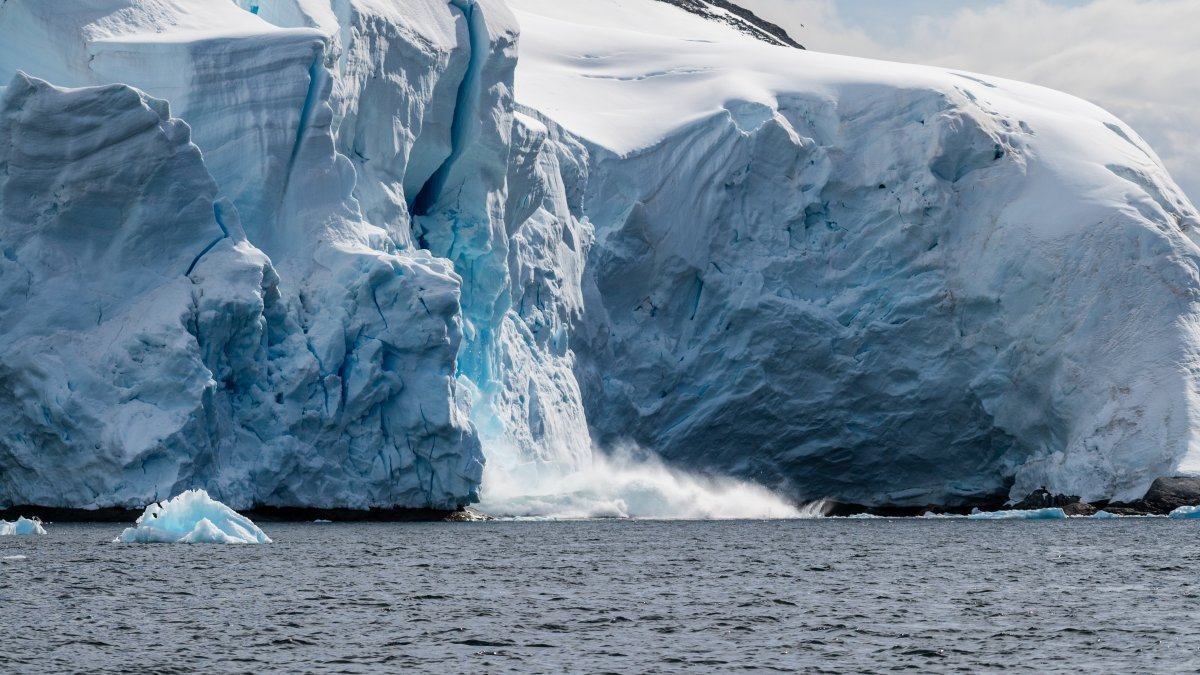
New research in Nature Communications finds that Thwaites Glacier in Antarctica is losing mass rapidly, according to a report from Turkey's Anadolu Agency. The study focuses on the grounding zone, where ice resting on bedrock begins to float. Warm ocean water is reported to be pushing several kilometres beneath the ice there and melting it from below. The report says the glacier could add about twice as much to global sea-level rise by 2100 as earlier projections suggested. The figure comes from the news report rather than from the paper itself, which has not been independently checked here. The study is peer-reviewed. Estimates of the glacier's future depend heavily on how ocean heat reaches the ice base. The report was published on 20 October, and the findings will be tested against further field and satellite observations.
Why it mattersThwaites holds enough ice to raise global sea level substantially, so any upward revision to its melt rate changes coastal planning assumptions.
NASA Science, Cosmic Origins announcements, Oct. 30, 2026
NASA asks industry how to rescue Hubble before it falls from orbit
Goddard request reverses a two-year-old refusal and sets a 2032 deadline for a reboost, servicing or controlled-reentry mission
WASHINGTON — NASA's Goddard Space Flight Center issued a Request for Information on Oct. 29 asking commercial companies for concepts to save the Hubble Space Telescope or bring it down safely. The agency listed three options: capture Hubble and raise it to at least 600 kilometers (about 372 miles), fly a mission to improve its performance and extend its life, or capture it and steer it into a controlled reentry. Any mission must avoid harming the telescope and take place by 2032. The contractor would supply the launcher, spacecraft, any crew and operations. A July 2026 analysis puts the chance of uncontrolled reentry at 10 percent by September 2032 and 50 percent by December 2033. Responses are due Nov. 30. The notice is not a contract. NASA says it will use the answers to shape a later formal solicitation, with no timeline or budget set. Two years ago NASA declined a commercial reboost.
Why it mattersHubble has no propulsion and is losing altitude, so a decision in the next few years determines whether the observatory is saved or deliberately retired before the 2040s-era successor arrives.
UPDATEIndia's GSLV places NVS-03 in orbit, restoring NavIC to four satellites
The launch from Sriharikota followed the shortest campaign between GSLV flights in ISRO's history
SRIHARIKOTA — India's space agency launched the NVS-03 navigation satellite on a GSLV rocket at 11:51 p.m. local time Friday (1821 UTC) from the second launch pad at Sriharikota. The rocket's three stages, including the cryogenic upper stage, performed as planned, and the satellite was released into geosynchronous transfer orbit after about 18 minutes. The targeted orbit has a low point of 170 km and a high point of 37,023 km. The satellite weighs roughly 2,250 kg and will use its own propulsion to reach a slot at 32.5 degrees East. ISRO chief V. Narayanan said the turnaround of 56 days between GSLV flights was the shortest yet and called it the rocket's 20th flight. The launch brings the NavIC regional navigation system back to a minimum of four working satellites. NVS-03 carries an indigenous rubidium atomic clock and adds an L1 signal alongside L5 and S-band. It was the fourth Indian orbital launch this year.
Why it mattersA working four-satellite NavIC restores India's independent positioning and timing service, reducing reliance on foreign systems such as GPS.
Skywatchers get early-morning passes of China's Shenlong space plane
Predicted flybys run through Nov. 6; brightness is modest but visible to the naked eye
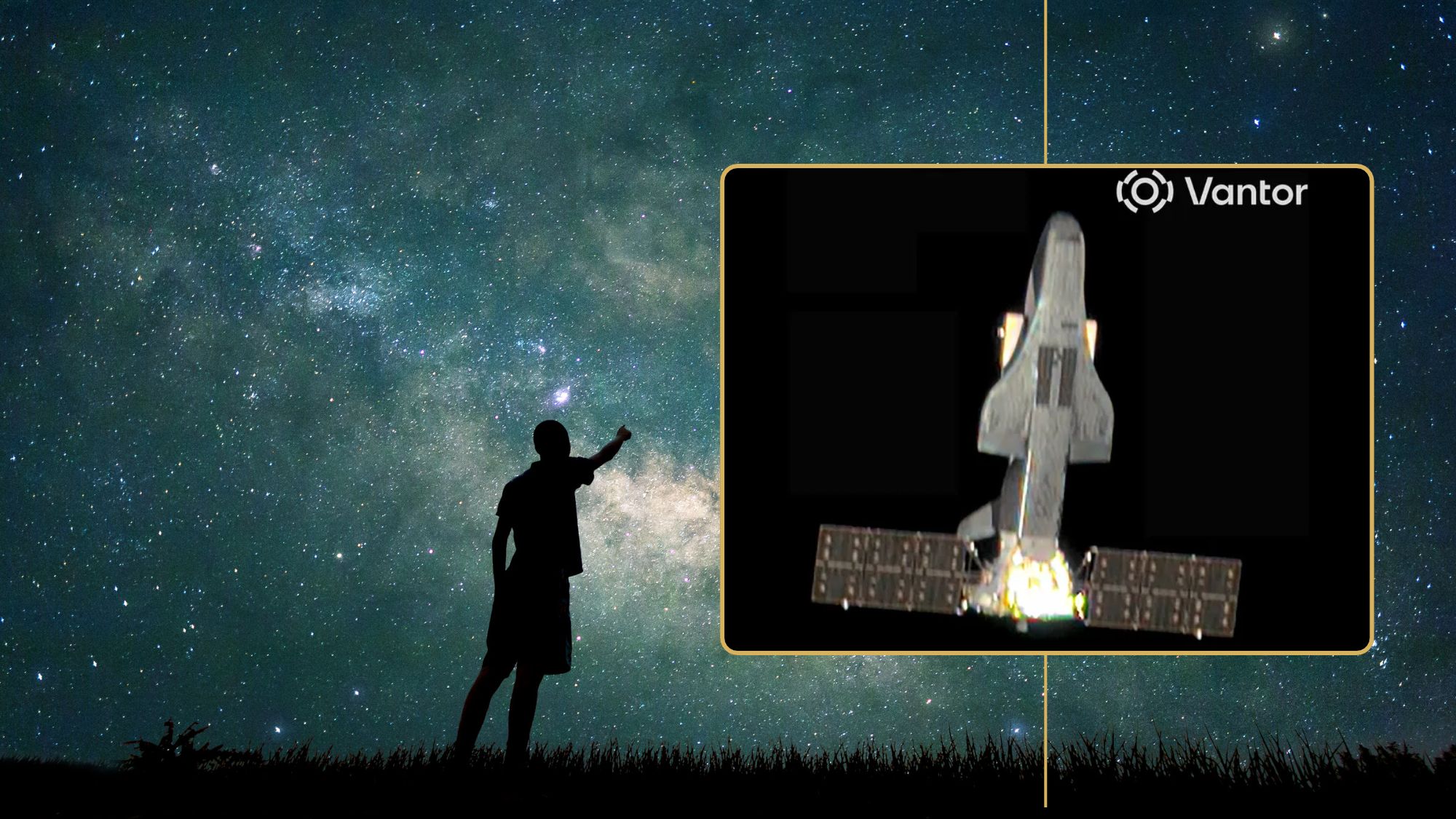
Space.com reports that China's experimental reusable space plane, often called Shenlong, will make a series of pre-dawn passes over the United States through early November. The predictions are based on Heavens-Above tracking data. Space.com cites Spaceweather.com for a brightness between magnitude +2.5 and +3.5 at its best, bright enough to see without a telescope under clear, dark skies. Listed windows include New York on Oct. 31 from 6:13 to 6:20 a.m. EDT and Nov. 2 from 5:28 to 5:37 a.m. EST. Chicago has Oct. 31 from 6:50 to 6:59 a.m. CDT. Denver has Nov. 1 and Nov. 3. Los Angeles has Nov. 2, 5 and 6. Memphis is not listed, so local viewers should check a tracking site for exact times. China has said little publicly about the vehicle's purpose, and the object's identity rests on the reporting and tracking data cited above.
Why it mattersThe passes give the public a rare chance to see a secretive spacecraft with the naked eye, and they show how closely amateur trackers follow military space programs.