Saturday, October 24, 2026Memphis · 80°/50°, TennesseeEst. 2026
Markets · loading
Technology & Science
Technology
Al Jazeera
New Mexico judge orders Meta to pay $25 billion over Facebook privacy claims
State court penalty, built on a jury's count of 43 million violations, is far larger than the FTC's 2019 fine; Meta says it will appeal
SANTA FE — State District Judge Francis Mathew on Oct. 21 imposed a $25 billion civil penalty on Meta. A jury had found in September that the company committed more than 43 million violations of New Mexico's Unfair Practices Act. Jurors judged 26 of 29 statements by Meta and its leaders on privacy and content moderation to be misleading. At the $5,000 statutory maximum per violation, the exposure would have been about $219 billion. The state asked for $35 billion to $40 billion. Meta asked for a cap of $3.45 billion. Interest accrues at 15% a year, and the attorney general says the money will go to education. The court has deferred a ruling on injunctive relief. Meta's quarterly filing says it has accrued for the loss and intends to appeal. Its chief legal officer has called the ruling a tax on speech.
Why it mattersThe award dwarfs the FTC's $5 billion Facebook settlement of 2019 and shows how much liability a single state can impose on a platform under consumer-protection law.
Quest Diagnostics says intruder reached patient records in lab-ordering system
SEC filing describes unauthorized access to Quanum LSM; scope, data types and attacker remain undisclosed
Quest Diagnostics told the SEC on Oct. 22 that it learned the day before of unauthorized access to Quanum LSM. Some of its clients use the system to place lab test orders and look up results. The company says it activated incident-response procedures, notified federal law enforcement and hired outside cybersecurity experts. It believes an unauthorized party accessed certain patient records, but the full scope is still under investigation. The filing gives no count of affected patients and does not say what data was involved. It also does not name an attacker or an entry method, and it does not say whether data was copied out. According to a report on the filing, Quest has not signaled a material disruption to operations. Plaintiff law firms have begun announcing investigations. Quest has not yet identified the clients whose accounts were involved.
Why it mattersQuest handles a large share of U.S. lab testing, and a breach of a provider-facing portal could expose sensitive health data held on behalf of many medical practices.
South Korea's chip exports triple in October as AI memory demand surges
Semiconductors made up nearly 45% of shipments in the first 20 days; sales to China rose 154%
SEOUL — Korea Customs Service data show chip exports jumped 222.5% from a year earlier to $27.5 billion in Oct. 1-20, a record for the period. Total exports more than doubled to $61.6 billion, and chips accounted for 44.7% of the total. Shipments to China rose 154.4% to $16.6 billion, and shipments to the United States rose 154.9% to $10.7 billion. Imports rose 42.8% to $47.1 billion, leaving a $14.5 billion surplus. Part of the headline gain reflects 2.5 more working days than a year earlier, but the daily average of $4.74 billion was also a record. Separately, Chinese customs data show China's own integrated-circuit exports rose 136% in September to $45 billion. Officials tie both trends to memory shortages and higher prices driven by AI infrastructure building. Full-month Korean figures are due in early November.
Why it mattersThe numbers show memory-chip pricing and AI-driven demand rising far faster than export-control politics have disrupted trade between the major chip economies.
Campaign against Fortinet and Palo Alto edge devices exposes 70,000 credentials
Researchers describe a large-scale effort aimed at internet-facing firewalls and VPN gateways
Security researchers disclosed on Oct. 23 details of a large-scale campaign that targeted exposed network edge devices, including Fortinet FortiGate firewalls and Palo Alto Networks GlobalProtect gateways. The effort exposed more than 70,000 credentials, according to trade-press reporting on the research. Firewalls and VPN appliances sit at the boundary of corporate networks, so stolen logins can give attackers a route inside without exploiting a new software flaw. The disclosure comes during a heavy period for edge-device security. CISA has recently added exploited flaws in Fortinet's FortiMail, Citrix NetScaler and BeyondTrust products to its Known Exploited Vulnerabilities catalog. Organizations running exposed gateways are generally advised to rotate credentials, require multifactor authentication and restrict management interfaces from the public internet.
Why it mattersCredential theft from perimeter devices lets intruders bypass patching altogether, which makes it a persistent risk for enterprises of every size.
DeepSeek reportedly raises $15 billion days after US federal ban
Bloomberg-sourced reports say the round came two days after Washington ordered civilian agencies to remove its software
HANGZHOU — Chinese AI lab DeepSeek has reportedly raised about $15 billion, or 100 billion yuan, according to Bloomberg reporting relayed by TechCrunch. That would make it one of the largest funding rounds in China. The report says the money arrived two days after the US ordered federal civilian agencies to remove DeepSeek technology over national security concerns. Reported investors include battery maker CATL and Tencent. The round was said to have been upsized twice, from a 50 billion yuan target to 80 billion and then 100 billion. It follows a June raise of more than $7 billion at a $50 billion valuation, and a Chinese IPO is reportedly possible in 2027. Neither DeepSeek nor the investors have been quoted confirming the figures. The company is reportedly spending on data centers and open-weight models.
Why it mattersThe deal suggests US restrictions have not cut DeepSeek off from capital, and that open weights are hard to police once they are distributed.
Anthropic's leaked safety bill sets 50-death bar for blocking a model
Draft would route any halt through Commerce and a federal judge; it is not law and has not been introduced
WASHINGTON — Anthropic has been pitching lawmakers a confidential draft AI safety bill, first reported by Politico, and a company spokesperson confirmed it reflects the firm's Advanced AI Framework. Under the draft, the government could block a frontier model's release or use only if it posed a foreseeable, imminent risk of more than $1 billion in damage or of killing or seriously injuring more than 50 people. The risk would have to come from a biological weapon, a cyberattack, or a model escaping its developer's controls. Independent evaluators registered with the Commerce Department would test models and have 72 hours to report an imminent risk. Commerce would then have to ask a federal judge in Washington to act. No other federal agency could order a halt. The bill remains a proposal; its wording could change and Congress has not taken it up.
Why it mattersA leading lab is trying to write the template for federal frontier-AI oversight, and the high trigger threshold and single-agency design are likely to be contested.
UPDATEPHP flaw fallout widens as AI-found bugs outpace patching
CNBC reports a global scramble; newsletter claims attacks now number in the millions
New developments are emerging in the PHP vulnerability episode. CNBC reports that researchers at Google's Wiz and the firm Calif found the flaws in August using advanced models from OpenAI and Google. Warnings then spread online by Tuesday, and governments and companies worldwide scrambled to contain the fallout. Some experts now call the episode 'Black October'. Roughly 70 percent of websites use PHP, by some estimates. Former CISA director Chris Krebs urged smaller firms to scan constantly, patch quickly or take legacy systems offline. The AI Weekly newsletter claims details leaked before the fix, attackers probed four days early, attempts now number in the millions, and European governments took sites offline. Those figures are not independently confirmed here.
Why it mattersThe case is a live test of whether defenders can patch faster than AI-assisted discovery, and leaks, can expose software.
Judge hears Anthropic fair-use bid over song lyrics; no ruling yet
Music publishers cite about 120,000 requests for synthetic lyrics as news publishers press a parallel case against OpenAI
SAN JOSE — US District Judge Eumi Lee heard cross-motions on 21 October in Concord Music Group v. Anthropic over whether training Claude on song lyrics is fair use, and did not rule, according to a secondary account relaying Reuters and the docket. Anthropic's lawyer argued that training yields transformative output. The publishers' lawyer said Claude received nearly 120,000 requests for synthetic lyrics over six months, arguing it competes with their works. A related case, UMG/Concord/ABKCO v. Anthropic II, is set for oral argument on 4 November, per a case tracker. Separately, news publishers suing Microsoft and OpenAI refiled a less-redacted summary-judgment motion on 16 October. It cites Microsoft data showing 83 to 93 percent click-through drops on some publisher domains versus Bing search.
Why it mattersThe first appellate fair-use ruling covered only a non-generative tool, so these district-court decisions will shape generative-AI training law.
Microsoft says its diagnostic AI beat doctors on hard cases
Claimed 83% vs 36% accuracy comes from company-reported results, not independent clinical trials
REDMOND — Microsoft AI chief Mustafa Suleyman said this week that the company's MAI-DxO diagnostic system outperforms physicians on complex cases, as he pursues what he calls 'medical superintelligence', TechCrunch reported. A newsletter summary puts the figures at 83 percent for the system versus 36 percent for doctors. Those numbers are Microsoft's own claims from a benchmark of difficult cases. They do not show performance with real patients, and the summary gives no sign of independent replication or clinical deployment. The comparison's design, including what resources the doctors were allowed, matters to how far the result generalizes. Microsoft describes the work on its AI site. No regulatory clearance for clinical use has been reported.
Why it mattersVendor benchmarks showing AI ahead of doctors are shaping health-care investment and policy before any real-world validation.
Largest supernova catalog yet adds to hints that dark energy changes
A 2,884-explosion dataset favors an evolving model over a constant, but short of discovery-level proof
BRISBANE — A University of Queensland-led team has built a catalog called Unite. It holds 2,884 Type Ia supernovae, and it recasts roughly three decades of survey data into one consistent framework. Combined with cosmic microwave background and baryon acoustic oscillation measurements, the sample deviates from the standard cosmological model, in which dark energy never changes. A summary of the work puts the preference for an evolving model at about 3.1 to 3.3 sigma in frequentist tests. Bayesian comparison gives only weak support, and the authors caution that systematic uncertainties complicate the picture. Physicists usually require 5 sigma to claim a discovery. Team member Tamara Davis said the result differs in direction from the 2024 Dark Energy Survey supernova data. She also noted that DESI's separate measurements of early-universe sound waves hint at the same thing. The team plans to add nearby supernovae from the DEBASS program. The catalog circulated as a preprint in September, and its journal publication status is not confirmed.
Why it mattersIf dark energy is not constant, the standard model of cosmology would need revision, and independent probes are now pointing the same way.
No overall colorectal cancer link found for ultra-processed food in 460,000-person study
PLOS Medicine analysis finds risk depends on the type of food: processed meat up, some grains and dairy down
BETHESDA, Md. — Researchers led by Erikka Loftfield of the National Cancer Institute report that eating more ultra-processed food was not tied to a higher overall rate of colorectal cancer. The analysis covers more than 460,000 American adults and was published October 15 in the open-access journal PLOS Medicine. Processed meat was linked to higher cancer incidence. Ultra-processed whole grains and dairy products were linked to lower incidence. The authors conclude that effects may depend on what the foods contain, not on the ultra-processed label alone. The work draws on the NIH-AARP Diet and Health Study, which enrolled people aged 50 to 71 in 1995-96. An earlier preprint of the analysis appeared on medRxiv. It is an observational study, so it shows associations rather than cause and effect, and diet was self-reported.
Why it mattersThe result complicates broad public-health messaging that treats all ultra-processed food as one risk category.
ThePrint: Scientists develop USB-sized electronic implant to lower blood sugar
ETH Zurich implant burns off excess blood sugar in obese, diabetic mice
Wireless graphite device in Science is a proof of concept; no human data reported
ZURICH — Researchers at ETH Zurich have developed a wireless, USB-stick-sized implant that uses a graphite-based electrocatalytic system to burn excess glucose in the body. The study appeared in Science on October 22 under the title "Wireless electrocatalytic closed-loop system for drug-free management of diabesity." In mice, the device lowered blood glucose and reduced obesity, according to coverage of the paper by India's ThePrint. The authors present it as a possible route to treating diabetes and obesity without drugs. The work is preclinical. No human trials have been reported, so safety, durability and effectiveness in people are unknown. The next step would be larger animal studies before any clinical testing.
Why it mattersIt points toward a device-based alternative to drug therapy for metabolic disease, at a time when GLP-1 drugs dominate the field, though it is still at the mouse stage.
Space.com: NASA lays out plan for Artemis 3 moon-lander test flight
UPDATENASA details Artemis III docking test, keeps 2028 landing target
Agency says Artemis IV remains the first crewed landing, with the Starship-or-Blue Moon choice still open
KENNEDY SPACE CENTER, Fla. — At a Friday briefing, NASA laid out the Artemis III plan. Four astronauts (Randy Bresnik, Andre Douglas, Frank Rubio and ESA's Luca Parmitano) will fly Orion in low Earth orbit in 2027. They will test rendezvous and docking with test versions of Blue Origin's Blue Moon and SpaceX's Starship landers. Program manager Jeremy Parsons said the campaign involves three of the world's most powerful rockets: SLS, Starship and New Glenn. The crew would enter Blue Moon and spend two days docked with it. The Starship docking would last about two hours, and the crew would not enter that vehicle. The nominal mission is 14 days. NASA is targeting summer 2027, but Administrator Jared Isaacman reportedly told staff last month that the mission was about 90 days behind. NASA has not chosen which lander will fly on Artemis IV, the planned 2028 landing near the lunar south pole.
Why it mattersThe briefing shows how much of the 2028 landing schedule depends on two commercial landers and an untested three-rocket launch campaign.
Japan's MMX probe heads to Mars to fetch Phobos sample
H3 rocket launch starts a five-year round trip to return at least 10 grams from the Martian moon
TANEGASHIMA, Japan — Japan's space agency JAXA launched its Martian Moons eXploration (MMX) spacecraft on an H3 rocket at 3:41 p.m. EDT Monday, which was 4:41 a.m. Tuesday local time. It was the tenth H3 flight. MMX will reach Mars in August 2027 and enter a quasi-satellite orbit alongside Phobos. It will deploy the Idefix rover, built with French and German partners, and land no earlier than December 2028. The probe is to collect at least 10 grams of surface material and fly home, with the capsule due to land in Australia in 2031. NASA supplied instruments, including a pneumatic sampler. ESA's veteran Mars Express orbiter is expected to support the arrival with joint observations, according to The Register. No spacecraft has returned a sample from the Martian system.
Why it mattersA successful sample return would give scientists the first physical material from a Martian moon, which could settle whether Phobos is captured asteroid or Mars debris.
BBC Sky at Night Magazine: Comet C/2026 S1 (Euclid)
Euclid telescope, built for galaxies, finds its first new comet
A Helsinki doctoral student's software flagged the long-period object in September images
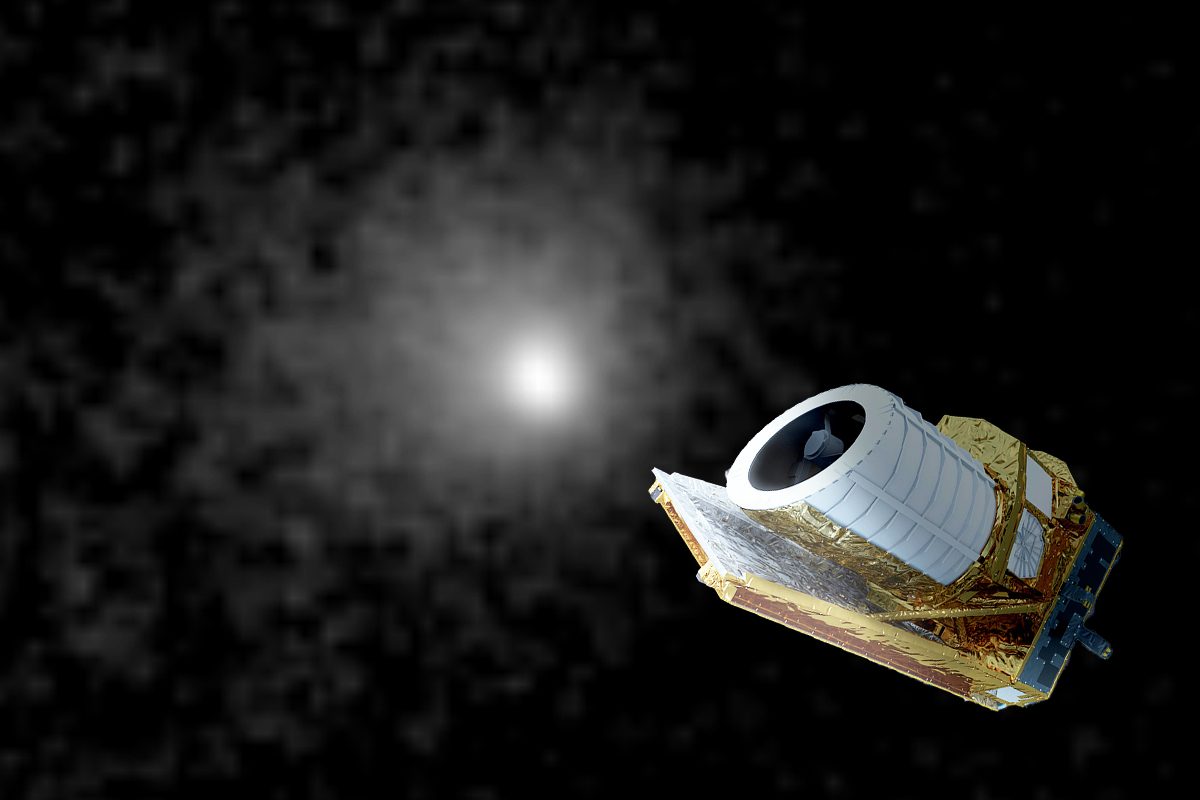
PARIS — ESA said Euclid has discovered a previously unknown comet, C/2026 S1 (Euclid), in images taken Sept. 16 to 24. The space telescope was built to map dark matter and dark energy. University of Helsinki PhD student Mikko Pöntinen noticed a streak flagged by his moving-object software. It showed up in five image sets, which made 16 exposures in all. The Minor Planet Center confirmed it as a comet on Oct. 8 after follow-up from ground observatories. It is roughly 1.3 billion kilometers away, between Jupiter and Saturn in distance. Its orbit is nearly perpendicular to the planets' plane and takes thousands of years. That is why Euclid, which avoids the crowded plane, caught it. It is too faint for amateur telescopes. Team scientists said it is not suitable for ESA's planned Comet Interceptor mission, but the find tested how the two teams would coordinate.
Why it mattersThe find shows that survey telescopes can catch distant comets early, which could help pick targets for future flyby missions.